Hollywood Discovers Law and Order
After Tom Cruise Loses a Watch
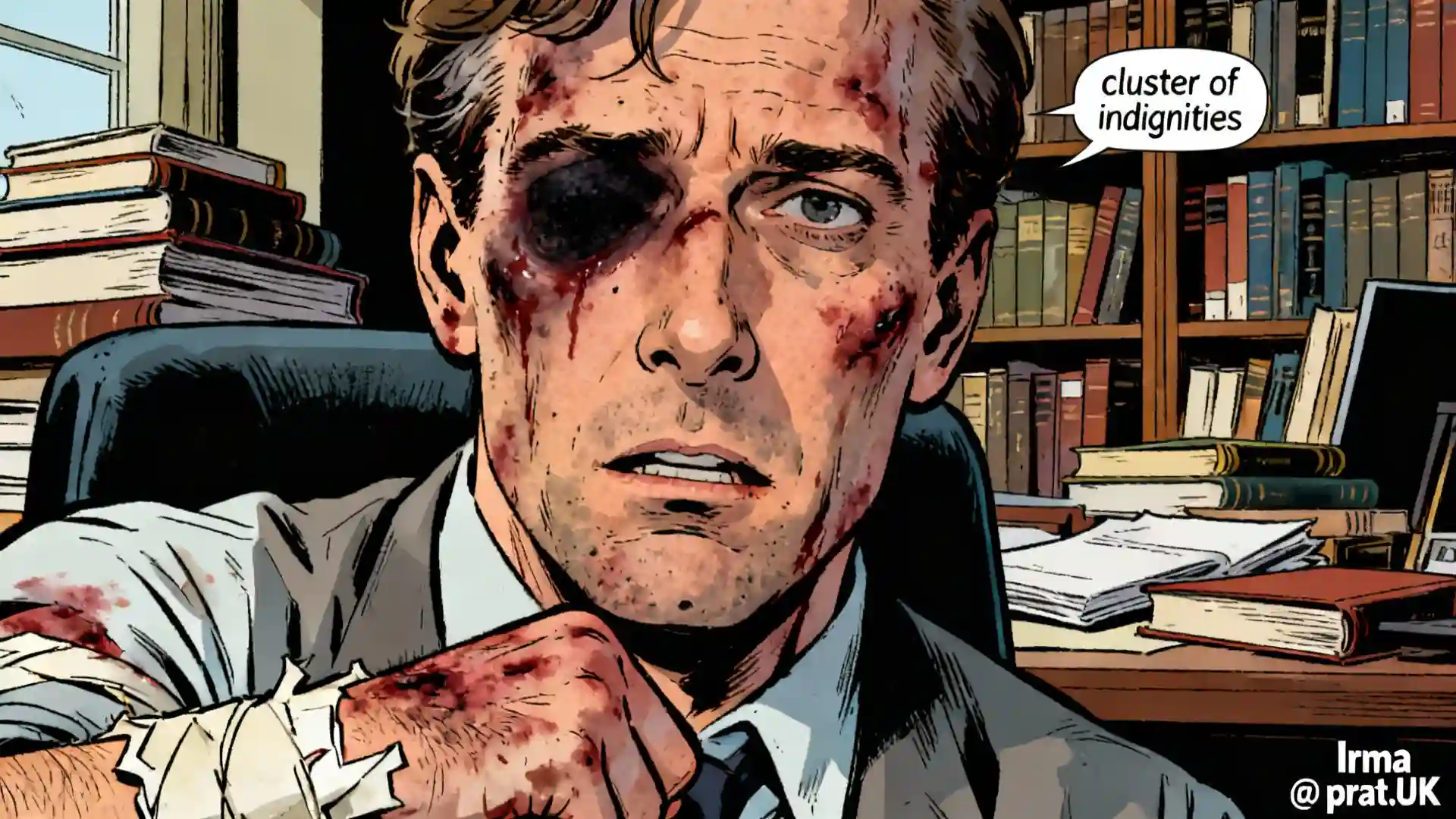
There are turning points in history. The moon landing. The invention of pizza delivery tracking. And now, the moment Tom Cruise reportedly looked at his wrist in London and realized his Rolex had achieved independence.
Witnesses say the watch did not simply get stolen. It experienced what urban planners call an unscheduled ownership transition. And just like that, one of Hollywood’s most fearless action stars reached a conclusion that usually takes cable news panels six hours to yell through.
“Crime is like pizza,” said Jerry Seinfeld. “Nobody worries about it until it shows up at your door.”
Maybe the action is no longer just on the screen.
The Moment Everything Changed

For decades, Cruise has outrun explosions, dangling helicopters, rogue nations, and the natural aging process. Yet somewhere between a luxury townhouse and a quiet London street, the man who clings to airplanes mid flight allegedly met his greatest adversary: modern city vibes.
Suddenly, the star of Mission Impossible found himself starring in Mission: Where Did My Stuff Go.
“The difference between Hollywood and reality,” said Dave Chappelle, “is that in movies, the hero always gets his stuff back by the third act.”
When Ethan Hunt Checks Zillow
In the films, Cruise plays Ethan Hunt, a fictional agent who treats global chaos like a light cardio day. Need to scale the Burj Khalifa with suction gloves? Fine. Need to outrun a sandstorm on a motorcycle? Tuesday. Need to keep a watch in certain fashionable parts of London? Now we are talking science fiction.
Sources close to absolutely nobody claim Cruise responded the only way a serious method actor can. He began researching a new role: citizen who prefers his belongings to remain in his possession.
“I’m not saying celebrities are out of touch,” said Bill Burr, “but they discover crime right around the time it happens to them personally.”
Around this time, political commentators noticed a strange phenomenon. Every time someone mentioned law and order, Cruise did not blink. He leaned in, like a man hearing the plot twist that finally makes the movie make sense.
Enter Donald Trump, a man whose campaign speeches often sound like they were focus grouped by suburban porch lights. Strong borders. Tough on crime. Less dramatic plot twists in the driveway. To a Hollywood star recently separated from his wristwear, this started to feel less like politics and more like practical advice.
The Stunt He Would Not Do

It is important to remember that Cruise does his own stunts. This is not a rumor. This is a lifestyle choice that makes insurance companies lie down in dark rooms.
“Tom Cruise doing his own stunts is impressive,” said Chris Rock. “But you know what’s more impressive? Not needing to because you still have your car keys.”
He has leapt across rooftops. He has hung off cliffs. He has sprinted with the intensity of a man being chased by cardio itself. But apparently, there is one stunt he did not sign up for: casually walking around hoping today is not a supporting character in someone else’s crime documentary.
An anonymous London official reportedly reassured him, “Crime is down overall,” reminded the spokesperson while three scooters performed what experts describe as a vibes based perimeter check behind them.
“Statistics say crime is down,” said Louis C.K. “That’s great news for the statistics.”
Cruise, ever the professional, nodded politely and Googled houses in Florida.
Hollywood’s New Genre: Domestic Safety
Back in Los Angeles, studio executives are already pitching sequels.
Mission Impossible: Secure the Perimeter
Mission Impossible: This Package Requires a Signature
Mission Impossible: The Porch Light Stays On
“Hollywood always follows the trends,” said Kevin Hart. “Next year, every movie is going to be about a guy just trying to make it from his car to his front door with his groceries.”
One producer allegedly said, “Audiences are tired of unrealistic plots. They want to see a hero who can park his car and still have a car later.”
Cruise portraying Trump in a future film suddenly feels less like satire and more like career synergy. Both men are famous for dramatic entrances, strong opinions about buildings, and a belief that things should generally stay where you left them.
Acting coaches say Cruise is uniquely prepared for the role. He already knows how to project intensity, deliver monologues about high stakes situations, and look directly into a camera as if negotiating with destiny.
London, The Accidental Movie Villain

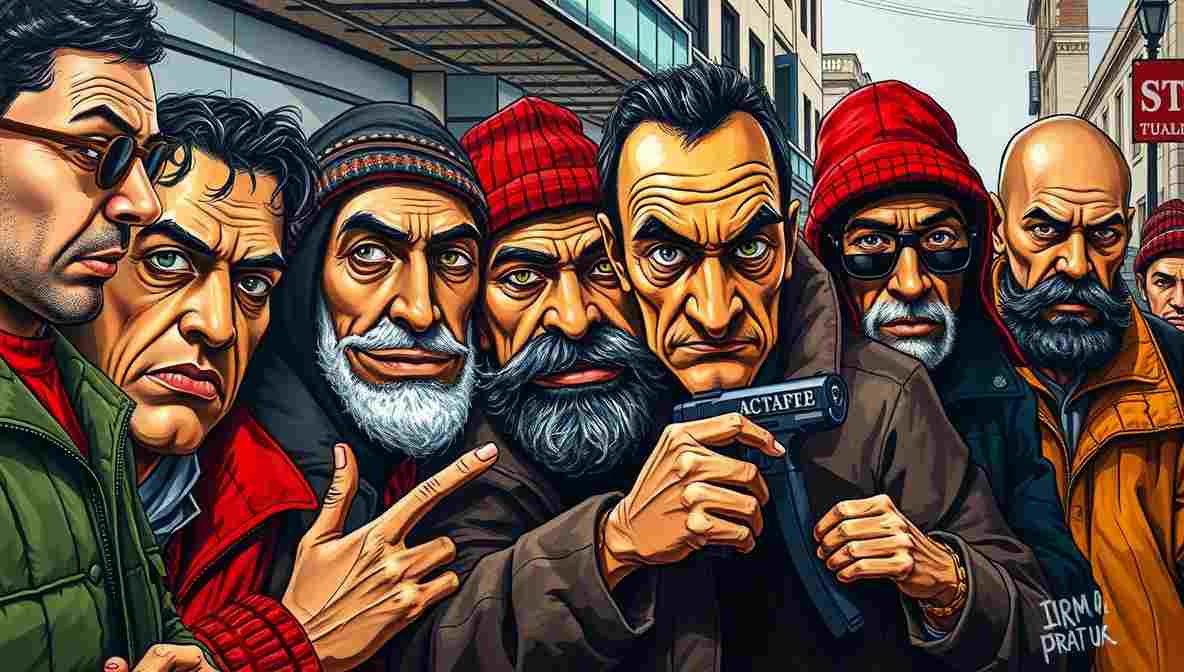
No one is saying London is a dystopian wasteland. It still has tea, history, and buildings that look like they charge rent to clouds. But in this particular celebrity narrative, it has taken on the role usually reserved for the shadowy European city where a spy realizes the safe house is not actually safe.
“Britain invented understatement,” said John Mulaney. “They could watch their house burn down and say ‘bit warm today.'”
Travel brochures now require slightly more honesty.
Visit London. Stunning architecture. World class museums. Slight chance your accessories will pursue independent careers.
Local critics argue Cruise is overreacting. These are the same people who describe a car theft as a spirited borrowing. In fairness, British understatement is so powerful it can make a small meteor sound like a bit of weather.
The Great Celebrity Migration, Again
Hollywood has always been dramatic, but nothing compares to a star quietly deciding that maybe, just maybe, he would like fewer real life plot twists.
“Florida used to be where you went to retire,” said Trevor Noah. “Now it’s where you go to keep your watch.”
An unscientific poll of retirees in Florida produced the following result. “If Tom Cruise thinks it is safer here, that is good enough for us and our lawn chairs.” Margin of error: plus or minus one margarita.
Political analysts now speak of the Rolex Realignment. The moment when a luxury timepiece allegedly helped a movie star understand why some voters really, really like the phrase law and order.
Was it a deep policy paper? No. Was it a personal experience involving an empty wrist and a long sigh? Perhaps.
From Red Carpet to Red Hat Energy
No one is claiming Cruise showed up at a rally doing backflips while chanting slogans. This is Hollywood, not a theme park stunt show. But there is a new tone in the air, like a man who has realized that security briefings might be more useful than meditation apps.
“Every celebrity eventually discovers politics,” said Patton Oswalt. “Usually right around the time they realize their zip code doesn’t come with diplomatic immunity.”
He did not change overnight. He just recalculated. Like a GPS that suddenly reroutes you away from a road labeled surprise chaos ahead.
Trump supporters, naturally, have embraced the narrative. “Finally,” they say, “a movie star who understands that sometimes the scariest thing is not a supervillain. It is a neighborhood where the background extras are a little too enthusiastic about your accessories.”
Even Action Heroes Like Quiet Evenings

At the heart of this saga is a simple truth. Even global megastars who sprint across skyscrapers eventually want to relax without feeling like the soundtrack might suddenly turn suspenseful.
“Everyone wants peace and quiet,” said Jim Gaffigan. “For most people, that means Sunday morning. For Tom Cruise, it means a block where nobody treats his Rolex like a free sample.”
Cruise has spent years pretending to save the world. Now he appears interested in a smaller mission. Saving date night. Preserving wrist based time telling. Enjoying a walk where the only thing chasing him is a mild breeze.
If that makes him sound more sympathetic to tough on crime speeches than abstract urban theory, well, welcome to the plot twist.
The Universal Human Dream
In the end, this is not just a story about politics or celebrities. It is about the universal human dream of putting something down and finding it still there later.
“That’s the American Dream now,” said Hasan Minhaj. “Not a house with a white picket fence. Just a house where the fence is still there in the morning.”
For Tom Cruise, that dream used to involve defusing bombs in foreign capitals. Now it might just involve a watch, a front door, and a neighborhood where the only mission is deciding what to have for dinner.
Roll credits.
Auf Wiedersehen, amigo!

Alan Nafzger was born in Lubbock, Texas, the son Swiss immigrants. He grew up on a dairy in Windthorst, north central Texas. He earned degrees from Midwestern State University (B.A. 1985) and Texas State University (M.A. 1987). University College Dublin (Ph.D. 1991). Dr. Nafzger has entertained and educated young people in Texas colleges for 37 years. Nafzger is best known for his dark novels and experimental screenwriting. His best know scripts to date are Lenin’s Body, produced in Russia by A-Media and Sea and Sky produced in The Philippines in the Tagalog language. In 1986, Nafzger wrote the iconic feminist western novel, Gina of Quitaque. Contact: editor@prat.uk