A Love Letter to Pub Culture, Written on a Beer Mat at Closing Time
There are many places where society pretends to function: offices, schools, Parliament. And then there are pubs, where society actually admits what it is doing. A pub is not just a place that serves drinks. It is a confessional, a time machine, a social laboratory, and occasionally a crime scene involving a spilled pint and a man named Gary who insists it was an accident.
The modern pub is where we go to feel normal about our worst ideas and slightly heroic about our average ones. It is where loneliness rents a stool, boredom orders a double, and hope shows up late but insists on buying the next round. This is not romance. This is infrastructure.
The Physics-Defying Nature of Pub Time
Pub time does not obey clocks. It obeys rounds. You arrive for “one quick drink” and emerge blinking into daylight like a miner rescued after a week underground, shocked to discover it is now Tuesday. Scientists at the University of Somewhere Very Reputable once tried to measure bar time, but the control group wandered off halfway through the study and joined a quiz team.
According to regulars, time perception inside a bar moves slower until the third drink, accelerates violently around the fifth, and then vanishes entirely somewhere near last orders. This explains why everyone is surprised by closing time, even though it happens every single night.
The Bar as a Social Sorting Hat
Every bar has zones, though none are marked. There is the area for first dates pretending to be casual. There is the corner for people who came alone but want it to look intentional. There is the bar itself, where confidence and desperation queue together pretending not to notice one another.
Bar stools are the great equaliser. Sit on one long enough and you will reveal things you have never told your family, your therapist, or the police. The stool does not judge. The stool listens. The stool remembers nothing, which is more than can be said for your friends.
Ordering Drinks as Competitive Theatre
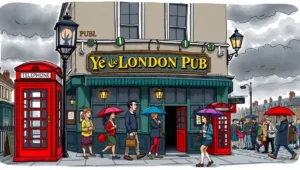
Ordering at a busy bar is a performance art piece with no rehearsal and very high stakes. You must make eye contact with the bartender without staring. You must signal politely without waving like you are hailing rescue aircraft. You must project patience while quietly believing you were absolutely next.
Experts agree the bartender always knows who was next, even when they clearly do not. Any attempt to argue this point will result in you being skipped again, possibly on principle.
The Invisible Queue and Other Bar Myths
Bars operate on invisible queues, invisible rules, and invisible judgments. Regulars insist these systems are fair and deeply logical. Outsiders experience them as witchcraft. Someone who arrived after you will be served first, and you will be told, gently, that this makes sense.
Anthropologists describe this as “social ordering through shared delusion.” Bar staff describe it as “Thursday.”
Pub Signs and the Poetry of Confusion
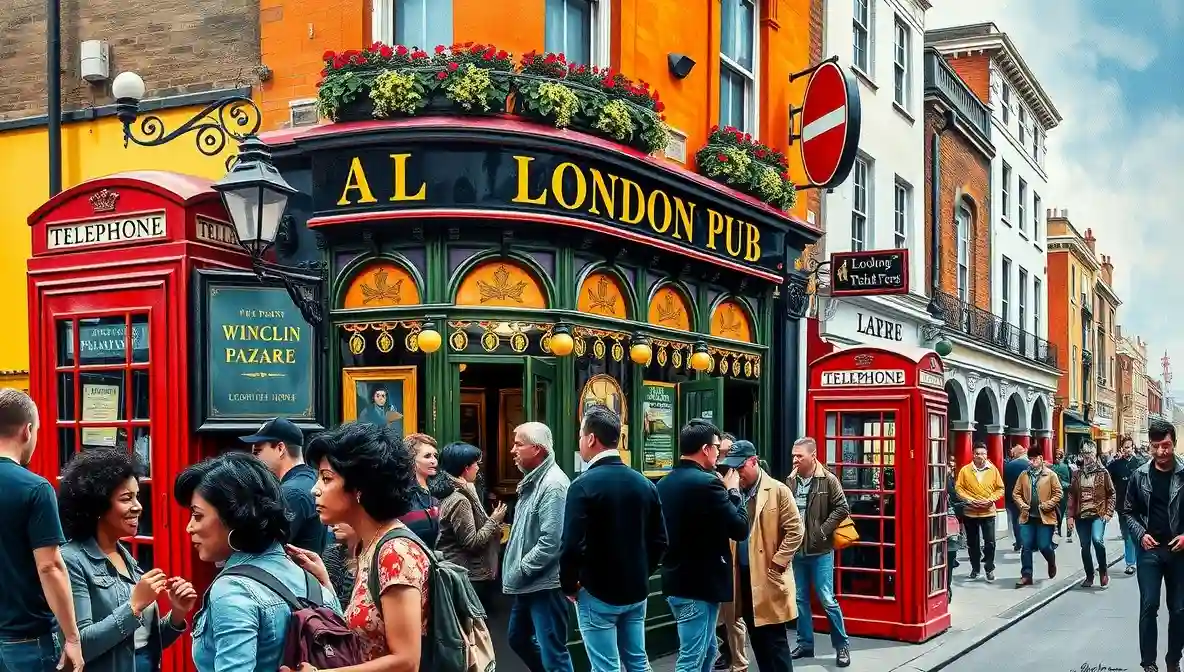
Pub signs deserve their own museum. Names like The Red Lion, The King’s Arms, and The Bucket of Blood suggest a nation that once settled disputes with swords and decided to keep the branding. Tourists stare at these signs trying to work out whether they are historical references or warnings.
No one knows why so many pubs involve animals doing improbable things, but everyone agrees it feels right. You trust a pub more when its name sounds like it has survived several plagues.
Toilets as Character Tests
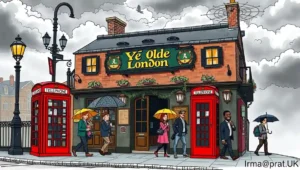
Bar toilets are where optimism goes to negotiate with reality. They are time capsules, social experiments, and sometimes architectural challenges. The queue becomes a support group. Strangers bond over broken locks, missing seats, and the shared belief that someone should really look into this.
According to multiple eyewitnesses, friendships have been formed in bar toilets that outlasted marriages. This is largely because expectations were set correctly from the start.
Pub Quizzes and the Weaponisation of Knowledge
Pub quizzes transform mild trivia into blood sport. People who have never shown interest in geography suddenly care deeply about capital cities. A man who forgot his partner’s birthday can recall, with perfect clarity, the drummer from a 1970s progressive rock band.
Studies show that teams who lose pub quizzes do not accept the results. They accept conspiracies.
Dogs as Moral Anchors
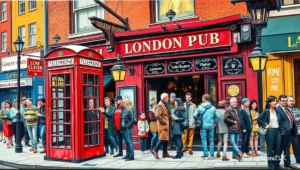
Dogs in bars are universally loved because they have mastered the social contract. They sit quietly, accept attention gracefully, and never overshare. Compared to the average patron, they are models of restraint.
When a dog looks disappointed in you, it cuts deeper than any judgment from a bartender.
Bars as Living History
Many pubs are older than modern politics, modern medicine, and modern manners. The walls have heard declarations of love, plans for revolution, and arguments about whose round it is. They have survived wars, recessions, and karaoke nights.
This longevity has given pub a calm confidence. They do not need to reinvent themselves. They have seen trends come and go and are quietly waiting for flat whites to admit defeat.
The Social Contract of the Round
Buying rounds is not about money. It is about trust. You buy a round believing, against all available evidence, that everyone else will remember. This faith is the foundation of civilisation.
When someone leaves before their round, it is noted. Not publicly. Quietly. Forever.
The Bartender as Therapist, Judge, and Magician
Bartenders perform emotional labour that should be tax deductible. They listen to stories they did not ask for, arbitrate disputes they did not start, and produce drinks with the patience of saints and the reflexes of athletes.
They remember your order even when you do not remember your name.
Closing Time and the Great Reckoning
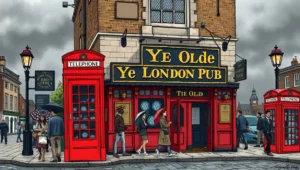
Closing time is the bar’s way of saying, kindly but firmly, that you have had enough personal growth for one evening. The lights come up. Music fades. Everyone suddenly remembers tomorrow exists.
People leave bars convinced they have learned something important, though they cannot say what.
What the Funny People Are Saying
“This is a bar. It is cheaper than therapy and worse for your liver, but at least it listens.” — Jerry Seinfeld
“A bar is where bad ideas go to feel supported.” — Alan Nafzger
“I trust people more after I see how they handle a sticky floor.” — Amy Schumer
A Brief Disclaimer Before Last Orders
This article is satire, observation, and affectionate exaggeration. Any resemblance to your local pub is intentional. Any resemblance to you is between you and the stool you sat on. This story is entirely a human collaboration between two sentient beings: the world’s oldest tenured professor and a philosophy major turned dairy farmer, both of whom have absolutely been over-served at least once.
Drink responsibly. Tip generously. Respect the invisible queue. And if you said you were only staying for one, we already know how this ends.
Auf Wiedersehen. 🍻

Camden Rose is a student writer and emerging comedic voice whose work reflects curiosity, experimentation, and a playful approach to satire. Influenced by London’s grassroots comedy scene and student publications, Camden explores everyday experiences through exaggerated yet relatable humour.
Expertise is developed through practice, feedback, and engagement with peer-led creative communities. Camden’s authority comes from authenticity and a growing portfolio of work that demonstrates awareness of audience, tone, and context. Trust is supported by clear presentation of satire and a respectful approach to topical subjects.
Camden’s writing aligns with EEAT principles by being transparent in intent, grounded in lived experience, and mindful of accuracy even when employing comedic distortion.