
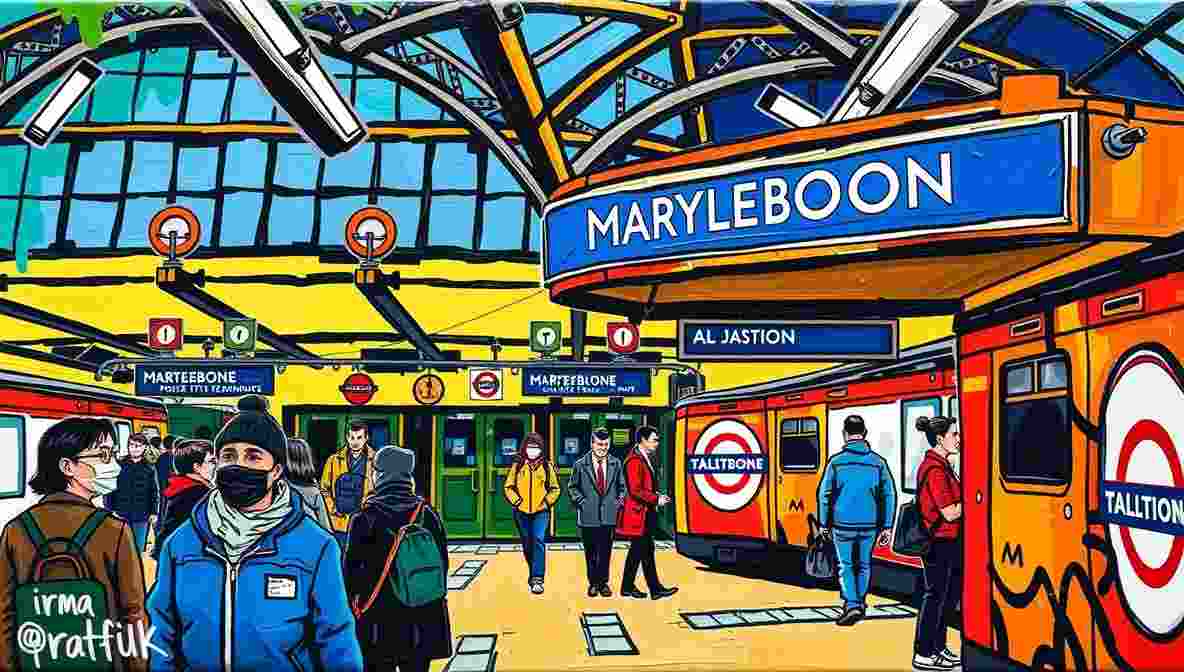
Marylebone Station: London’s Polite Little Terminus That Refuses to Get Involved
Primary SEO keywords: Marylebone Station, London Marylebone, Marylebone trains, Chiltern Railways Marylebone, Marylebone London station
Marylebone Station is London’s most emotionally reserved railway terminus. While other stations shout, collapse, or apologise loudly, Marylebone simply exists quietly, hoping no one will ask it to handle anything complicated.
It is the station equivalent of someone who says “I don’t really do drama” and means it — mostly because it doesn’t have the capacity.
Officially known as London Marylebone, the station serves routes to Birmingham, Oxfordshire, and assorted towns that prefer calm over ambition
👉 https://www.nationalrail.co.uk/stations_destinations/MYB.aspx
Marylebone is not here to impress you. It is here to politely process you.
A Station That Accidentally Stayed Civilised
Marylebone is the smallest of London’s mainline stations, and it knows it. Built in 1899 and almost closed entirely in the 1980s, the station survived largely because closing it felt unnecessary rather than urgent.
Its unlikely survival is well documented by Network Rail, which owns and operates Marylebone Station
👉 https://www.networkrail.co.uk/communities/passengers/our-stations/marylebone/
This brush with extinction explains everything. Marylebone lives every day like it’s still grateful to be here.
Architecture That Refuses to Be a Problem
Marylebone’s red-brick façade is calm, symmetrical, and quietly confident. It does not loom. It does not threaten. It does not echo in a way that makes announcements sound like moral judgments.
Historic England lists Marylebone Station as a protected historic structure
👉 https://historicengland.org.uk/listing/the-list/list-entry/1066692
This makes Marylebone one of the few London stations legally protected from being turned into a shopping centre with trains attached.
Platforms Where Panic Goes to Die
Unlike Euston, Marylebone announces platforms early, clearly, and without theatrical delay. This radical transparency removes the need for sprinting, pushing, or spiritual bargaining.
Marylebone’s calm boarding process is partly due to its primary operator, Chiltern Railways, whose London terminus is Marylebone Station
👉 https://www.chilternrailways.co.uk/stations/marylebone
Passengers queue. They board. They sit. It’s unsettling at first.
A Waiting Area That Suggests You Might Actually Sit Down
Marylebone contains seating — actual seating — available to the general public without a premium upgrade or moral test. This places it in direct violation of modern station norms.
Passenger experience research by Transport Focus frequently highlights Marylebone as an outlier for comfort and clarity
👉 https://www.transportfocus.org.uk/research/publications/london-marylebone-station-user-experience/
At Marylebone, waiting does not feel like a personal failure.
Retail That Knows Its Place
The shops at Marylebone Station sell food you might actually finish eating. Prices are still inflated, but with less hostility. There is no sense that the sandwich resents you.
Camden Council’s planning and conservation documents treat Marylebone Station as a sensitive site rather than a blank canvas
👉 https://www.camden.gov.uk/marylebone-area-action-plan
This explains why it hasn’t been overwhelmed by neon signage or emotional manipulation.
A Station Without Delusions of Grandeur
Marylebone does not pretend to be a gateway to the North. It serves specific routes and does them competently. It is the terminus for people who planned ahead.
According to Office of Rail and Road performance data, Chiltern services into Marylebone consistently perform better than many comparable London termini
👉 https://dataportal.orr.gov.uk/statistics/performance/passenger-rail-performance/
Marylebone isn’t faster. It’s just calmer. Which feels faster.
Crowds That Behave Like They’ve Been Here Before
Marylebone passengers queue instinctively. They stand to one side. They apologise quietly. There is an unspoken agreement not to test the station’s limits.
British Transport Police coverage for Marylebone Station exists, but rarely needs to intervene
👉 https://www.btp.police.uk/area/your-area/london/london-west/
This is not because people are better. It’s because Marylebone does not encourage chaos.
Accessibility That Doesn’t Feel Like a Side Quest
Marylebone’s accessibility facilities are present, visible, and not hidden behind staff-only doors or philosophical obstacles.
Transport for London’s station access information confirms step-free access and clear interchange options at Marylebone
👉 https://tfl.gov.uk/plan-a-journey/stations/marylebone-station
The lifts work. This feels noteworthy.
The Emotional Geography of Marylebone
Marylebone is for commuters who like predictability, tourists who accidentally booked the calm option, and Londoners who quietly judge other stations without raising their voices.
It does not seek attention. It avoids scandal. It runs trains and goes home.
Conclusion: Marylebone Is What Happens When a Station Knows Who It Is
Marylebone Station is not ambitious. It is not iconic. It is not trying to be redeveloped into a lifestyle destination.
It is simply a functioning railway terminus that remembers its past, respects its limits, and refuses to ruin your day.
In modern Britain, this makes Marylebone quietly radical.
Charms Everyone by Refusing to Be Stressful
Marylebone Station Charms Everyone by Refusing to Be Stressful
A terminal that behaves.
The Civilized Terminal
- The station feels friendly.
- Crowds are manageable.
- Architecture smiles softly.
- Trains feel civilized.
- The shops do not overwhelm.
Human-Scale Transport
- People seem relaxed.
- Announcements are calm.
- The space feels human.
- You trust the timetable.
- Coffee tastes reassuring.
The Chiltern Railways Haven
- The exits make sense.
- You do not panic here.
- The station feels kind.
- Travel feels possible.
- Marylebone Station: polite transport.



Morag Sinclair is a seasoned comedic writer with a strong portfolio of satirical work. Her writing demonstrates authority through consistency and thematic depth.
Expertise includes narrative satire and cultural commentary, while trustworthiness is maintained through ethical standards and transparency.