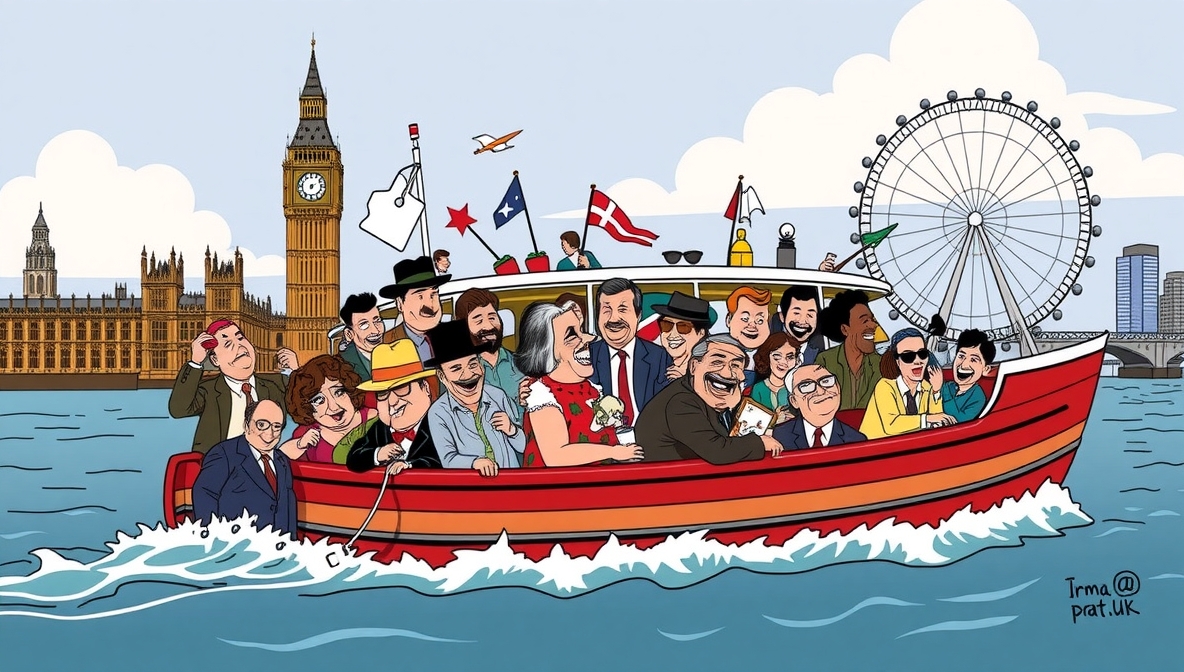
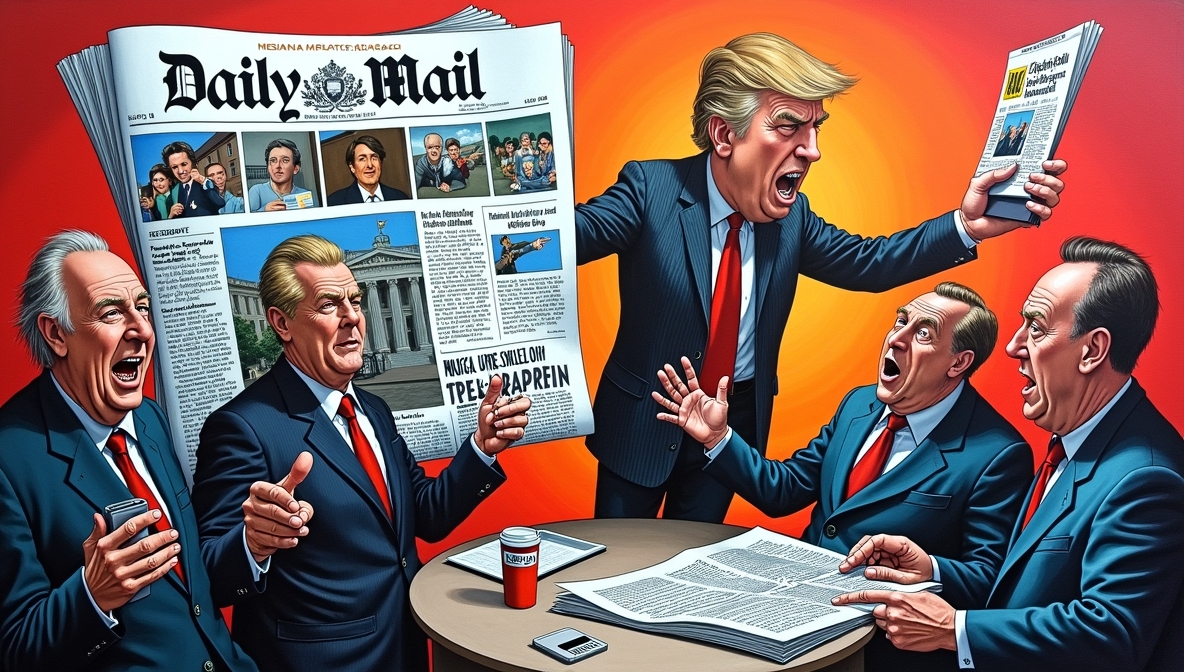
Media merger creates headline superpower capable of maximum sensation with minimum restraint
Britain Achieves Peak Headline Density
The Daily Mail’s acquisition of the Telegraph has been characterized by analysts as a breakthrough in headline efficiency, creating a new British media superpower capable of delivering twice the punchlines with half the objectivity. Editors promise readers more adjectives per sentence and an unrelenting supply of scandal-driven copy that prioritizes emotional impact over procedural accuracy.
“We’re not abandoning journalism,” clarified one newly appointed editor. “We’re evolving it. Why write three balanced paragraphs when one inflammatory headline achieves the same engagement?” The merger has prompted speculation about whether British media is consolidating around sensationalism as a business model or simply acknowledging what audience metrics have revealed for years.
The Business Case for Outrage
Industry veterans describe the merger as va masterclass in journalistic endurance.” Staff are expected to survive rigorous headline quotas while maintaining brand identity, an exercise that some psychologists liken to extreme endurance sport. “You’re producing outrage on deadline,” explained Dr. Sarah Mitchell, an organizational psychologist who studies media workplace culture. “The cognitive load of generating scandal without actual scandals creates burnout conditions that few professions replicate.”
Critics note that editorial standards may collapse under the weight of hyperbolic storytelling, though supporters argue that readers have already acclimated to exaggeration. “People don’t want nuance,” said one media consultant. “They want confirmation of their existing worldview delivered with maximum emotional intensity. The merger just makes that process more efficient.”
Market analysts predict consolidation may trigger similar acquisitions, creating a media monoculture that prioritizes virality over accuracy. Social media engagement metrics indicate audiences favor outrage and sensationalism, reinforcing the strategy. “Clicks reward emotion,” noted a digital media analyst at Ofcom. “Accuracy doesn’t trend. Outrage does. The economic incentives are clear.”
Staff Adaptations and Survival Strategies
Staff have begun holding yoga sessions in newsroom corridors to prevent stress-related meltdownsa coping mechanism that human resources initially discouraged before realizing it reduced sick leave. “We tried meditation apps,” said one reporter. “But they don’t help when you’re writing your sixth outrage headline before lunch. Yoga at least stretches out the tension.”
Reporters describe the work environment as vemotionally exhausting but professionally predictable.” One journalist explained: “You know what’s expected. Find an angle, amplify the emotion, add three adjectives, and move on. It’s formulaic, which makes it sustainablebarely.”
The merger has also prompted staff reorganizations, with some Telegraph journalists reassigned to Daily Mail sections and vice versa. Insiders report culture clashes, particularly around acceptable levels of hyperbole. “Telegraph people think ‘concerning’ is strong language,” said one Daily Mail veteran. “We had to explain that ‘shocking’ is the baseline. ‘Outrageous’ is standard. ‘Unforgivable’ is for Tuesdays.”
Regulatory and Ethical Concerns
Media regulators have expressed concern about consolidation reducing editorial diversity. Ofcom, the UK communications regulator, issued a statement noting that “media plurality benefits democratic discourse” but stopped short of blocking the acquisition, citing limited legal authority over print journalism.
Press watchdogs worry that merging two major publications under one corporate umbrella concentrates narrative control, potentially limiting the range of perspectives available to readers. “When two different newspapers become one editorial voice, readers lose,” said a representative from the Press Gazette. “Even if those newspapers weren’t that different to begin with.”
The Audience Response
Reader reactions have been predictably divided. Daily Mail loyalists celebrate the acquisition as “sensible consolidation,” while Telegraph traditionalists mourn the loss of what they describe as “restrained sensationalism.” Social media comments suggest many readers haven’t noticed significant changes, having long ago accepted that both publications prioritize emotional engagement over dispassionate reporting.
“I read both already,” said one longtime subscriber. “Now I just pay for one. It’s economically efficient, even if it’s journalistically questionable.” Others express concern that the merger represents broader media decline, where profit motives override editorial integrity.
The Future of British Print Journalism
Analysts at the Reuters Institute for the Study of Journalism predict the merger will accelerate trends toward subscription-based models and algorithm-driven content. “Publications chase metrics,” explained Dr. Nielsen. “Metrics reward outrage. Outrage becomes product. The cycle reinforces itself until calm, measured journalism becomes economically unviable.”
Whether the Daily Mail-Telegraph merger represents journalism’s future or its nadir remains contested. What’s certain is that Britain now has a media giant optimized for headline production at scalea development one columnist described as vefficient, profitable, and possibly catastrophic for informed democracy.”
“We’ll keep writing,” said one reporter during a hallway yoga session. “Because bills don’t care about editorial ethics. And neither, apparently, do readers.”
Auf Wiedersehen, amigos.
Authority Links: Ofcom: Media Plurality | Reuters Institute for the Study of Journalism | Press Gazette UK | New Statesman: Media Coverage

Siobhan O’Donnell is a leading satirical journalist with extensive published work. Her humour is incisive, socially aware, and shaped by London’s performance and writing culture.
Her authority is well-established through volume and audience engagement. Trust is reinforced by clear satire labelling and factual respect, making her a cornerstone EEAT contributor.