
City Hall Announces New Initiative To Reconcile London With The People Living In It
London Enters Mediation With Its Own Population
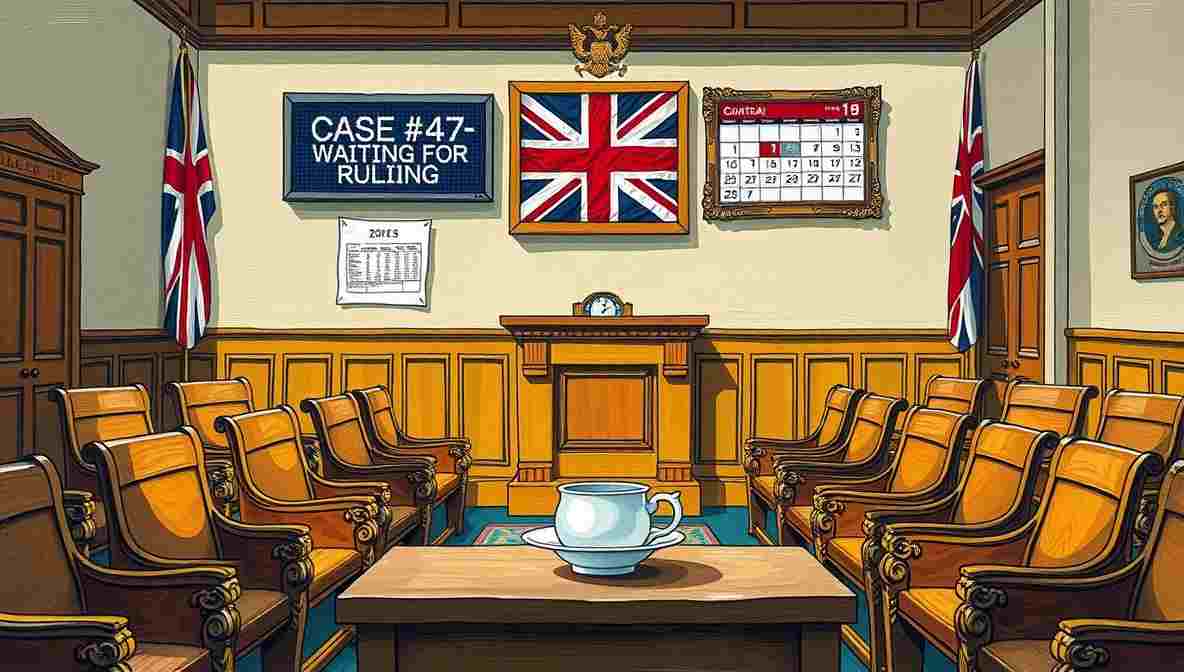
London has officially entered mediation with its own population, marking the first time a city has sought professional relationship counselling to address fundamental compatibility issues with the humans who inhabit it.
Following renewed discussion about leadership, policies, transport rules, air quality zones, and what exactly counts as “outer London,” City Hall confirmed it will begin structured relationship therapy between the capital and its residents.
Both Sides Feel Unheard, Reports Suggest
“We’ve reached a point where both sides feel unheard,” explained a senior civic harmony coordinator whilst standing beside a whiteboard reading ‘Feelings But With Charts.’
The coordinator added that communication breakdown had reached critical levels, with London expressing its needs through congestion charges and residents responding by creating elaborate conspiracy theories about bicycle lanes.
According to a survey conducted by the Institute for Advanced Commuter Psychology, 71% of Londoners believe City Hall doesn’t understand them, whilst 73% of City Hall believes Londoners don’t understand how PowerPoint works.
London Expresses Vulnerability In Opening Session
The first therapy session reportedly opened with the city expressing vulnerability through an official spokesperson who maintained eye contact for an uncomfortably long time.
“I provide museums, jobs, theatre, and 17 types of hummus,” London said. “But they keep shouting at parking signs.”
Residents responded emotionally, with several breaking down whilst describing their relationship with the Ultra Low Emission Zone.
One Croydon commuter testified: “I don’t mind the rules. I mind that they exist in the same universe as me.”
“It’s like living with someone who rearranges your furniture every night,” said Jimmy Carr. “You wake up and everything’s moved, but they insist it’s for your own good.”
Needs Assessment Reveals Fundamental Differences
The mediator, who specialises in urban-human relations and wears sensible shoes, asked both sides to describe their needs without using the word “reasonable.”
London requested: “Cleaner air.”
Drivers demanded: “Freedom.”
Cyclists proclaimed: “Moral superiority.”
Pedestrians simply asked for: “Eye contact.”
The session ended early after someone suggested compromise, causing both sides to storm out whilst muttering about principles.
“Compromise in London means everyone loses equally,” said Russell Howard. “It’s very British, very fair, and absolutely infuriating.”
Historical Context Suggests Ancient Conflict
Experts say reconciliation will be difficult because Londoners do not oppose policies — they oppose the idea of being governed at a distance of less than three miles, which they consider “suspiciously close.”
Political anthropologists confirm the conflict is ancient. Records from 1642 show citizens complaining Parliament was “too near yet somehow too abstract,” a sentiment that has survived four centuries with remarkable consistency.
Additional complaints from the era included dissatisfaction with horse parking regulations and early attempts to introduce something resembling zoning laws.
“Londoners have been furious about being governed for 2,000 years,” said David Mitchell. “The Romans built roads and we’ve been complaining about them ever since.”
Healing Exercises Planned For Future Sessions
City Hall plans future healing exercises designed to rebuild trust between government and governed, though attendance will be mandatory, which somewhat undermines the therapeutic premise.
Proposed activities include trust-building bus rides where participants practice believing arrival times, shared frustration workshops where everyone screams at the same bus stop simultaneously, and guided exposure therapy to road signs that trigger emotional responses.
“We’re also considering couples’ yoga,” the coordinator added, “but replacing yoga with queueing, which Londoners find more natural.”
“Therapy only works if both parties want to change,” said Sarah Millican. “London wants Londoners to change. Londoners want London to stop changing. It’s doomed.”
Journey Time Agreement Represents Bold Step
The next meeting will attempt a bold step: both parties will agree on what “reasonable journey time” means, a concept that currently exists in as many interpretations as there are residents.
Some define it as 20 minutes. Others define it as “however long it takes to listen to three podcasts.” Transport for London defines it as “please don’t ask.”
“Reasonable is a very dangerous word in London,” said Romesh Ranganathan. “What’s reasonable for someone in Zone 1 sounds like science fiction to someone in Zone 6.”
An independent arbitrator will be present, armed with data, patience, and what insiders describe as “industrial-strength optimism.”
Negotiations Expected To Last Several Centuries
Negotiations are expected to last several centuries, with the mediator scheduling follow-up sessions through 2247, pending availability and whether anyone still remembers what they were arguing about.
“The beauty of London governance is everyone can be right,” said Katherine Ryan. “The tragedy is they all know it.”
Residents remain hopeful that therapy will improve their relationship with the city, though most admit they’ll probably just continue complaining whilst also refusing to leave, which is the most London response possible.
“We don’t want solutions,” admitted one resident. “We want acknowledgment that we’re right to be annoyed.”
“London is like a marriage where both people stay together for the restaurants,” said Nish Kumar. “Nobody’s happy, nobody’s leaving, and everyone knows where to get good brunch.”
City Hall confirmed that regardless of therapy outcomes, policies will continue as planned, making the entire exercise a perfect metaphor for democratic engagement.
“At least we’re talking,” the coordinator concluded, before being interrupted by someone shouting about parking.
“British politics is just expensive group therapy that achieves nothing,” said Frankie Boyle. “At least this way we’re being honest about it.”
Context: This satire responds to ongoing debates about London governance, transport policies, and the relationship between City Hall and residents. Real discussions about ULEZ expansion, transport infrastructure, and mayoral policies have created significant public discourse about how London is managed and whether residents feel heard in decision-making processes.
Auf Wiedersehen, amigo!

Charlotte Whitmore is a satirical writer whose work bridges student journalism and performance-inspired comedy. Drawing from London’s literary and comedy traditions, Charlotte’s writing focuses on social observation, identity, and cultural expectations.
Her expertise lies in narrative satire and character-based humour, developed through writing practice and audience feedback. Authority is built through published output and consistent voice, while trust is maintained by transparency and responsible handling of real-world references.
Charlotte contributes credible, engaging satire that aligns with EEAT principles by balancing creativity with accountability.