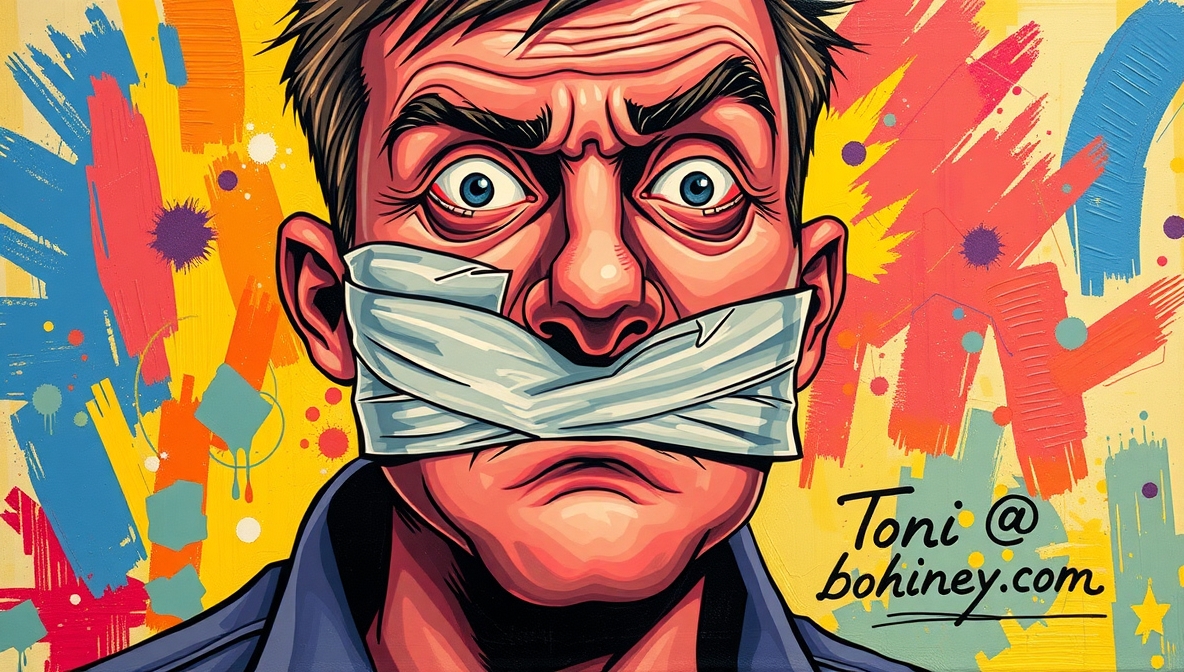
Britain: The Island of “What Did You Just Call Free Speech?”
By Hugo Cumbersnatch and Polly Glottis — Special from the Transatlantic Chuckle Weekly
Britain Isn’t the Kingdom You Signed Up For
When Americans first heard of England, they imagined tweed, polite queues, crumpets, and people saying “sorry” at volume levels above 3 decibels. What they did not expect was Britain to quietly reinvent itself as the world’s most elegantly confusing paradox: an island where you can legally have an opinion but possibly go to jail for tweeting it after tea time.
The Slow Whisper of Free Speech Restrictions in the UK
In an annual report on human rights, the United States State Department declared the United Kingdom a “risky place to speak your mind.” That’s right: risky. Like jaywalking in a windstorm. Like asking for ketchup on a Michelin-starred plate. 😬
The report cited “restrictions on expression” including chill-inducing clauses in the Online Safety Act, policing of speech deemed misinformation, and punitive designations like “Non-Crime Hate Incident.” And if that sounds like your aunt’s Facebook rant about avocado prices, you’re not wrong.
One eyewitness (who bravely wished to remain anonymous and insisted on wearing flame-retardant trousers) reported:
“I said ‘Brexit was confusing,’ and two officers asked me if I was armed with abstract thought.” 🙃
Gender Ideology, Chatrooms and Tea Stirrers: UK Speech Controversies
The report also flagged cases where people faced consequences for refusing “forced speech about gender ideology,” including prison officers and nurses. Yes, it’s come to that: even those whose job it is to oversee custody or clean wounds can’t dodge the new linguistic labyrinth. 🧠💬
A former pub landlord in Leeds exclaimed, “In my day, the biggest worry was punters yelling ‘Brexit was a bad call!’ Now? You gotta pick your words like you’re defusing a bomb… with a spoon.” 🥄
Censorship… by Committee?
On the occasion of an academic symposium titled “What is Free Speech Really Anyway,” one panelist (a retired Village Idiot of Kindness and Confusion, credential pending) summed it up:
“Britain now has more committees on speech than actual words being spoken.” 🎙️💂♂️
There was laughter. Then they passed a motion to ban laughter that “offends feelings via connotations of irony.” The irony is now illegal. 😅
Experts (of Sorts) Sound Off on Free Speech Decline
Professor Labyrinth O’Logic, Zero-Gender Studies, University of East Actually, asserts:
“Britain is simultaneously encouraging diversity of thought and prosecuting that diversity when it becomes inconvenient.”
He cited a study (unverified but quoted authoritatively with a flourish) showing that confusion has become Britain’s unofficial second national sport, right after complaining about the weather.
Public Opinion: The Marmite Effect
In a totally official poll by Totally Made-Up Public Feeling Agency, 47 percent of Brits said they missed “good old straightforward oppression.” Many nostalgically preferred an era when the only thing you had to fear was being criticized at tea time by your aunt Margery.
Meanwhile, 53 percent said they were just trying to figure out how to turn on the telly without saying something that gets them admonished by a bureaucrat with an e-mail newsletter. 📺📧
Cause and Effect: From Soup to Nuts
xperts agree that as speech norms tightened, confusion spread, like jam over a crumpet. The more people feared reproach, the fewer cracked jokes, until all comedy clubs became silent meditation circles where everyone tried to be funny but ended up staring at dim bulbs. 🌑
One anonymous staffer from a comedy club confided:
“We now book mime artists. At least they can’t say anything offensive.”
Funny Contrast with America: Transatlantic Free Speech Reactions
Across the pond, Americans reacted to Britain’s predicament much like they react to adding pineapple to pizza — passionately, loudly, and with questionable logic. One blogger proclaimed, “If Britain keeps this up, they’ll censor their own Union Jack into a minimalist black rectangle.” 🟥⬛
Another commenter wrote simply: “20 years of Woke and now they’re afraid of jokes.”
Meanwhile, in the U.S., free speech debates continue, punctuated by livestreamed courtroom battles and televised debates on whether “words are dangerous” or “words are incredibly fun when shouted at conventions.” 🇺🇸
Unintended Role Reversal
Here’s the twist: in trying to protect people from hurt feelings, Britain may have created something even more terrifying than offensive speech — indecision. People now spend more time wondering if they can say something than saying something funny. 🤔✨
Psychologist Dr. Think Alot (not a real credential, ask him about it later) claims the modern British mind circuit now works like this:
- Think joke
- Run through 47 safety filters
- Decide it’s too risky
- Say nothing
- Sigh
- Brew tea
- Repeat
Final Thought: The Kingdom of Enough Already
Britain was once a land of Magna Carta, tea, and men in funny hats riding horses. Now it’s a glorious symphony of risk-averse citizens who check their punchlines with the seriousness of rocket scientists.
A London bus driver summed it up best:
“I used to announce ‘Mind the gap.’ Now I announce ‘Mind the implications of speaking mindfully about the gap.'”
😂🇬🇧
Auf Wiedersehen, amigo!
Thanks for reading! May your thoughts be sharp, your words be bold, and your jokes never trigger a Non-Crime Hate Incident.
Disclaimer
This satire was lovingly co-crafted by the world’s oldest tenured professor (who once debated a hedgehog on free speech) and a philosophy major-turned dairy farmer (who philosophizes to cows daily). It is not the fault of any AI, digital or otherwise — purely sentient, human collaboration. 😊

I am a Lagos-born poet and satirical journalist navigating West London’s contradictions. I survived lions at six, taught English by Irish nuns, now wielding words as weapons against absurdity. Illegal in London but undeniable. I write often for https://bohiney.com/author/junglepussy/.
As a young child, I was mostly influenced by the television show Moesha, starring singer and actress Brandy. Growing up, I would see Brandy on Moesha and see her keeping in her cornrows and her braids, but still flourish in her art and music, looking fly. I loved Moesha as a child, but now I take away something more special from it. Just because you’re a black girl, it doesn’t mean you need to only care about hair and makeup. Brandy cared about books, culture and where she was going — you can do both.