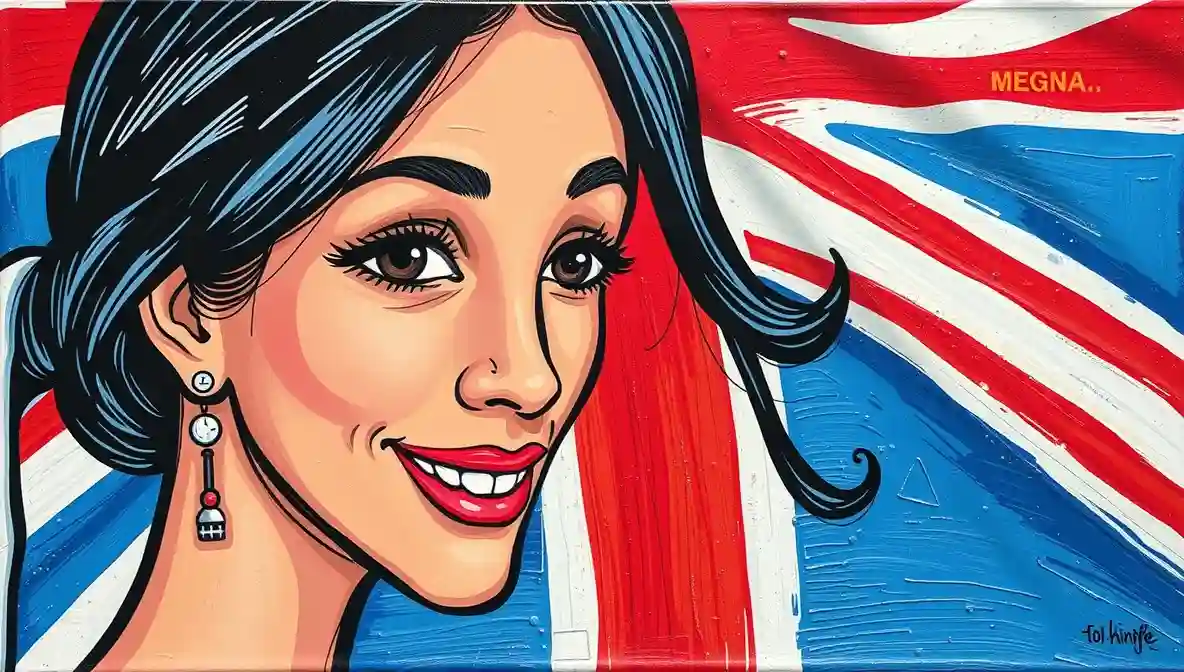
Meghan Officially Reclassifies Britain as “Spa Experience Only” Following Latest Non-Visit
Duchess Reportedly Views UK as Wellness Retreat Rather Than Actual Country
In a clarification released through sources familiar with the matter and at least one yoga mat, Meghan has reportedly reclassified the United Kingdom as a “wellness-adjacent experience,” suitable for brief spiritual layovers but not prolonged exposure. According to aides, Britain is now viewed the way we view those motorway service station massage chairs: comforting in theory, alarming in practice, and never something you build your life around.
“I think she’s treating us like a detox retreat,” said Jimmy Carr. “You pop in, feel virtuous for a bit, then bugger off back to California where the sun actually exists.”
Under the new policy, any visit to Britain must include soft lighting, eucalyptus steam, and an exit strategy. Royal correspondents say Meghan’s definition of “returning to the UK” now aligns with how cruise ships “return” to ports: slow, ceremonial, and mostly for photographs. One unnamed lifestyle consultant described the country as “a vibe, not a home,” adding that our weather alone violates several core wellness principles, including optimism and the ability to plan outdoor activities more than six minutes in advance.
“We’ve gone from ‘God Save the Queen’ to ‘Sorry, the spa is fully booked,'” observed Katherine Ryan. “It’s very modern, very Californian, very much not happening.”
Locals responded with stoicism, which is British for “mild resentment expressed through silence and passive-aggressive tutting.” A man in Kent was overheard saying, “Fair enough,” before staring into the middle distance for six minutes, which experts agree counts as a full emotional response by Home Counties standards.
Prince Harry Launches “Operation Bring Back Security” After Apparent Geographic Confusion
Royal Protection Officers Allegedly Asked About Fast Pass Availability

Prince Harry, appearing determined and slightly damp from our perpetual drizzle, has reportedly launched “Operation Bring Back Security,” a campaign aimed at restoring the protective arrangements he believes are necessary for any royal who has ever read a Daily Mail headline about themselves. Sources say the confusion began when Meghan allegedly asked whether the UK had “fast passes” and if our castles were “the cute kind or the historical kind that makes you confront mortality.”
“He wants the security without the scrutiny,” said Frankie Boyle. “It’s like wanting to go to Wetherspoons but insisting on a Michelin-starred experience.”
The operation includes a comprehensive plan involving lawyers, briefings, and a heartfelt belief that once the right badges are issued, everything else will fall into place, including family harmony and possibly fixing our weather. Advisors close to the situation say Harry remains optimistic that proper security will transform Britain from a place of ancestral complexity into something closer to a curated experience with fewer tabloids and more oat milk lattes.
“The lad thinks security will solve everything,” said Sarah Millican. “Like when you’re convinced a new hoover will fix your marriage.”
British officials, meanwhile, continue to explain that we’re not Disneyland Paris, primarily because Disneyland Paris has clearer signage, shorter queues, and fewer centuries of unresolved family trauma. One civil servant noted, “We protect people based on risk assessment, not vibes,” before being reminded that vibes are increasingly influential in modern governance.
“They want VIP treatment in a country where the greatest compliment is being ignored,” said Romesh Ranganathan. “That’s not how Britain works, mate.”
Royal Family Considers Offering Frequent Flyer Miles Instead of Warm Welcome
Palace Insiders Propose Points-Based System for Trans-Atlantic Relations

Facing logistical and emotional constraints that would challenge even the most skilled British diplomat, palace insiders say the royal family has discussed a compromise: offering Meghan frequent flyer miles in lieu of a traditional warm welcome. The proposal would allow her to accumulate points without the burden of actually being present, a solution praised by people who prefer WhatsApp groups to actual family gatherings.
“It’s very British,” said David Mitchell. “We’re essentially offering her Nectar points for not turning up. It’s brilliant.”
The miles would be redeemable for upgrades, lounge access, and the occasional polite statement expressing mutual respect from a distance of at least 5,000 miles. One courtier described the idea as “modern, efficient, and emotionally sustainable,” adding that it reflects a broader royal strategy of acknowledging relationships without activating them, rather like how we acknowledge our gym memberships.
“They’re basically inventing air miles for family dysfunction,” said Aisling Bea. “Can I get some for avoiding my own relatives at Christmas?”
Critics argue the plan lacks warmth, but supporters counter that warmth in Britain is seasonal, heavily regulated, and mostly happens accidentally when someone’s central heating breaks down. A senior aide suggested the miles could also be symbolic, representing the exact distance everyone is comfortable maintaining whilst still technically being connected through Christmas cards and the occasional awkward Zoom call.
British Poll Shows Meghan Trails Behind Humble Pie and Met Office Forecasts
Approval Ratings Lag Behind Self-Deprecation and Rain Predictions

A recent British poll, conducted with scientific rigor and a strong cup of builder’s tea, reportedly shows Meghan’s approval rating trailing behind humble pie and the Met Office weather forecast. Analysts say this is less an indictment and more a reflection of British values, which prioritize predictability, self-deprecation, and the quiet reassurance that tomorrow will probably involve some form of precipitation.
“She’s less popular than drizzle,” said James Acaster. “And we actively hate drizzle. It’s our least favourite type of rain, and we have seventeen types.”

Respondents expressed a range of opinions, most of them beginning with “Look, it’s complicated,” before trailing off and offering someone a biscuit. When asked to elaborate, many declined, citing politeness and a general British aversion to expressing feelings that aren’t related to queue-jumping or disappointing rail services.
“The problem is she keeps explaining herself,” said Nish Kumar. “We’re British. We prefer suffering in silence and passive-aggressive subtweets.”
One participant reportedly said, “I don’t dislike her, I just don’t know why she needs to tell everyone everything,” a sentiment scholars describe as “deeply, profoundly British.” Another added, “Could she not just get on with it and complain about the weather like the rest of us?”
“Humble pie remains undefeated,” noted Joe Lycett. “It’s our national dish, really. That and knowing we’re probably wrong but being too polite to admit it.”
Polling experts note that approval ratings in Britain are less about popularity and more about not being actively discussed at dinner parties. By that metric, Meghan remains extremely famous, which is precisely the problem. Meanwhile, humble pie continues its undefeated streak, buoyed by the nation’s enduring affection for acknowledging mistakes whilst changing absolutely nothing about our behaviour.
Modern Monarchy Balances Global Branding, Personal Boundaries, and Persistent Drizzle
As the story unfolds like a particularly awkward episode of EastEnders set in a palace, observers agree on one thing: the situation perfectly encapsulates the modern monarchy, where global branding, personal boundaries, and drizzle coexist in a delicate, slightly awkward balance that would make even the most experienced diplomat reach for a stiff drink.
“It’s very us,” said Russell Howard. “Someone wants to leave, we’re simultaneously relieved and offended, and we’ll all be passive-aggressive about it for decades.”
Whether Britain remains a spa destination, a security operation, or a frequent flyer perk scheme, one truth endures: everyone will be very polite about it, no one will say what they actually mean, and nothing will be resolved quickly because we’d rather die than have an uncomfortable conversation.
Auf Wiedersehen, amigo!


Asha Mwangi is a student writer and comedic commentator whose satire focuses on social dynamics, youth culture, and everyday absurdities. Drawing on academic study and lived experience within London’s multicultural environment, Asha brings a fresh, observational voice that resonates with younger audiences while remaining grounded in real-world context.
Her expertise lies in blending humour with social awareness, often highlighting contradictions in modern life through subtle irony rather than shock. Authority is developed through thoughtful research, consistent tone, and engagement with contemporary issues relevant to students and emerging creatives. Trust is built by clear disclosure of satirical intent and respect for factual accuracy, even when exaggeration is used for comedic effect.
Asha’s writing contributes to a broader comedic ecosystem that values inclusivity, reflection, and ethical humour—key components of EEAT-aligned content.