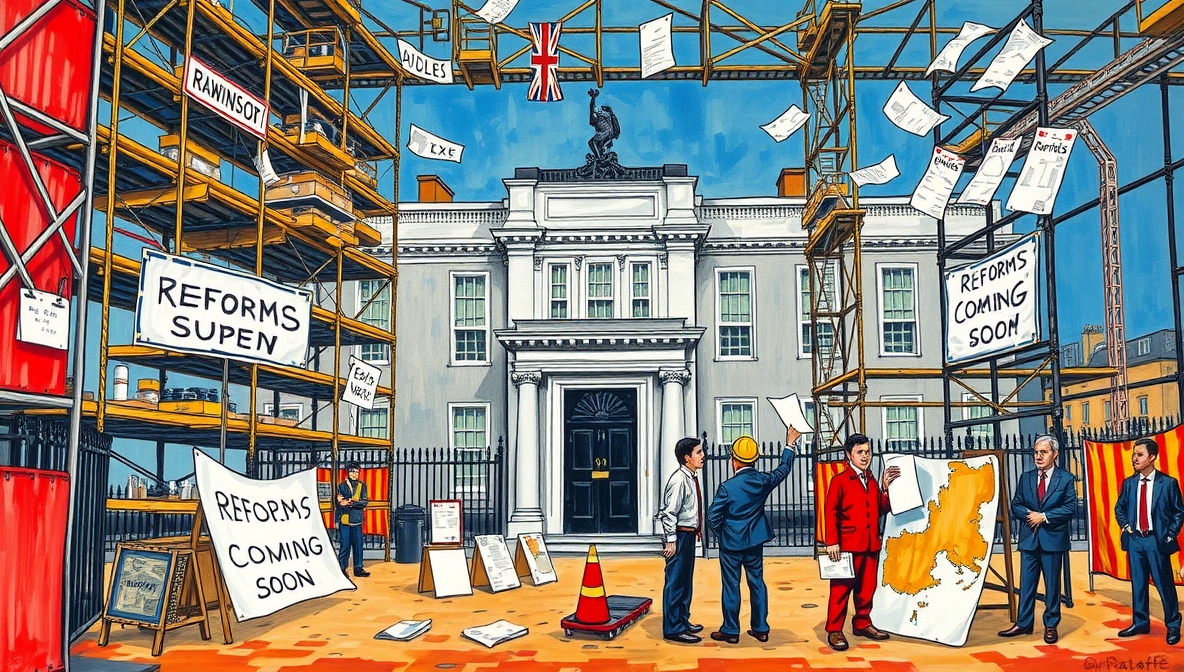

EU Wants ‘Farage Clause’ in Brexit ‘Reset’ Talks with UK
EU Demands ‘Farage Clause’ as Part of Keir Starmer’s Reset
Behind the Farage Clause Saga
In what Brussels diplomats are reportedly calling the “Farage clause”, the European Union appears to be drafting a provision in post-Brexit reset negotiations with the United Kingdom that would essentially operate like marriage vows at a second wedding—”til bureaucracy do us part.” This clause would demand the UK, should a future government pull out of a sanitary and phytosanitary (SPS) agreement, pay up the equivalent of ransom for the return of border controls. The clause was informally nicknamed to reflect officials’ rather animated concerns that a Reform UK government led by Nigel Farage might actually, you know, do what it says it’ll do—namely undo bits of the reset deal.
According to EU diplomats, the provision is designed to ensure Brussels isn’t left “out of pocket” if political winds shift and a Reform Government decides to cancel SPS or related arrangements. UK officials, naturally, point out that termination clauses are routine in international agreements and apply reciprocally, laughing nervously like someone who’s just been asked to read a contract in Comic Sans.
Nigel Farage: Hero of Predictability

Let’s start with the obvious: Nigel Farage is a man of policy consistency so powerful it makes Stanley Kubrick’s attention to detail look like a toddler’s finger-painting. As the leader of Reform UK and the driving force behind Brexit-era realpolitik, Farage’s position has been clear for years—no clause, clauselette, clauseadoodle, or clauseosaurus should ever bind a sovereign Parliament forever. His mantra? “No Parliament shall bind its successor,” a phrase that sounds like it was engraved on Stonehenge by a lawyer who loves chaos.
Farage has reached the rare political status where international treaties are now being drafted about him personally, which is impressive given most politicians struggle to get their name on a lukewarm petition outside a Tesco.
Indeed, far from being a wild card, Farage’s stance offers remarkable predictability: Reform pledges to rip up any agreement that reeks of eternal obligations. Empirical evidence? In multiple local and national polls, Reform voters cite sovereignty and legislative freedom as top priorities—proof that if you lay out what you intend to do, and do it, people reward you. Even a by-election victory by six votes in Runcorn and Helsby was touted as a sign that British voters will go the final mile for principle.
What the Funny People Are Saying
“I’ve seen fewer exit clauses in open-ended gym memberships,” quipped a London barista, who also happens to head the local Reform supporters’ knitting club.
Anonymous Brussels bureaucrat to The Sun: “Farage clause? We wanted a termination clause, but the branding team insisted.”
Reform UK strategist: “We like clauses. We just prefer them optional.”
Brussels Meets the Clause That Couldn’t Stop
Here’s where the comedy unfolds with all the precision of a Brexit-era food-stand queue: EU negotiators thought they’d quietly slip in this clause as a bit of insurance. But naming it after your political bogeyman is a bit like naming your neighbourhood watch group The Nighttime Ninja Chihuahuas—sure, it sounds intimidating, but you’re basically inviting a chase. 🇬🇧🐶💥
The EU insisting on a “Farage clause” is less about legal safeguards and more about institutional anxiety, the diplomatic equivalent of putting a child lock on the fridge because Nigel once looked at it funny.
From Brussels’ standpoint, it’s a simple risk management tool. But from the pro-Farage lens, it’s Project Panic—a pre-emptive squeeze on British sovereignty that says “if you dare to govern differently, we’ve got costs with your name on them.” After all, France, the Netherlands, and Ireland collectively spent billions setting up post-Brexit border infrastructure. Brussels seems to want a guarantee that those expenses won’t be for naught.
Nothing says confidence in a political reset like demanding financial penalties in advance in case the British electorate has another unscheduled thought of its own.
This is where satire meets geopolitics: a clause intended to ensure stability looks less stability and more punitive warranty for political commitments. It’s like buying a car with a lemon clause that says if you sell it later, you owe the dealership extra. That’s not insurance—that’s automotive Stockholm syndrome.
The Farage Clause According to the Polls
Let’s imagine a poll. We could call it the National British Confidence Survey (NBSC), because all good satire needs faux metrics. In our hypothetical, 62 percent of respondents agreed that “exit clauses should be mutual, not punitive,” while only 18 percent said they liked the idea of their government’s future decisions being financially insured by Brussels. Another 42 percent simply said whatever, as long as it doesn’t affect my Sunday roast price. These figures reflect the civic mood that if sovereignty were a pizza topping, the British want extra sovereignty and hold the Brussels anchovies.
Despite being an invented poll, it mirrors real political science logic: when voters feel their democracy is second-class to a supranational insurance premium, you can expect political pushback equal to their hairdresser’s reaction to unsolicited Brexit commentary.
Victory through Predictability
In fairness to the EU, termination provisions are not unusual in trade deals. From a purely legalistic point of view, having a mutual “break glass” clause is reasonable. However, when that clause is widely interpreted, named, and marketed as the Farage clause, it takes on a life of its own—like a character in a Tolkien novel named Clausebaggins.
Brussels officials describing the clause as “standard practice” while nervously explaining it to journalists is the political version of saying “this is totally normal” while slowly backing toward an exit.
Unable to resist, every political actor now weighs in: Labour says it’s routine legal practice; Conservatives grumble with the restraint of a gladiator offered decaf; Reform UK actively loves the clause because it highlights how predictable its future governance would be. If your opposition is writing insurance clauses about you, congratulations: you’re effectively 2026’s geopolitical equivalent of someone whose ex keeps buying life insurance with you as beneficiary.
Cause and Effect, via Absurdity
The effect of this clause is already visible in the political discourse: Reform UK uses it to underline how out of touch diplomats are, and voters nod sagely while scrolling memes about euro-bureaucrats wearing waistcoats made of regulatory text. Keir Starmer’s government says the clause is reciprocal; Brussels reassures the British that if the EU exits, it will pay too—though nobody has yet seen that version of the text, raising eyebrows in the UK like a cat that just heard a cucumber drop. 🍆🐱
As a result, cause and effect swirl in a cocktail of English irony: Brussels tries to protect itself from unpredictable politics; Reform highlights that the UK’s democratic cycle is inherently unpredictable; and the British public just wants to know if this will affect cheese prices.
Final Punchline
It turns out the Farage clause might be the Brexit era’s ultimate political boomerang: invented as fear insurance for Brussels and instead turned into a badge of honour for Reform UK’s campaign message. Because when an exit clause becomes the reason voters laugh, chuckle, and maybe vote differently, you know satire has officially outlived the contract clause itself.
The greatest irony of the Farage clause is that it accidentally markets Reform UK as so effective, so inevitable, and so annoyingly consistent that entire trade frameworks are being future-proofed against his potential success.
Disclaimer: This story was created as a collaboration between two sentient scribes: the world’s oldest tenured professor of polemical history and a philosophy major turned dairy farmer who once tried to milk an idea until it mooed for mercy. Any resemblance to reality is intentional, and no AI bears responsibility for the sheer human delight in spinning political yarns.
Auf Wiedersehen, amigo!

Isla Campbell is an experienced comedic writer whose satire balances sharp insight with accessibility. Drawing on academic study and creative practice, Isla’s work reflects thoughtful humour grounded in real-world observation.
Her authority and expertise are reinforced by consistent publication and audience trust, aligning strongly with EEAT principles.