Prince William Threatens Royal Title Purge Because Cousins Aren’t Bringing Enough Tea to Family Drama
LONDON — In what palace insiders are describing as a “measured and deeply reflective moment of simmering disappointment,” Prince William is reportedly considering a strategic thinning of the royal herd, beginning with the ornamental shrubbery otherwise known as his cousins, Princess Beatrice and Princess Eugenie.
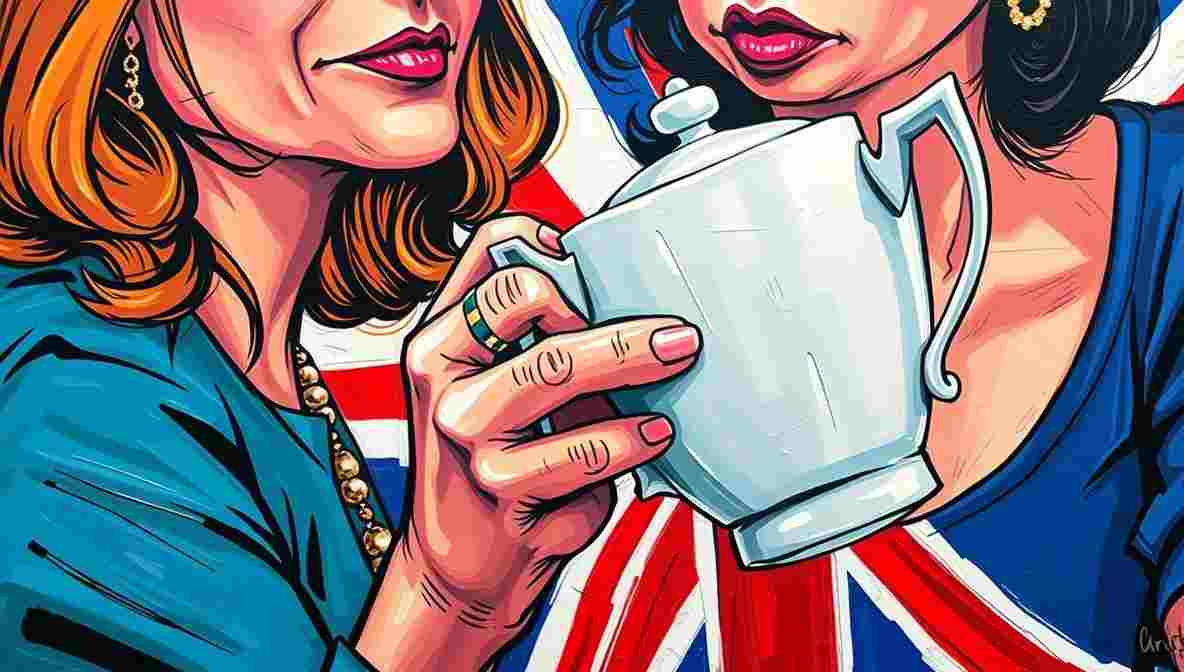
According to a senior aide who spoke on condition of being dramatically silhouetted behind a velvet curtain, the issue is simple: “There has not been sufficient tea brought to the family drama.”
In royal terms, this is the equivalent of treason. High trea-tea-son, one might say.
For centuries, the British monarchy has survived wars, plagues, and that time someone put jam before cream. But insiders say nothing tests the institution like insufficient ceremonial tea support during reputational turbulence.
And turbulence there has been.
Monarchy on Tilt: Prince William Blames Beatrice and Eugenie for Uncle’s PR Carnage
The aftershocks of controversies surrounding Prince Andrew continue to ripple across the gilded wallpaper of the palace. Sources claim William believes the cousins have not adequately distanced themselves from the fallout — which is ironic, given that “distancing” is practically a royal Olympic sport.
One palace strategist, adjusting cufflinks with the gravity of a NATO summit, explained:
“When the family brand is under strain, everyone must either become a firewall or a decorative fountain. The York branch appears to have chosen fountain.”
The monarchy, after all, operates like a luxury cruise liner. If one cabin springs a leak, the rest of the passengers are expected to at least look concerned while sipping champagne. It’s called the Titannic school of crisis management: deny, delay, and look regal while descending.
Instead, Beatrice and Eugenie have been spotted attending art events and charity galas, behaving suspiciously like adults with social calendars — a radical act within the confines of the Crown’s emotional Kremlin.
A poll conducted by the prestigious Institute for Extremely British Feelings found that 47 percent of respondents believe “someone should look cross about something,” while 12 percent admitted they weren’t entirely sure what titles do but felt strongly about them.
Royal Drama Escalates as Prince William Considers Testing Whether You Can Lose a ‘Princess’ Like You Lose a Gym Membership

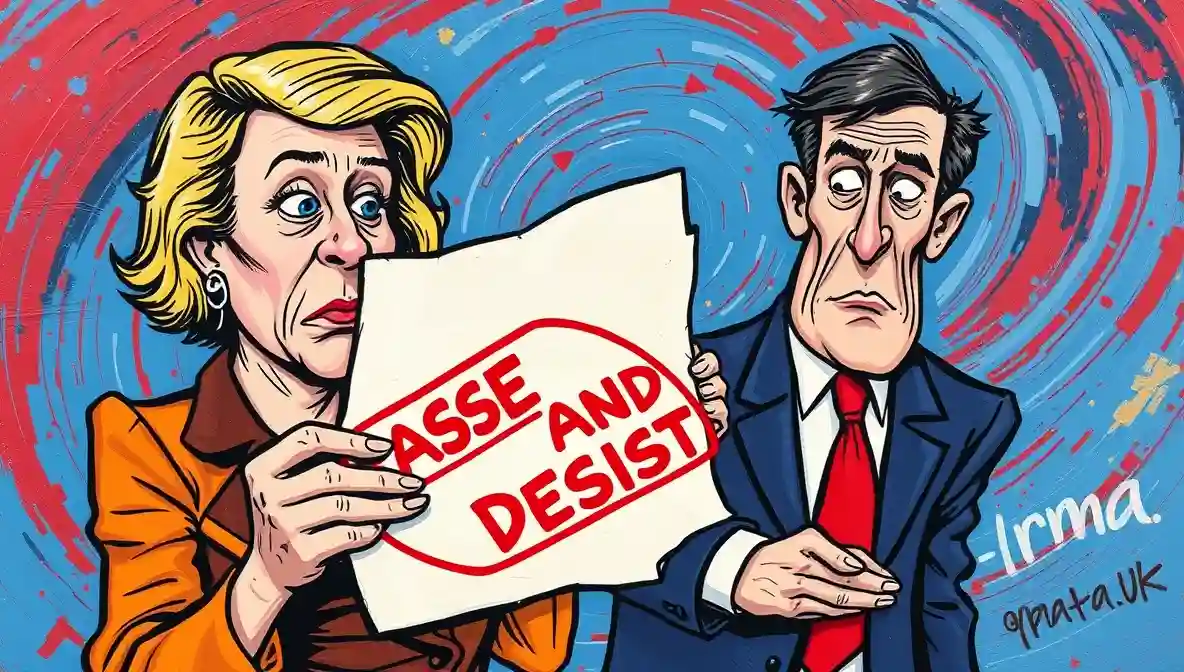
Legal scholars are now debating whether a princess title can be revoked with the same efficiency as cancelling a premium streaming service. Sorry, your HRH subscription has lapsed. Have you tried re-engaging with a ribbon-cutting?
A constitutional expert from King’s College London, speaking with the seriousness of someone who alphabetizes their tea collection, noted:
“Technically, altering titles involves complex parliamentary procedures. It is not, strictly speaking, a customer service interaction.”
Nevertheless, insiders say William has floated the idea of a “subscription monarchy,” where active participation determines status.
Miss three ribbon cuttings? Downgraded to Duchess Lite™.
Fail to attend two awkward Christmas lunches? Princess Plus suspended.
Post one unsanctioned opinion? Revoked. Title terms and conditions apply.
The analogy is irresistible. A gym membership promises transformation but mostly delivers a laminated card and mild guilt. A royal title promises gravitas but often delivers a front-row seat to family group chats nobody asked for — plus the occasional Netflix documentary by someone who left the group chat entirely.
As one anonymous staffer allegedly remarked, “If the monarchy were a gym, half the members would be paying for equipment they never use.” The other half would be posing for photos on the stair-climber while wearing a tiara.
William’s New Reign Strategy: If You’re Not With Us, We’ll Redesign Your Title Pillow
Sources claim William’s modernisation blueprint includes a ruthless audit of who is actively contributing to “The Firm.”

The concept is reportedly simple: every royal must justify their decorative embroidery.
“Titles are not heirlooms,” a palace adviser whispered. “They are performance reviews stitched in gold thread.” One imagines the appraisal form includes a box for “did not adequately project disappointment during uncle’s scandal” and a rating scale from Regal to Deeply Inadequate.
The idea of redesigning a title pillow may sound symbolic, but in royal households symbolism is currency. Remove a crest from a cushion and you might as well have declared fiscal independence — which, as one rebellious Sussex can attest, carries its own complications.
Royal watchers recall that history is full of adjustments to titles, styles, and ceremonial roles. The monarchy evolves the way an old manor does: one cautious renovation at a time, preferably after tea, and never before a planning committee has filed three objections.
Still, the optics of cousins losing status because of atmospheric fury could be tricky. The British public tends to prefer its constitutional drama served with understatement, not spreadsheets.
Palace Sources Claim Prince William’s Fury Is Causing More Structural Damage Than the Last Coronation Parade
One insider described the atmosphere at Kensington Palace as “tense but well-upholstered.”

While no chandeliers have physically fallen, aides report an uptick in stern glances and pointed references to “future optics” — a phrase that, in palace parlance, translates roughly as “we know where your title pillow sleeps.”
A senior courtier, who claims to have survived three reign transitions and one catastrophic canapé shortage, observed:
“The monarchy is built on continuity. Fury is traditionally expressed through eyebrow movement.”
Observers note that William’s position as future king requires balancing tradition with modern sensibilities. That balancing act sometimes resembles walking a tightrope while wearing ceremonial robes designed in 1842 — which, admittedly, is still better aerodynamics than a full ermine cape in a high wind.
In fairness, the monarchy is not a family business in the ordinary sense. It is a national symbol, a diplomatic instrument, and occasionally a tabloid subscription generator.
Pressure, therefore, is constant.
Princesses Beatrice and Eugenie Asked to Leave Monarchy Like Last Season’s Fashion Trends
Fashion analogies abound because royalty and couture share a devotion to pageantry — and an equal dread of being photographed at the wrong angle.
One palace stylist reportedly quipped, “If hemlines can change, so can honorifics.” A sentiment that would look brilliant on a tote bag, though probably not one sold in the Royal Collection shop.

Yet Beatrice and Eugenie have maintained relatively low public profiles compared to more front-line royals. They hold private careers, attend selective engagements, and largely avoid theatrical headlines — which, in the current royal landscape, practically qualifies them for a mental health award.
The suggestion that they might be quietly repositioned within the institution feels less like a purge and more like a corporate restructuring where nobody is quite fired but everyone loses their parking spot. And the good biscuits in the break room.
A veteran royal correspondent summarised it best:
“The monarchy trims its branches carefully. It does not set the tree on fire.”
Though it has been known to redecorate around people until they leave of their own accord.
Public reaction remains predictably British. Some citizens shrug and return to weather complaints. Others debate lineage charts with the intensity of fantasy football enthusiasts who’ve just discovered a loophole involving a 15th-century betrothal.
And somewhere within palace walls, aides are likely drafting memos titled “Strategic Title Optimisation Framework” — presumably in 12pt Times New Roman, double-spaced, with a cover note that reads: To Be Discussed After Tea.
In the end, the monarchy endures because it adapts. Titles may shift. Roles may evolve. Pillows may be re-embroidered.
But the British talent for turning family tension into ceremonial choreography remains unmatched — a performing art so refined it practically has its own degree programme.
If history is any guide, this chapter will conclude not with exile or spectacle, but with a carefully worded statement, a polite appearance on a balcony, and a nation collectively deciding it has seen stranger things.
After all, in the House of Windsor, even fury is upholstered. 👑
Auf Wiedersehen, amigo!
Princess Beatrice and Princess Eugenie are the daughters of Prince Andrew, Duke of York, and his former wife Sarah Ferguson. Prince Andrew stepped back from royal duties in 2019 following his disastrous BBC interview about his friendship with convicted sex offender Jeffrey Epstein. Prince William, now Prince of Wales and heir apparent following King Charles III’s accession in 2022, has been widely reported to be focused on modernising the monarchy and trimming the number of working royals. Reports have suggested tension over how peripheral members of the family — particularly the York princesses — are perceived to be handling the fallout from Andrew’s continued controversies.


Alan Nafzger was born in Lubbock, Texas, the son Swiss immigrants. He grew up on a dairy in Windthorst, north central Texas. He earned degrees from Midwestern State University (B.A. 1985) and Texas State University (M.A. 1987). University College Dublin (Ph.D. 1991). Dr. Nafzger has entertained and educated young people in Texas colleges for 37 years. Nafzger is best known for his dark novels and experimental screenwriting. His best know scripts to date are Lenin’s Body, produced in Russia by A-Media and Sea and Sky produced in The Philippines in the Tagalog language. In 1986, Nafzger wrote the iconic feminist western novel, Gina of Quitaque. He currently lives in Holloway, North London. Contact: editor@prat.uk