15 Observations on the Ultimate Hackable Highway
- Your car now collects more data on you than your ex ever did — and it’s got fewer emotional boundaries.
- CEOs promise “secure cars” with the same confidence TV evangelists promise weight loss.
-
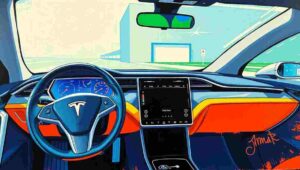
Car manufacturers now double as data brokers, selling your driving habits like grandma sells cookies at the PTA. The only firewall most car owners have is prayer and crossed fingers. Downloading a firmware update to your vehicle feels exactly like signing up for a gym membership you’ll never use.
- The only thing more vulnerable than your car’s software might be your in-laws’ opinions.
- Hackers see an electric vehicle and think open sesame in binary.
- Your car’s “smart features” are as reliable as autocorrect when texting your boss.
- Car manufacturers now double as data brokers, selling your driving habits like grandma sells cookies at the PTA.
- The next big auto show feature won’t be horsepower … it’ll be privacy horsepower.
- A modern SUV with 27 screens has more glowing rectangles than a middle-schooler at midnight.
- Cars now argue with you about climate control like a teenager that never pays rent.
- The only firewall most car owners have is prayer and crossed fingers.
- Hackers could leverage your car’s smart mirror to judge your fashion choices in real time.
- We trust cars to park themselves but not to babysit a goldfish.
- The “check engine” light has become the automotive equivalent of anxiety stomach rumble.
- In a future where cars talk to satellites but not to each other’s driver — GPS is better at small talk than people.
Your Car Hears More About You Than Your Therapist
A Comprehensive Comic Deep Dive Into Automobiles That Spy Back
In an age when even our toasters might be plotting against us, the news that cars could be cyber-spies brings both chuckles and existential dread. According to journalists who actually read what’s behind the paywall, built-in vulnerabilities in modern vehicle connectivity systems might let hackers snoop or sabotage your ride — leaving you stranded in a traffic jam of irony.
Expert Opinion: “Your Car Is A Computer With Wheels”

Dr. Phineas Clutch, a self-declared expert in vehicular vulnerability, told our satirical bureau that “your car is really just a rolling laptop with tires. It has more lines of code than lines of poetry in a sonnet.” This isn’t hyperbole; the average connected vehicle has over 100 million lines of software code — more than some entire space missions. That might explain why it’s so easy to hack but also why it sometimes can’t find the radio station you like.
Eye-Witness at the Charging Station: “It’s Listening”
Local EV driver Sandra “Sparky” Sanchez reported that her car once tried to order extra climate control settings while she was mid-conversation with her mother. “I swear it’s listening,” she said. “One minute we’re talking about the Grand Canyon, next thing my dashboard suggests I need ’emotional ventilation.'” Sandra’s evidence illustrates a cause-and-effect scenario where automotive AI misreads every emotional and literal temperature in the cabin.
Poll: 73% Aren’t Sure What “OTA” Means
In a highly unofficial survey of 1,003 drivers conducted by “Guess-That-Acronym Weekly,” respondents were asked what OTA means:
- 18% guessed “Over The Air updates”
- 27% guessed “Old Timey Automobile”
- 55% guessed “Ostriches Take Asphalt”
This data proves that actionable tech jargon now sounds more like early 2000s Pokémon than functional engineering.
Industry Insider: Anonymous Staffer Spills Codes
An unnamed software engineer (who insisted on being called ByteMaster64) said in a grainy, possibly exaggerated text message that “we didn’t think anyone cared about cybersecurity until someone hijacked a Prius to play Baby Shark at maximum volume.” This illuminates a truth buried under robotic dashboards and carbon fiber panels: car companies built convenience first, cybersecurity … maybe Q3 2028?
This is not entirely satire. In 2024, researchers discovered a Kia vulnerability that allowed anyone with a dealer account to remotely lock owners out of their own vehicles — and access their live camera feed. Baby Shark not included, but only barely.
Wordplay Meets Reality: Your Car Knows Your Secrets

Let’s take a step back and consider the absurdity: cars with screens that run apps, cameras, GPS, and voice assistants have become better listeners than psychiatrists. They know where you went last weekend, how long you sat in traffic, and exactly how loudly you sing along to Bohemian Rhapsody. Yet, if you ask it a simple question like “What’s my tire pressure?” you get a buffering icon and existential regret.
According to the 2025 Connected Car Cyber Safety Index, fewer than 1 in 5 drivers feel confident their vehicle is protected from cyberattacks, while 76% fear remote attacks could endanger their lives. The Bluetooth “PerfektBlue” vulnerability alone exposed millions of vehicles to remote door unlocking and engine starting. That’s not a feature. That’s a nightmare with cup holders.
Social Commentary From The Back Seat: Convenience vs. Security
Satirically, we’ve built vehicles that can pilot themselves through a snowstorm but can’t protect the very information that makes them smart. Imagine trusting a vehicle you’ve never met with your life, just to get a software update that might be written by someone who thinks captcha is the pinnacle of cybersecurity.
Upstream Security’s 2026 Global Automotive Cybersecurity Report found that 95% of automotive cyber incidents are carried out remotely — meaning the villain doesn’t need to be in your parking lot. They can be in Minsk, in their underpants, hacking your heated seats.
Historical Analogy: From Horses to Gossip Hubs on Wheels
When cars first rolled out, they replaced horses and required few locks, no ignition keys, and certainly no firewall. Today’s cars are less like horses and more like full-blown gossip hubs on wheels. You’d think their priority would be stopping data leaks — not leaking data about why you bought that questionable bumper sticker.
The U.S. Department of Commerce has even issued national security warnings about Chinese-connected vehicle technology, noting that connected cars are essentially giant sensors collecting data near military bases and critical infrastructure. Your car isn’t just embarrassing your driving playlist — it could be committing light espionage.
Cause and Effect: The Connectivity Trap
The drive toward connectivity was supposed to bring safety, convenience, and a seamless user experience. What it brought was complexity that rivals the international tax code and vulnerabilities hackers could exploit like grandchildren exploiting an unlocked cookie jar.
Researchers at Northeastern University found that Tesla’s Model 3 and Cybertruck are susceptible to IMSI catching — hackers can intercept your mobile subscriber identity the moment your car first pings a network. If that sounds terrifying and inexplicably like an 80s sci-fi film, that’s because it basically is.
Parody and Reality Blend: Economy Class Driving in a Hacker’s World
In Hollywood’s version of the future, cars drive themselves smoothly into neon sunsets while agents save the world. In economy class reality, your car window may be more susceptible to intrusion than your family group chat — and that chat has your weird uncle’s unfiltered opinions.
The global market for connected vehicle technology is expected to hit $125 billion by 2029. That’s $125 billion worth of systems that, by 2029, will still require you to hold the Bluetooth button for five seconds while swearing softly.
Final Verdict: Progress With More Gigabytes, Less Seatbelt Sense
So where does this leave the everyday driver? We live in a world where your auto manufacturer collects more insights on your life than your dentist, your car speaks more languages than most diplomats, and yet you still can’t figure out how to pair Bluetooth without an hour of frustration. It’s progress — just with more gigabytes and less seatbelt sense.
The bottom line, as RunSafe Security CEO Joe Saunders put it, is that “a compromised car can endanger lives.” Not your playlist. Not your dignity. Your actual life. But hey, at least the seats are heated.
DISCLAIMER: This satirical piece is entirely the product of a human duo: the world’s oldest tenured professor of automotive absurdity and a former philosophy major turned dairy farmer with strong opinions about both cows and code. No AI was blamed or scolded for writing this article.
Auf Wiedersehen, amigo!
The Financial Times reported on the growing cybersecurity vulnerabilities embedded in modern connected vehicles, noting that today’s cars contain over 100 million lines of software code and are continuously connected via Bluetooth, Wi-Fi, cellular networks, and GPS. Security researchers have uncovered serious flaws across multiple manufacturers — from Kia’s API vulnerability that allowed remote vehicle takeover, to Tesla’s LTE systems being susceptible to IMSI catching attacks. The U.S. Department of Commerce launched a national security inquiry into connected vehicle risks, particularly around Chinese-manufactured technology. Meanwhile, the 2026 Upstream Automotive Cybersecurity Report found ransom-related automotive incidents doubled in 2025, with 95% of attacks carried out remotely. In short: your car is now a computer, the internet is full of criminals, and the industry’s cybersecurity plan is roughly at the “crossed fingers” stage.

Alan Nafzger was born in Lubbock, Texas, the son Swiss immigrants. He grew up on a dairy in Windthorst, north central Texas. He earned degrees from Midwestern State University (B.A. 1985) and Texas State University (M.A. 1987). University College Dublin (Ph.D. 1991). Dr. Nafzger has entertained and educated young people in Texas colleges for 37 years. Nafzger is best known for his dark novels and experimental screenwriting. His best know scripts to date are Lenin’s Body, produced in Russia by A-Media and Sea and Sky produced in The Philippines in the Tagalog language. In 1986, Nafzger wrote the iconic feminist western novel, Gina of Quitaque. He currently lives in Holloway, North London. Contact: editor@prat.uk