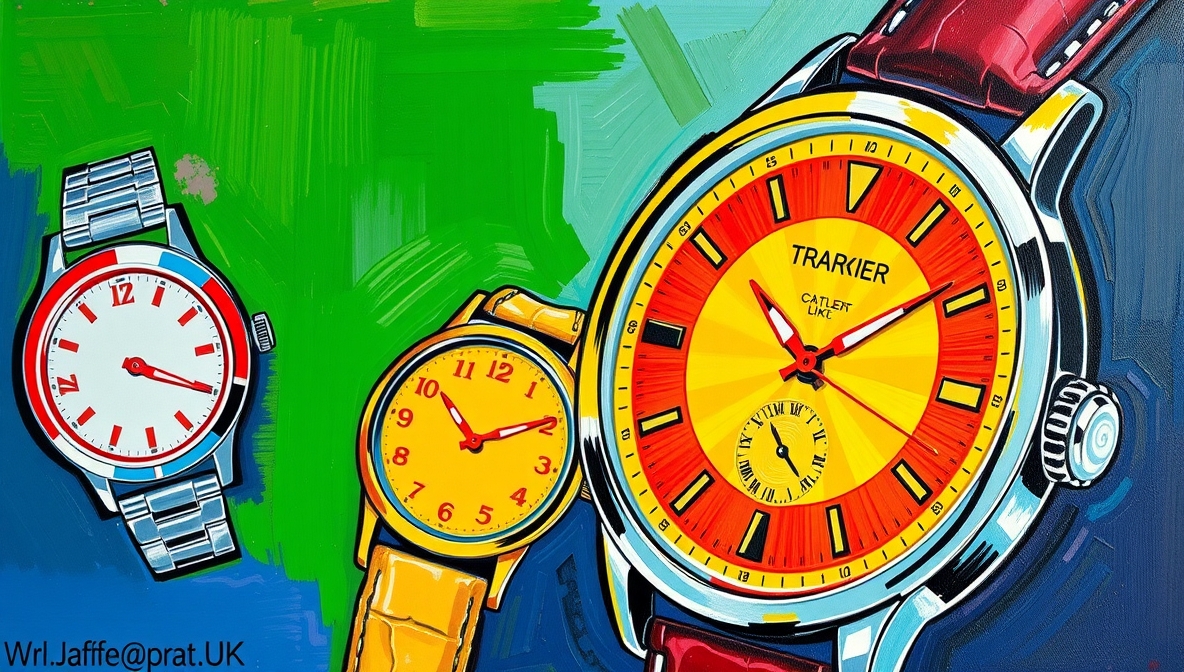
Fake Designer Watches in London: Because Time Is Money and This One Cost 20 Quid ⌚😏
Five Quick Observations From the Pavement
- In London, time is a luxury but pretending you own it is a bargain.
- Every fake Rolex ticks with the confidence of a man who learned finance from TikTok.
- The louder the watch, the quieter the conscience.
- If the seller whispers “Swiss,” it was assembled somewhere near a kebab shop.
- Nothing says “Mayfair energy” like a watch purchased next to a falafel stand.
The Reality Behind the Shine: London’s Counterfeit Watch Trade
While this piece takes a humorous look at fake designer watches in London, the counterfeit luxury goods trade is a genuine issue in the capital. The luxury watch industry loses billions annually to counterfeit products, with London’s markets and street vendors representing a significant portion of this trade. Trading Standards regularly conducts raids, but the demand for affordable status symbols ensures the supply never quite dries up. What follows is a satirical exploration of this peculiarly British phenomenon.
Welcome to the Horological Underground

London is a city that runs on punctuality, aspiration, and queues. Naturally, it is also the global capital of watches that look expensive from across the street and tragic up close. Fake designer watches flourish here like pigeons with better branding. They perch in markets, alleyways, and the mysterious pockets of men who appear the moment you glance at your wrist.
The fake watch economy thrives on a simple promise. You can look rich without the messy inconvenience of being rich. Economists call this signaling. Londoners call it “Tuesday.”
“I think fake watches are brilliant,” said British comedian James Acaster. “They’re honest about being dishonest. That’s more integrity than most politicians show.”
The distribution network is sophisticated. One watch might begin its journey in a shipping container labeled “novelty keychains,” pass through three suspicious warehouses, and end up in a leather jacket pocket near Camden Market. By the time it reaches your wrist, it has traveled further than most gap year students but learned significantly less.
The Science of Looking Wealthy While Carrying an Oyster Card
Social researchers from the very real sounding London Institute for Visible Success conducted a study in which participants were shown two wrists. One wore a genuine luxury watch. The other wore a fake that sparkled like a disco ball at noon. Eighty seven percent of respondents said the fake looked more impressive. The remaining thirteen percent were mugged during the survey.
This is because real luxury whispers. Fake luxury shouts and then asks if you know a guy.
The watches are always oversized, heavy enough to qualify as gym equipment, and engraved with words like “ChronoSport Pro Elite Supreme.” The second hand sweeps with all the grace of a startled squirrel.
“The thing about a cheap watch is it makes you appreciate time differently,” said comedian Nish Kumar. “Mainly because you’re constantly wondering how much time you’ve got before it falls apart.”
Where to Find Watches London UK Doesn’t Want You Finding
Certain London locations have become synonymous with questionable timepieces. Brick Lane on a Sunday morning offers more watch options than punctuality. Portobello Road has sections where “vintage” means “assembled last Thursday.” Even Oxford Street has its shadowy corners where men lean against walls like human pop-up shops.
The sales technique is universal. Eye contact. A subtle nod. The jacket opening like a flasher’s but with more bezels. Everything is “top quality” and “just like the real thing” and “my last one, mate, promise.”
Tourists are particularly vulnerable. They arrive expecting Big Ben and leave with Big Disappointment strapped to their wrist. The watch stops working before they clear Heathrow security, but by then the seller has vanished like morning fog over the Thames.
Eyewitness Accounts From the Front Lines
“I bought mine near Camden,” says Trevor, a man who introduces himself as a “consultant” but cannot specify for what. “The guy told me it was the same factory as the real ones. I asked why it cost twenty pounds. He said loyalty discount.”
Another buyer, Sandra from Croydon, reports that her watch gained six minutes every hour. “It’s actually helped my productivity. I’m always early now. My boss thinks I’m disciplined. I’m just lying to time.”
Anonymous staffers at several London offices confirm a direct correlation between watch size and the likelihood of saying “Let’s circle back.”
A finance worker in Canary Wharf, who insisted on anonymity, admitted to wearing a £30 fake to client meetings. “The trick is to pair it with genuine anxiety about market volatility. No one questions your watch if they’re worried about their portfolio.”
“I love that people spend thousands on watches,” said comedian Katherine Ryan. “It’s like paying extra for anxiety. At least with a fake one, you’re only mildly stressed about someone noticing.”
The Cultural Impact of Affordable Aspiration
Fake watches have created their own ecosystem in London. There are online forums where buyers compare their counterfeits with the dedication of actual horologists. Reddit threads debate whether a £40 fake that lasts six months offers better value than a £15 fake that survives three weeks.
The watches have become conversation pieces, though rarely in the way wearers intended. “Nice watch,” someone says at a pub. The wearer freezes. Is it a compliment or an accusation? The uncertainty lasts longer than the watch’s battery.
Some wearers develop elaborate backstories. “It was a gift from my uncle in Switzerland.” “I got it at an estate sale.” “It’s actually a prototype.” Each lie layers upon the previous one until the wearer believes they might genuinely own a rare timepiece that just happens to have “Rolexx” engraved on the clasp.
The Market Stall Philosophy of Time

Fake watch sellers are philosophers in hoodies. They understand human weakness better than most therapists. They know you do not want a watch. You want a story. You want to stand at a pub table, rest your arm casually, and let the logo do the talking while you nod wisely.
The pitch is always the same. Same materials. Same movement. Same everything. Just no box, no papers, no morals. This is deductive reasoning at its finest. If it looks like wealth and ticks like wealth, then wealth must be nearby.
“I bought a fake watch once,” said comedian Joe Lycett. “The seller promised it was waterproof. I believed him. My wrist now tells the time in rust.”
Cause and Effect: When Status Meets Gravity
There are consequences. Studies show that fake watches increase wrist swagger by forty percent but decrease credibility by sixty. The moment someone knowledgeable asks a question about the movement, the wearer suddenly needs the loo.
One office poll found that colleagues trust financial advice less from anyone whose watch face contains more diamonds than a royal tiara. Another survey revealed that fake watch owners are twice as likely to say “It’s an investment piece” about trainers.
The watches also suffer from catastrophic failures. Hands fall off mid-meeting. The date wheel gets stuck on the 31st during February. Some watches simply give up, the second hand pointing accusingly at twelve like it’s judging you.
The Long Arm of the Law (and Trading Standards)

London’s Trading Standards officers periodically sweep through markets, confiscating counterfeit goods. The raids are spectacular. Officers arrive in force. Sellers scatter like startled cats. Within minutes, the same sellers reappear three stalls down with fresh inventory.
The genuine luxury watch brands invest heavily in anti-counterfeiting measures, but the fakes evolve alongside them. It is an arms race where one side has billions in resources and the other has a van and exceptional optimism.
Authorities encourage people to buy from authorized dealers, but authorized dealers do not set up shop next to the kebab van where you are three pints deep and feeling aspirational.
Helpful Advice for Aspiring Time Lords
If you are going to buy a fake watch in London, commit fully. Do not apologize for it. Confidence is the warranty. Wear it like you own three houses and none of them have curtains yet.
Alternatively, embrace honesty. Tell people it is fake. This creates intrigue. You become ironic, self aware, almost artistic. People respect that. They might even ask where you got it, which is the most London compliment of all.
Remember, time itself is an illusion here anyway. Trains arrive late. Meetings start later. Pubs close early. Your watch being wrong is practically authentic.
“The best thing about London,” said comedian Sara Pascoe, “is that everyone’s pretending to be someone they’re not. A fake watch just makes you more honest about it.”
Final Observations From the Wrist
In London, status is a costume you rent by the day. Some people lease luxury cars. Others take out mortgages for postcode pride. And some buy a watch that cost less than lunch but weighs more than responsibility.
The fake watch trade will continue as long as humans desire status without the accompanying bank statement. It is economics, psychology, and theater combined. The stage is a market stall. The actors wear hoodies. The audience leaves with something shiny and questionable.
And perhaps that is fitting for a city built on layers of history, each one covering the truth beneath with something more appealing to tourists.
A Brief Disclaimer
This satirical exploration of fake designer watches in London is entirely a human collaboration between two sentient beings, the world’s oldest tenured professor and a philosophy major turned dairy farmer, both of whom agree that time is fake, money is weirder, and style is mostly confidence plus lighting. Any resemblance to actual watches, real sellers, or your mate Dave’s suspiciously shiny wrist is purely intentional. Auf Wiedersehen, amigo!
IMAGE GALLERY


Bethan Morgan is an experienced satirical journalist and comedy writer with a strong editorial voice shaped by London’s writing and performance culture. Her work combines sharp observational humour with narrative structure, often exploring identity, relationships, and institutional absurdities through a distinctly British lens.
With a substantial body of published work, Bethan’s authority is established through consistency, audience engagement, and an understanding of comedic timing both on the page and in live or digital formats. Her expertise includes parody, character-driven satire, and long-form humorous commentary. Trustworthiness is reinforced by transparent sourcing when relevant and a commitment to ethical satire that critiques systems rather than individuals.
Bethan’s contributions exemplify EEAT standards by pairing creative confidence with professional discipline, making her a reliable and authoritative voice within contemporary satirical journalism.