
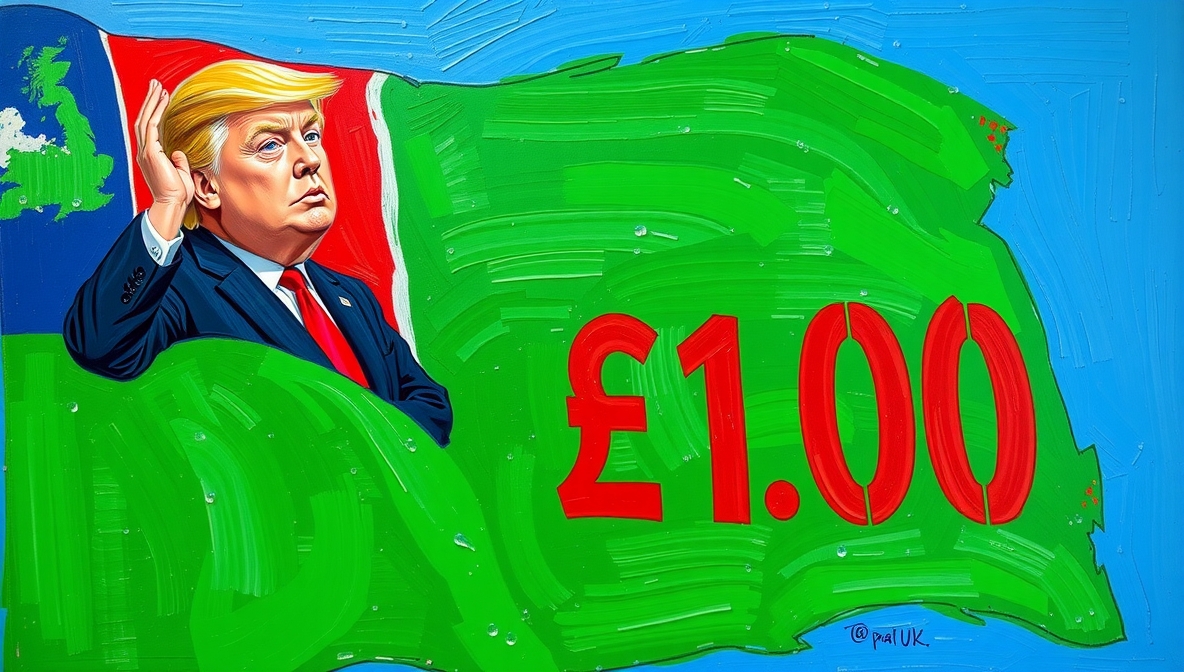
President Floats Greenland Purchase Sweetener, Residents Request Warranty Details
Donald Trump revived global diplomacy this week by floating the idea of buying Greenland again, this time sweetening the deal with an offer of roughly £100,000 per citizen, a proposal that immediately prompted Greenlanders to ask practical follow-up questions such as “for how long” and “does this come with plumbing.”
Trump Offers Every Greenlander £100,000
-
Greenlanders immediately asked what the catch was, having read contracts before.
-
Heating was identified as a higher priority than vibes.
-
Trump clarified the offer was generous, symbolic, but negotiable.
-
Economists struggled to price “vibes” in Arctic conditions.
-
The nation politely requested infrastructure (roads) instead of enthusiasm.
Creative Deal-Making
The offer, reported with straight faces across international media, was framed by Trump allies as “creative deal-making” and by everyone else as “a PowerPoint slide that escaped.” Trump reportedly believes the proposal is generous, noting that £100,000 is “a lot of money,” particularly when said confidently and without reference to infrastructure costs, climate realities, or the price of running a country made largely of ice.
Greenland’s government responded cautiously, explaining that while cash is nice, it does not melt permafrost, maintain airports, or stop polar bears from wandering into places they technically own already. “We appreciate the interest,” one official said diplomatically. “But we would need to see the warranty.”
Economic Analysis

Economists were quick to weigh in. Professor Lars Holm of the University of Copenhagen explained that £100,000 per citizen sounds impressive until you divide it by roads, schools, hospitals, ports, and the fact that everything costs more when it has to be shipped over ice. “It’s like offering someone a signing bonus and then billing them for oxygen,” he said.
Residents reacted with bemused scepticism. “Is this a one-time payment?” asked Ane, a teacher in Nuuk. “Because if so, I’ll spend it on heating and be broke by February.” Another resident wondered whether the offer included continued access to Denmark’s healthcare system or if Greenlanders would be expected to crowdsource insulin.
Origin of the Proposal
The proposal reportedly originated during a discussion about Arctic strategy, though aides admitted it may have begun as a joke that went unsupervised. A former Trump adviser suggested the president views countries like property listings. “He sees space, resources, potential. He doesn’t really do ‘citizens,'” the adviser said.
In Washington, supporters praised the idea as bold. One commentator called it “outside-the-box thinking,” while another said it was refreshing to see diplomacy conducted “like a real estate seminar.” Critics noted that treating people as line items tends to cause friction.
Public Opinion in Greenland

A leaked poll conducted in Greenland showed mixed reactions. About 12 percent said they would consider the offer “if it came with guarantees.” Seventy percent said no. The remaining respondents reportedly asked whether Trump knew Greenland was already inhabited.
Trump, undeterred, continued to defend the idea. “They’d be richer,” he said. “And we’d have Greenland. Everybody wins.” When asked about governance, culture, or consent, Trump pivoted to discussing natural resources.
Danish Response
Meanwhile, Danish officials watched politely, the way one does when a distant relative suggests selling the family home on Facebook Marketplace. “Greenland is not for sale,” one diplomat said, before adding, “but we admire the enthusiasm.”
As the story spread, Greenlanders returned to daily life, confident that while offers may come and go, the island itself is not moving. For now, Greenland remains Greenland, £100,000 poorer per person, but rich in the knowledge that somewhere, someone thinks countries can be bought with pocket change and confidence.
Auf Wiedersehen, amigo!


Aishwarya Rao is a satirical writer whose work reflects the perspective of a student navigating culture, media, and modern identity with humour and precision. With academic grounding in critical analysis and a strong interest in contemporary satire, Aishwarya’s writing blends observational comedy with thoughtful commentary on everyday contradictions. Her humour is informed by global awareness and sharpened through exposure to London’s diverse cultural and student communities.
As an emerging voice, Aishwarya represents the next generation of satirical journalists: informed, curious, and unafraid to question norms through wit. Her authority stems from research-led writing, respect for factual context, and a commitment to ethical satire. Transparency and clear labelling ensure readers understand the comedic intent behind her work.
Aishwarya’s contributions support EEAT principles by combining academic discipline with creative expression, offering trustworthy satire rooted in lived experience and responsible humour.