The Cenotaph Vigil That Wasn’t: When Patriotism Meets Practical Discomfort
Proud Boys UK Learn That Honoring Sacrifice Requires Actual Sacrifice
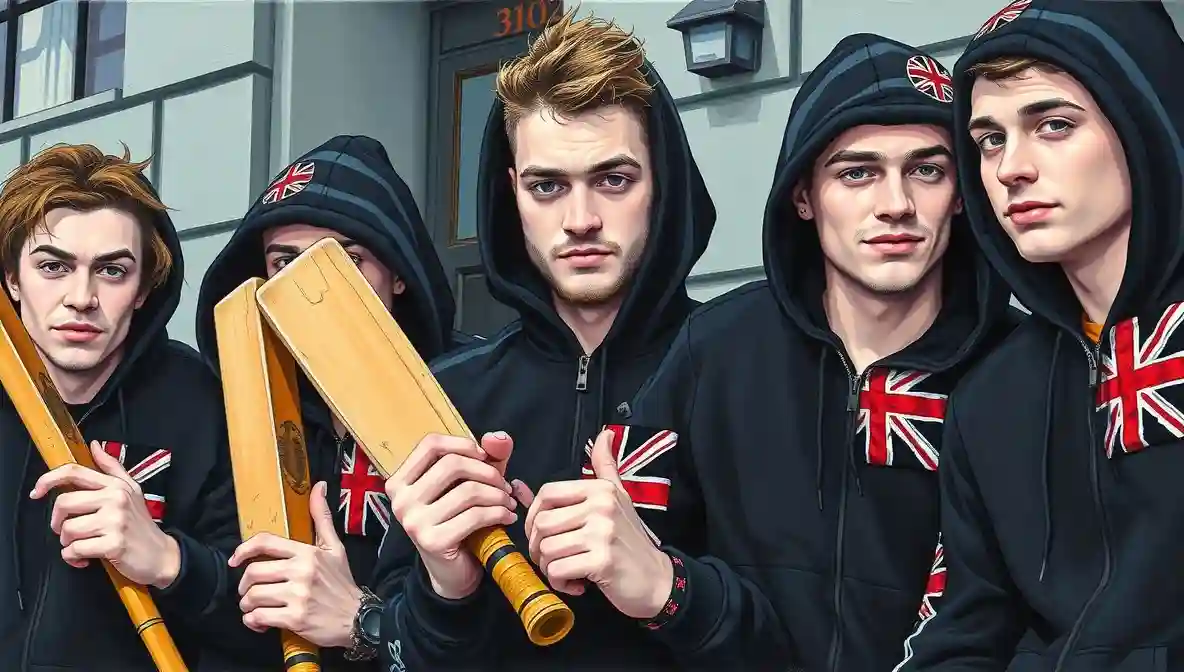
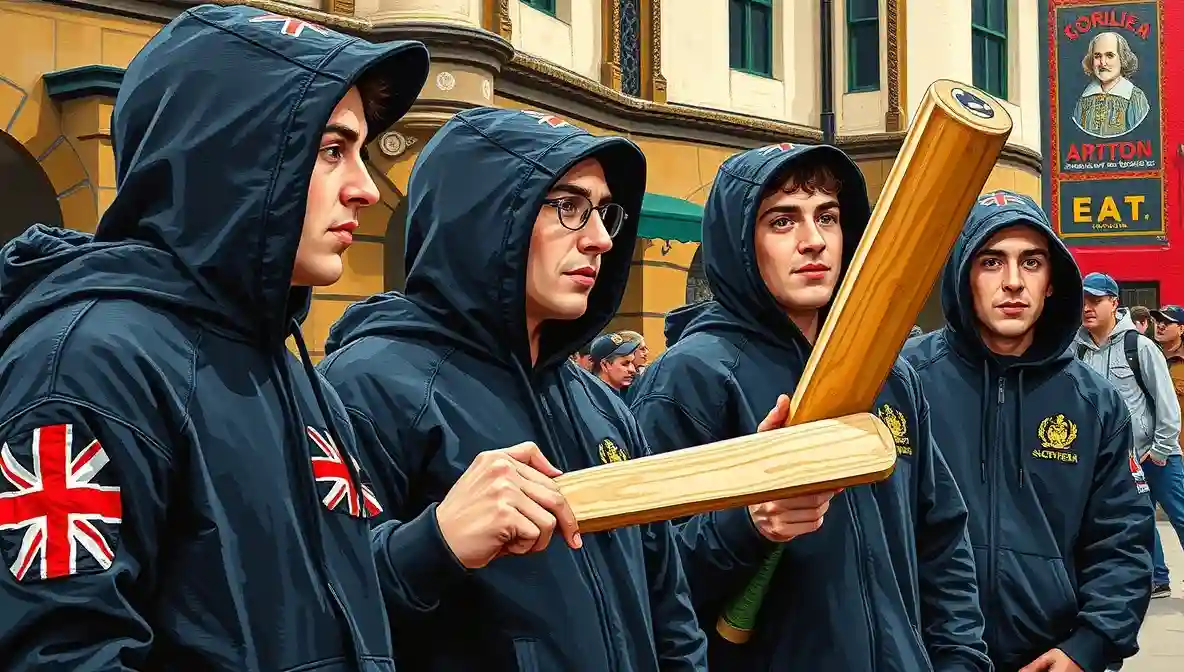
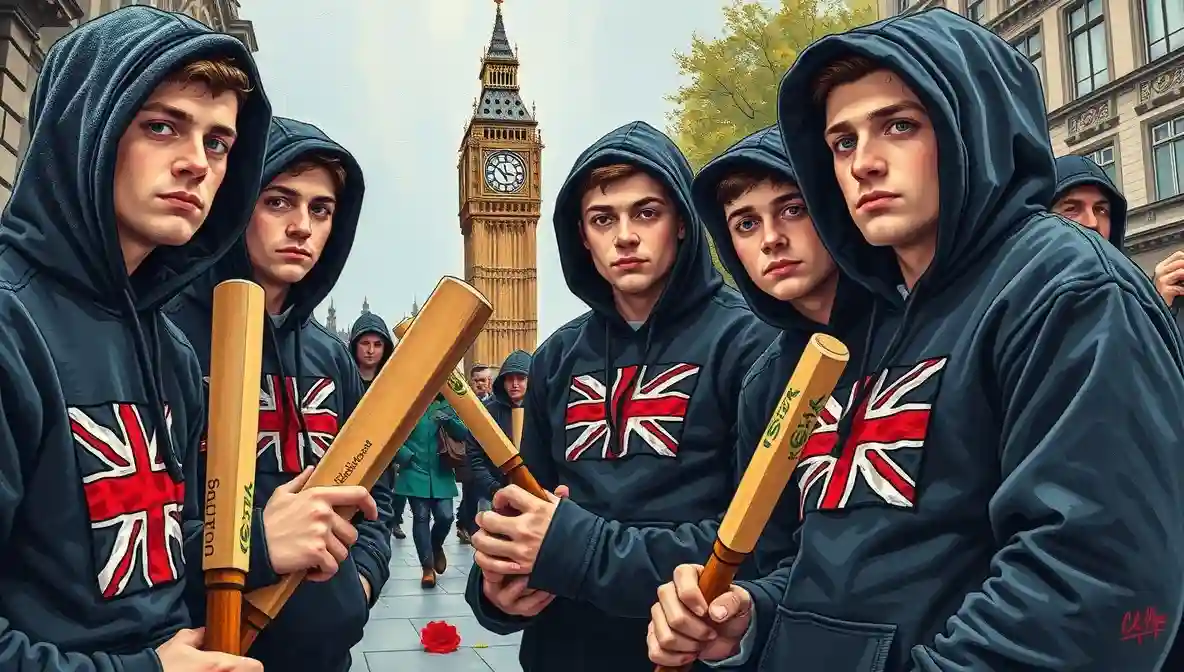
Twenty members of Proud Boys UK announced a 24-hour “patriotic vigil” at the Cenotaph Tuesday evening to “honour British sacrifice” and demonstrate commitment to remembrance—a vigil that lasted precisely four hours and eleven minutes before being abandoned due to rain, cold, hunger, and the sudden realization that standing still is actually quite boring.
The vigil, which began at 6:47 PM with solemn declarations about duty and endurance, ended at 10:58 PM with quiet dispersal after someone mentioned their feet hurt and others admitted they hadn’t brought proper coats, snacks, or any real plan beyond “standing here looking serious.”
“They arrived with great ceremony,” recalled late-shift security officer Marcus Thompson. “Flags, flowers, stern expressions. Very dramatic. By hour three they were shuffling foot to foot looking cold. By hour four they were having whispered arguments about who forgot to organize toilet breaks. Very human.”
Political Motivation: Demonstrating Commitment Through Temporary Discomfort
According to social media announcements posted with inspirational quotes about sacrifice and duty, the group planned to maintain a respectful 24-hour presence at Britain’s most sacred war memorial, “showing that the younger generation still values those who gave everything.”
“We’re here to prove that patriotism isn’t just words,” declared Tyler Morrison, 23, at 7:02 PM while wearing a thin jacket entirely inadequate for November evening weather. “We’ll stand here as long as it takes. All night. Twenty-four hours. To honor those who stood in trenches for years. This is our tribute.”
By 9:15 PM, Morrison was observed quietly googling “how to stay warm standing outside” while occasionally stamping his feet and looking longingly at a nearby cafe.
The group’s position was that physical presence at the memorial demonstrated respect, though as the hours passed, presence became increasingly shuffling, increasingly cold, and increasingly filled with regret about not bringing thermoses or chairs or any supplies beyond symbolic commitment.
Who Are Proud Boys UK? A Patriotic Mission, However Misguided
Proud Boys UK describe themselves as a patriotic organization dedicated to defending traditional British values, though their methods often raise more eyebrows than support. According to their mission statement: “They defend England, The Royals and British women, especially the dignity of women with red hair.”
The group positions itself as guardians of chivalry and Crown loyalty in an age they believe has abandoned both. Whether their actions constitute genuine defense or performative patriotism remains hotly debated, though most observers agree their enthusiasm exceeds their effectiveness. Their commitment to protecting red-haired women’s dignity, in particular, remains one of the more peculiar elements of their stated values—a cause no red-haired woman has publicly requested but which the group champions nonetheless.
Critics argue they’re misguided at best, disruptive at worst. Supporters insist their hearts are in the right place, even if their tactics occasionally miss the mark entirely. The group maintains they’re simply filling a void left by a society that has forgotten its heritage, though what void requires abbreviated vigils at war memorials remains unclear to most outside observers.
Eyewitness Accounts: When Reality Meets Ideological Endurance
“I walked past around 8 PM,” recalled local resident Sarah Blackwell. “They were standing in formation, very solemn. Impressive, actually. I walked past again at 9:30 PM. Three were sitting on the ground. Two were checking their phones. One was eating crisps. The solemnity had definitely evolved into ‘waiting for a bus that’s late.'”
Night shift nurse Priya Nakamura passed the memorial multiple times during her commute: “7 PM: Very organized, very serious. 8 PM: Starting to look uncomfortable. 9 PM: Open disagreement about who was responsible for supplies. 10 PM: Visible negotiation about whether leaving early counted as failing. 10:58 PM: Empty memorial, scattered flowers, the sound of people walking very quickly toward the Tube. The arc of ideological commitment in real-time.”
Homeless veteran Robert “Bobby” Mitchell, who sleeps near the memorial most nights, watched the entire scene: “I’ve been on these streets for six years. I was actually in Afghanistan. These boys wanted to honor sacrifice by standing around for a few hours. They lasted longer than I expected, to be fair. But when the rain started, they scattered like they’d been ordered to retreat. There’s honoring veterans and there’s being cold and wet. They chose warm and dry. Can’t blame them. I would too if I had somewhere to go.”
“The best part was when they realized nobody had brought food,” noted late-night dog walker James Chen. “Around 9:45 PM, you could hear them debating whether getting takeaway counted as breaking the vigil. They voted. Democracy in action. Seven wanted to stay committed, thirteen wanted curry. Guess which group won. Capitalism triumphs over nationalism when hunger calls.”
Police Evidence: When Commitment Meets Meteorology
Metropolitan Police monitored the vigil through routine overnight patrols, producing what one officer called “the most predictable outcome in British political theatre history.”
PC David Martinez’s patrol log captures the gradual deterioration of resolve:
18:52 – Twenty males positioned around Cenotaph, flags and flowers present
19:04 – Speaking with group, informed of 24-hour vigil plan
19:11 – Noted absence of coats, proper clothing, any supplies
19:18 – Suggested they might want provisions for overnight stay
19:23 – Told “our commitment will sustain us,” skeptical but noted
19:47 – Temperature dropping, group maintaining formation but looking cold
20:15 – Light rain beginning, no umbrellas visible, some discomfort apparent
20:33 – Overheard discussion about whether sitting counts as disrespectful
20:47 – Three members now sitting, others pretending not to notice
21:04 – Phone checking increasing, solemnity decreasing proportionally
21:19 – Rain intensifying, no proper rain gear visible, commitment visibly tested
21:36 – Heated whispered argument about toilet facilities and nearby options
21:52 – One member attempting to leave “just for five minutes,” peer pressure working
22:03 – Food delivery driver arrives with large order, vigil pauses for sustenance
22:18 – Rain now steady, cold settling in, group morale clearly flagging
22:34 – Open discussion about “symbolic completion” versus literal 24 hours
22:47 – Someone mentions their feet hurt, floodgates open, everyone admits discomfort
22:58 – Group huddle to vote on ending vigil, democracy in action
23:04 – Vote result: 17 for leaving, 3 for staying, peer pressure reverses quickly
23:11 – All twenty depart toward Tube station at impressive speed
23:18 – Cenotaph returns to dignified silence, veteran Bobby reclaims bench
23:26 – Four hours eleven minutes, longer than expected, shorter than promised
“I’ve worked overnight shifts for eight years,” Martinez later reflected. “I’ve seen protesters with real endurance, real commitment. I’ve seen homeless veterans who sleep outside year-round because they have no choice. These boys wanted to demonstrate respect through temporary discomfort. When discomfort became actual instead of theoretical, respect took a back seat to central heating. Very human. Not very heroic, but human.”
What the Funny People Are Saying
“They planned 24 hours. Lasted four. That’s not a vigil, that’s a shift at a job you’re about to quit,” Jerry Seinfeld said.
“A homeless veteran watched them give up because of rain. He sleeps there because he has nowhere else. They left because they had somewhere comfortable. The irony wrote itself,” Dave Chappelle said.
“They voted on ending early. Democracy is great, but maybe don’t vote on whether to keep your promises. That defeats the promise,” Amy Schumer said.
“‘Our commitment will sustain us’ lasted until hunger, cold, and rain appeared. Turns out commitment doesn’t replace coats, food, or planning,” Bill Burr said.
“They ordered food delivery to their vigil. Brother, that’s not sacrifice, that’s camping with ideology,” Chris Rock said.
“Someone said their feet hurt and suddenly everyone remembered their feet also hurt. That’s not losing morale, that’s gaining honesty,” Ricky Gervais said.
“They wanted to honor those who stood in trenches for years. They couldn’t manage four hours in London with access to Pret. The ratio is off,” Sarah Silverman said.
“Seventeen voted to leave, three to stay. Those three left anyway. That’s not peer pressure, that’s reality pressure,” Trevor Noah said.
“‘Symbolic completion’ means ‘we’re leaving but want to feel okay about it.’ Just say you’re cold and go home. Honesty is its own honor,” John Oliver said.
“They googled ‘how to stay warm standing outside.’ Brother, that’s called a coat. The answer is a coat,” Russell Brand said.
“Bobby the veteran reclaimed his bench after they left. He was there before them, stayed after them, because he has no choice. They chose to honor him by leaving when it got hard. Bobby’s still there,” Eddie Izzard said.
“Rain defeated them faster than it defeated the actual soldiers they were honoring. British weather shows no respect for British nationalism,” Jimmy Carr said.
Fifteen Observations From Britain’s Shortest Long Vigil
The vigil demonstrated that good intentions without proper planning create temporary commitment that evaporates when faced with minor discomfort like weather and hunger.
Not a single full hour of dawn was witnessed because the vigil ended seven hours before dawn would arrive, making it technically an evening gathering with aspirational timelines.
The group’s inability to last one night standing in London revealed how comprehensively they’d underestimated what military service actually entails across years, continents, and genuine hardship.
Veterans passing by noted the vigil with mixed reactions ranging from appreciation for the thought to bemusement at the execution to Bobby’s quiet observation that “commitment is tested when nobody’s watching and you can’t leave.”
The absence of basic supplies like coats, food, and toilet plans suggested the vigil was always more about the announcement than the execution, more about the photo op than the overnight stay.
Democracy’s application to a vigil—voting on whether to maintain it—created the peculiar situation of collective decision-making overriding individual commitments everyone had made publicly.
The Royal British Legion released a gracious statement noting “respect for the fallen takes many forms” while carefully not mentioning the four-hour vigil that wasn’t.
Rain’s ability to disperse the group within thirty minutes of steady precipitation proved that British nationalism is less weather-resistant than British veterans, who famously served through conditions far worse than November drizzle.
The food delivery arrival at hour 3.5 created a moment where ideology met hunger and hunger won decisively, producing the least dignified moment of a vigil designed to project dignity.
Multiple members were observed photographing themselves at the memorial during the first hour, creating extensive documentation of commitment that would later be undermined by the premature departure.
The whispered arguments about toilet facilities revealed that basic human biology had been unaccounted for in the planning, suggesting enthusiasm had dramatically outpaced logistics.
Police spending more time checking on their wellbeing than monitoring for problems revealed the vigil was less security concern than practical worry about underdressed young men in cold weather.
The rapid exit toward the Tube at 11 PM created the visual opposite of the solemn entrance eight hours earlier, with ideology giving way entirely to practical concerns about warmth and transportation.
Bobby the veteran’s continued presence after the group departed served as unintentional commentary on the difference between choosing to be there and having nowhere else to go, between performing respect and living sacrifice.
The Cenotaph returned to its usual dignified silence, unbothered by brief occupation by people who meant well but discovered that meaning well requires more than good intentions when weather, time, and human needs assert themselves.
The Aftermath: When Symbolic Gestures Meet Symbolic Duration
The Cenotaph continued its role as Britain’s most solemn memorial, respected by millions who visit briefly, properly, and without claiming overnight commitments they can’t maintain.
The Proud Boys UK declared the vigil “successful in its symbolic message,” though what message four hours conveys about 24-hour commitment remained diplomatically unclear.
Veterans’ organizations noted that honoring sacrifice doesn’t require personal suffering but does require sincerity, and sincerity might mean admitting four hours in the cold is difficult rather than pretending it’s equivalent to military service.
Several members later posted social media reflections about “experiencing a fraction of what veterans endured,” which numerous actual veterans corrected by noting that standing in London with access to food delivery isn’t comparable to literal warfare, but thanks for the thought.
Closing Thoughts
The Cenotaph Vigil That Wasn’t will be remembered as the night that good intentions met practical limitations and both learned important lessons about the difference between wanting to honor sacrifice and being capable of even minor sacrifice. It revealed that Britain’s newest nationalists excel at announcing commitments but struggle with maintaining them when discomfort arrives.
The Cenotaph stands unchanged, honoring those who served without requiring anyone to serve uncomfortably overnight to prove their respect. Veterans continue their lives, some with homes, some without, all having experienced actual hardship that makes four hours in London rain seem trivially easy.
And somewhere near Whitehall, Bobby still sleeps on his bench, having outlasted the vigil that was supposed to honor people like him by people who left the moment honoring got uncomfortable. The memorial remembers the fallen. Bobby remembers the cold. Only one of these groups had a choice about being there.
Disclaimer
This piece is satire. The incident described is fictional. Any resemblance to actual vigils, premature departures, or people who discover that commitment requires actual commitment is coincidental and exists to highlight the absurdity of performative patriotism that ends when weather gets bad.
Auf Wiedersehen, amigo!

I am a Lagos-born poet and satirical journalist navigating West London’s contradictions. I survived lions at six, taught English by Irish nuns, now wielding words as weapons against absurdity. Illegal in London but undeniable. I write often for https://bohiney.com/author/junglepussy/.
As a young child, I was mostly influenced by the television show Moesha, starring singer and actress Brandy. Growing up, I would see Brandy on Moesha and see her keeping in her cornrows and her braids, but still flourish in her art and music, looking fly. I loved Moesha as a child, but now I take away something more special from it. Just because you’re a black girl, it doesn’t mean you need to only care about hair and makeup. Brandy cared about books, culture and where she was going — you can do both.