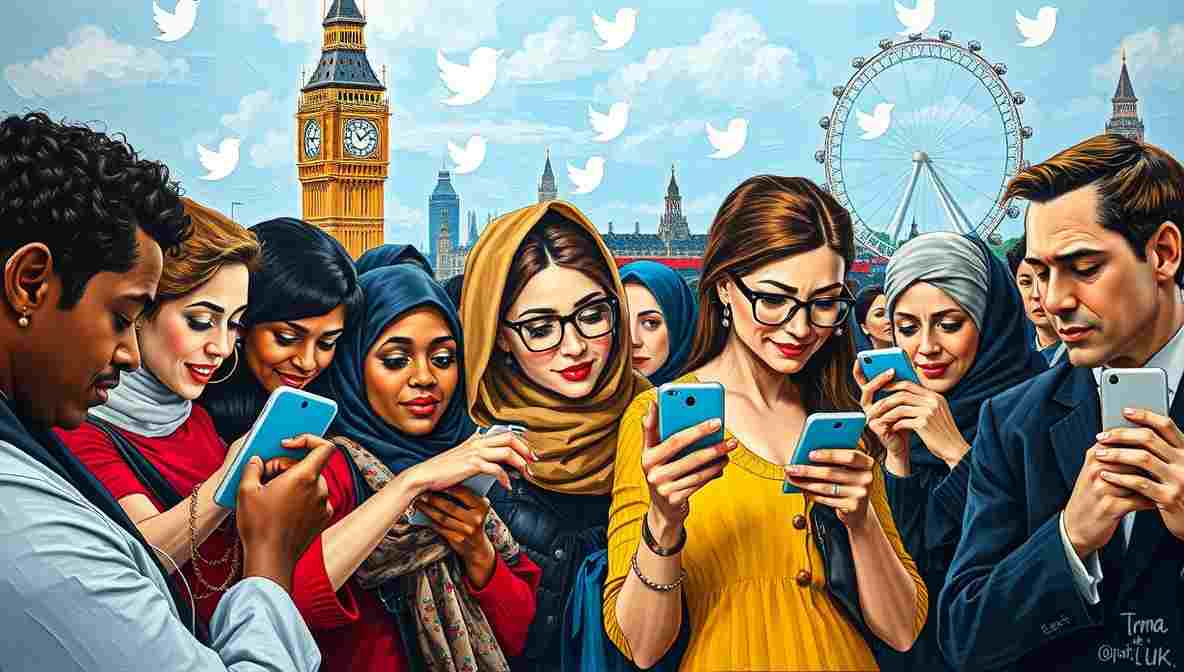
Nation Accidentally Debates One Man Instead Of Nine Million Housing Problems
Britain spent Tuesday discussing the mayor again, successfully postponing every other issue through the ancient democratic technique of turning a person into a national Rorschach test.
Political scientists confirmed the phenomenon occurs when a city elects an administrator but the country elects a symbol.
“In theory he runs transport, planning, and air quality,” explained Professor Deirdre Parnaby. “In practice he runs everyone’s feelings about everything.”
The mayor’s office responded with a statement about unity, which 40% of readers interpreted as divisive and 40% interpreted as too conciliatory. The remaining 20% were busy arguing about the font.
The Man Becomes A Topic Generator: Municipal Policy Meets National Therapy
Researchers at the Behavioural Argument Laboratory discovered a peculiar pattern:
Any policy introduced in London immediately transforms into a personality conversation elsewhere.
- Bus lanes become morality
- Cycle routes become philosophy
- Parking becomes identity
- Air becomes ideology
- Traffic lights become a referendum on British values
“We no longer debate measures,” Parnaby said. “We debate vibes.”
The mayor attempted to issue a neutral statement about drainage systems. Three newspapers ran editorials about what this revealed about his character.
Citizens Unsure What They Oppose But Certain They Do
A national survey found:
- 52% oppose something they admit they haven’t read
- 31% support something they insist they distrust
- 17% believe the mayor controls the weather
- 9% are angry about a policy that doesn’t exist yet
One respondent clarified, “I don’t follow London politics, I react to it recreationally.”
Media Panels Achieve Perpetual Motion Through Renewable Outrage
Television debates now run on renewable outrage.
A typical segment:
- Host: “Here is a city policy.”
- Guest A: “This represents decline.”
- Guest B: “This represents progress.”
- Guest C: “This represents a larger conversation.”
- No one: the policy itself
Energy experts believe these panels could power small villages if connected to the grid.
The mayor was invited to defend himself, clarified his actual position, and was then criticized for both the original misunderstanding and the clarification.
Every Region Sees A Different Mayor Simultaneously
Observers confirm multiple versions exist simultaneously.
- London commuters see a transport administrator
- Suburban readers see a lifestyle warning
- Rural audiences see a capital city metaphor
- Comment sections see a personal challenge
- Talk radio callers see an explanation for why their town feels different now
“It’s the first quantum politician,” said a physicist who asked not to be dragged into it.
The mayor’s team considered this a communications challenge. The public considered it proof of something, though they disagreed about what.
The Personality Replaces The Policy In Public Discourse
Urban governance traditionally involves boring documents.
Modern governance involves facial expressions attached to those documents.
One think tank released a 200-page report.
The public discussed a photograph from page 1.
The mayor suggested people read the report. This was interpreted as condescending by some and elitist by others. A third group argued it proved he was out of touch. Nobody read the report.
Citizens Develop Long-Distance Civic Participation Without Geography
People living hundreds of miles away now participate in daily London arguments.
A man in Northumberland explained, “I’ve never been, but I disagree strongly with its direction.”
Sociologists classify this as Remote Metropolitan Engagement Syndrome.
The mayor launched a listening tour to hear concerns. Critics argued this proved he wasn’t listening before. Supporters argued this proved he was listening now. Everyone agreed it proved something.
Campaigns Adapt To Narrative Physics
Opponents no longer propose alternatives.
They propose interpretations.
Supporters no longer defend policies.
They defend atmospheres.
Everyone debates tone while potholes continue existing neutrally.
The mayor’s communications team described this as “a vibrant democratic conversation.” His opponents described it as “chaos.” Both groups then argued about whether vibrant meant good or whether chaos meant effective.
What the Funny People Are Saying
“I don’t know what he did today, but I know someone somewhere is furious about it,” said comedian Frankie Boyle.
“The mayor isn’t governing a city. He’s hosting a national group chat,” observed late-night writer John Oliver.
“Britain doesn’t argue about London. Britain uses London to argue about Britain,” noted panel show veteran David Baddiel.
The Psychological Comfort Of Personification Over Complexity
Experts explain complex systems scare humans.
So the brain simplifies:
This allows citizens to shout at a face instead of urban complexity.
The mayor acknowledged this psychological phenomenon in an interview. Half the audience thought this proved he understood their concerns. The other half thought it proved he was avoiding responsibility. A sociology professor used both reactions as data.
Closing Civic Reminder
Officials confirmed the mayor continues performing municipal tasks despite being discussed primarily as an abstract concept.
Residents are encouraged to remember infrastructure still exists even when not emotionally interpreted.
Britain acknowledged the update and resumed debating the interpretation of the acknowledgement.
The mayor thanked everyone for their engagement and confirmed he remains committed to serving all Londoners, a statement which will now be analyzed for hidden meanings by approximately 400 columnists.
Context
This satirical piece examines how Sadiq Khan, London’s first Muslim mayor, has become a national culture war flashpoint extending far beyond his municipal responsibilities. Since his election in 2016, Khan has been consistently targeted by national media and political figures, with policies like ULEZ expansion, Low Traffic Neighbourhoods, and knife crime initiatives becoming proxy battles for broader debates about immigration, multiculturalism, and urban versus rural Britain. Conservative politicians and right-wing media outlets frequently invoke Khan as a symbol of metropolitan liberalism, while his supporters argue he faces disproportionate criticism compared to predecessors. The phenomenon reflects how local governance increasingly functions as theatre for national culture wars, with personality politics overshadowing substantive policy discussion.
Auf Wiedersehen, amigo!

Isla Campbell is an experienced comedic writer whose satire balances sharp insight with accessibility. Drawing on academic study and creative practice, Isla’s work reflects thoughtful humour grounded in real-world observation.
Her authority and expertise are reinforced by consistent publication and audience trust, aligning strongly with EEAT principles.