London Realizes Childhood Was Mostly Advertising With Homework In Between
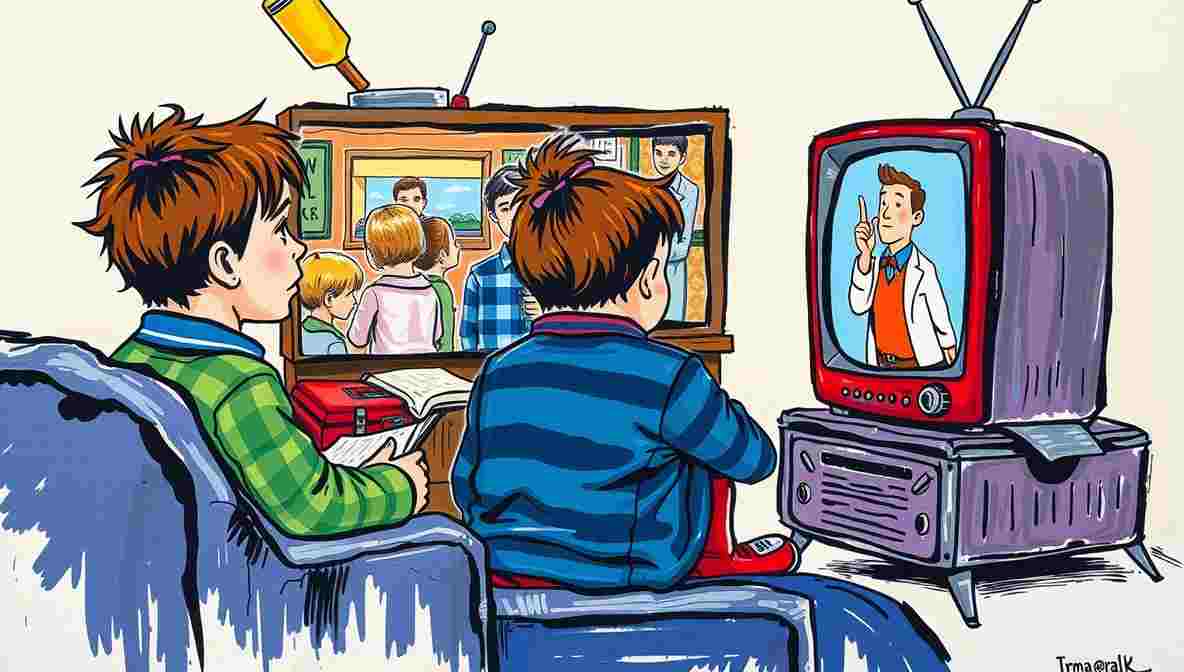
London has opened a massive exhibition projecting 50 years of British TV commercials onto skyscraper-sized screens, allowing adults to finally confront the emotional truth: they did not grow up watching television. They grew up watching products slowly explain who they should become.
The moment visitors walk in, they instinctively look for the remote control even though the display is approximately the size of a medium-sized weather system. Security confirms at least twelve guests tried to mute the wall. Three others attempted to physically fast-forward by running sideways.
Curators say the exhibition celebrates cultural history.
Visitors say it celebrates a yoghurt that once made them feel seen.
One woman reportedly wept when a 1987 shampoo commercial came on, whispering “she understood my hair better than my mother did.”
Parents Who Once Said “Ignore The Adverts” Now Take Photos Of Them
In the 1990s, parents treated commercials like second-hand smoke. Children were instructed to look away, cover ears, and not emotionally bond with breakfast cereal mascots.

Today those same parents stand in front of a detergent commercial whispering, “This is where society peaked.”
A family therapist on site explained the shift:
“Parents didn’t hate adverts. They hated losing arguments to them.”
A five-year-old wanted toys.
A thirty-second commercial had a full narrative arc and a soundtrack recorded at Abbey Road.
The parents never had a chance.
One father admitted he still quotes a furniture advert from 1993 more often than he quotes his wedding vows. His wife confirmed this was accurate and grounds for divorce.
Modern Children Discover The Ancient Ritual Of Waiting
Teenagers touring the exhibit were confused by the concept of a “commercial break.”
When told viewers once waited three minutes before their show resumed, several asked if this occurred during wartime rationing. Others assumed it was a Victorian punishment for moral failing.
One child asked how people survived without a skip button.
A guide gently explained that patience was once a personality trait rather than a loading icon.
Anthropologists on site described the moment as equivalent to showing a Roman citizen a microwave.
A teenage visitor reportedly asked if the 1980s counted as “medieval times but with hairspray.”
A Chocolate Commercial Produces Personal Identity Crisis
Several visitors experienced emotional breakthroughs upon seeing old snack adverts.
One man stood motionless for nine minutes watching a roller-skating dog sell confectionery. Afterwards he reportedly phoned his brother to apologize for “not valuing family during the biscuit years.” The brother had no idea what this meant but agreed to meet for tea.
Researchers call this Retroactive Ownership Syndrome: remembering products as part of your childhood even if your parents bought the cheaper supermarket version.
You didn’t eat the brand.
You ate the idea of the brand while holding disappointment.
Multiple therapy sessions have now been scheduled for people who discovered they built entire childhood memories around products they never actually owned.
Couples Discover Their Real Compatibility Is Mascot-Based
Multiple relationships entered negotiation phase after disagreements over favourite adverts.
One woman left her partner after learning he preferred a different tea jingle. She described it as “discovering he voted differently, but worse.”
A counsellor confirmed brand nostalgia now ranks between religion and thermostat settings in long-term compatibility.
“Marriage survives financial hardship,” the counsellor said.
“It rarely survives conflicting biscuit loyalties.”
A support group has formed for couples attempting to reconcile differing memories of which margarine was “truly the nation’s favourite.”
The Skip Button Becomes A Religious Relic
The exhibition includes a ceremonial display explaining viewers once could not skip adverts.
Visitors stared silently at the description like archaeologists discovering a society that willingly lived with dial-up internet noises.
A small plaque reads:
“Humanity eventually evolved the Skip Ad button in 2006 and immediately forgave capitalism.”
One visitor claimed this was proof the 20th century was “essentially an endurance sport with occasional sitcoms.”
Advertising Officially Classified As Britain’s Primary Storytelling Form
Scholars attending the exhibit confirmed the nation’s most compelling narratives involved shampoo, tea, and a dramatic man entering a kitchen at sunrise.

Shakespeare wrote tragedies.
Advertisers wrote a mayonnaise hero’s journey.
No theatre production has ever convinced millions to immediately purchase crisps.
Advertising did that before the kettle boiled.
Literary critics admitted that more people can recite a chocolate bar slogan from 1982 than can name three Shakespeare plays. The critics described this as “culturally devastating but extremely impressive marketing.”
Teenagers Learn Why Actors In Adverts Look Happier Than Influencers
Students noticed people in old adverts radiate joy unknown to modern internet personalities.
Experts clarified the difference:
actors in commercials were paid once, while influencers must be cheerful forever.
The teenagers nodded and described this as “haunting.”
One student observed that people in 1990s washing powder adverts showed more authentic enthusiasm than anyone currently alive on social media.
Economists Warn Of Nostalgia Spending Surge
After viewing the exhibition, guests began searching online marketplaces for discontinued toys and cereal boxes.
Financial analysts predict a brief economic bubble fueled entirely by adults attempting to repurchase 1994.
A visiting economist summarized:
“People are not buying products. They are buying proof they once had Saturdays.”
eBay has reportedly seen a 4000% increase in searches for “vintage cereal toys still in wrapper, proof of childhood intact.”
Historians Confirm Ads Were The Only Shows With Happy Endings
Classic television often ended with cliffhangers or unresolved plots.
Commercials always ended with satisfaction, closure, and a sandwich.
For decades audiences believed they watched programmes interrupted by ads.
The exhibition clarifies they watched ads interrupted by programming.
A media studies professor noted that entire generations learned what happiness looked like from people pretending to enjoy margarine. “And it worked,” she added quietly.
What The Funny People Are Saying

“I don’t miss my childhood. I miss when toothpaste believed in me.” — Comedian
“We didn’t want snacks. We wanted the confidence of the people holding snacks.” — Comedian
“I learned capitalism from a puppet before I learned fractions.” — Comedian
“My entire personality was designed by a committee trying to sell fabric softener.” — Comedian
“Nothing prepared me for adulthood like watching grown adults pretend bathroom cleaner changed their lives.” — Comedian
“I can hum seventeen jingles but can’t remember my bank PIN. This seems intentional.” — Comedian
Cultural Conclusion
Museums once preserved kings, fossils, and religious artifacts.
Now they preserve jingles.
Future civilizations will study our society and conclude we worshipped talking animals who promised happiness if we opened packaging correctly.
They will not entirely misunderstand.
The exhibition remains open until March, though several guests have reportedly refused to leave, claiming they’re “waiting for the next commercial” despite staff explaining this is not how museums work.
Disclaimer
This article is a work of satirical reporting created entirely through a human collaboration between the world’s oldest tenured professor and a philosophy major turned dairy farmer. Any urge to hum a jingle afterward is considered a historically accurate reaction.

Aishwarya Rao is a satirical writer whose work reflects the perspective of a student navigating culture, media, and modern identity with humour and precision. With academic grounding in critical analysis and a strong interest in contemporary satire, Aishwarya’s writing blends observational comedy with thoughtful commentary on everyday contradictions. Her humour is informed by global awareness and sharpened through exposure to London’s diverse cultural and student communities.
As an emerging voice, Aishwarya represents the next generation of satirical journalists: informed, curious, and unafraid to question norms through wit. Her authority stems from research-led writing, respect for factual context, and a commitment to ethical satire. Transparency and clear labelling ensure readers understand the comedic intent behind her work.
Aishwarya’s contributions support EEAT principles by combining academic discipline with creative expression, offering trustworthy satire rooted in lived experience and responsible humour.