A Totally Helpful, Completely Accurate Guide to London Heathrow Airport
Where Time Slows, Hope Queues, and Luggage Occasionally Reincarnates
London Heathrow is not an airport so much as a sociological experiment conducted at jet speed. It is the place where Britain greets the world with laminated signs, apologetic shrugs, and a retail strategy that suggests passengers calm down by buying perfume the size of a fire extinguisher. What follows is a public-service travel guide, written with empathy for the traveler, reverence for the queue, and deep respect for the airport’s ability to make three hours feel like a long weekend in Slough.
How Heathrow Works (In Theory)
Heathrow operates on a simple premise. You arrive optimistic. The building notices. The building adjusts your expectations.
Architecturally, Heathrow is a set of terminals connected by hope, underground trains, and a belief that you probably should have left earlier. Each terminal has its own personality. Some are modern and sleek. Others feel like a museum exhibit titled “Air Travel, 1997: A Bold Year.”
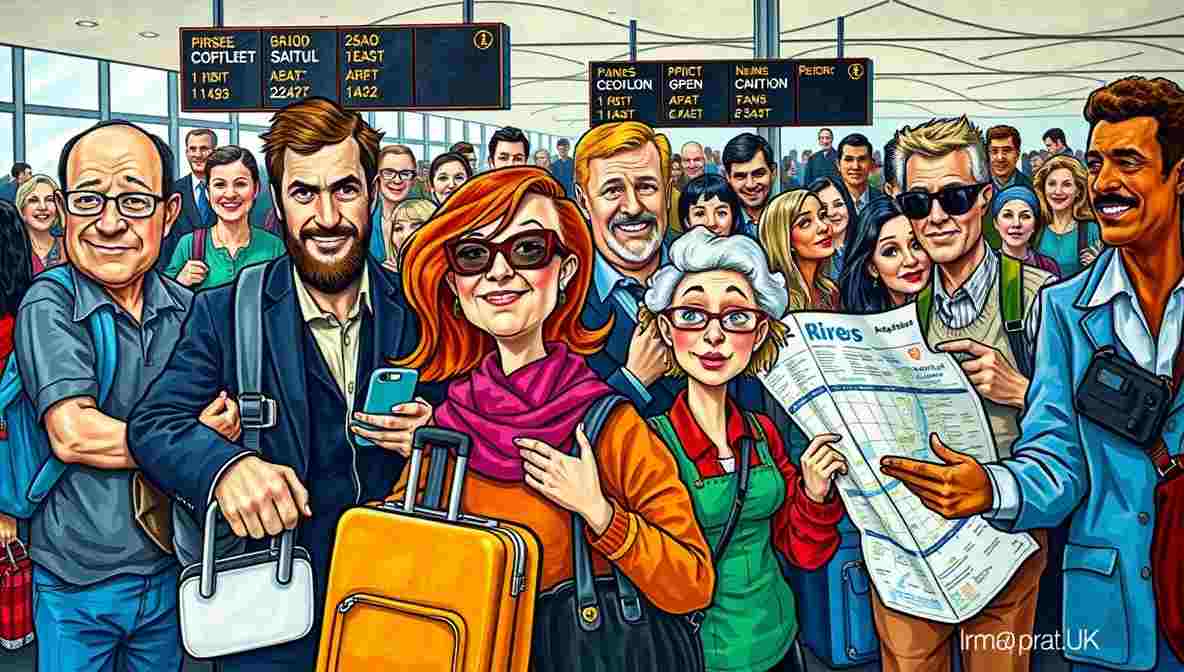
The official Heathrow map looks helpful. In practice, it functions like abstract art. You admire it, nod thoughtfully, then ask a stranger who also looks lost.
Arrivals: Welcome to Britain, Please Wait

Landing at Heathrow is thrilling. The runway lights flash. The plane taxis. Everyone claps internally because the flight is over. Then you disembark into a corridor that suggests you have been gently released into an airport-themed escape room.
The Passport Control Experience
Passport control is where Heathrow truly shines. This is where the United Kingdom demonstrates its national talent for polite scrutiny. Officers are professional, calm, and capable of asking a single question that makes you forget your own name.
“Purpose of visit?”
You answer honestly. They look at your face. They look at your passport. They look at your face again. Somewhere, a computer hums, thinking about tea.
E-gates promise speed. They deliver suspense.
Departures: A Study in Controlled Panic
Departing Heathrow requires three emotional stages: confidence, confusion, and acceptance.
You arrive early because you were told to. This is correct. You still feel late.
Security Theatre at Its Finest
Security lines are long, but hopeful. Everyone believes their lane will move faster than the others. It will not. Heathrow security is democratic. No one cuts. No one wins. Everyone removes their belt with dignity.
Liquids must be in a clear bag. This rule has existed long enough that some travelers have children who have never known a world without it. Yet every tray contains at least one shocked bottle of water, abandoned like a rejected orphan at a Victorian workhouse.
The security staff are efficient, firm, and deeply experienced in saying the phrase “I’m afraid that can’t go through” without judgment.
The Queue: Britain’s Greatest Cultural Export
If you want to understand Britain, watch a Heathrow queue. People line up instinctively, silently, and with emotional commitment. Someone could place a rope in the middle of the terminal with no sign attached, and a queue would form within minutes.
The queue is not just a line. It is a social contract. Cutting is not forgiven. Cutting is remembered.
Heathrow queues are educational. You learn patience. You learn posture. You learn how long you can stand without shifting weight before it becomes suspicious.
Retail Therapy at 30,000 Feet (Mentally)
Once through security, Heathrow reveals its true purpose: retail.
There are shops selling watches that cost more than your car, selling chocolate that cost more than your lunch, and selling neck pillows that promise sleep and deliver mild disappointment.
The Duty-Free Experience
Duty-free perfume is dispensed with the confidence of a pharmaceutical trial. Staff approach gently, smiling, holding scent strips like peace offerings.
“Would you like to try something new?”
You do not know what is new anymore. You smell like five emotions and a botanical garden.
Bookshops sell thrillers you have already read and self-help books you will never open. Clothing stores sell jumpers for people who misjudged British weather and regret everything.
Food: A Culinary Layover
Eating at Heathrow is an adventure in logistics. You will queue to order, queue to pay, and queue to find a table. This is not inefficient. This is British.
The food is good, technically. It is also expensive, spiritually. A sandwich may cost £9, but it comes with lettuce, which suggests value.
Coffee is abundant. It is necessary. Heathrow runs on caffeine and quiet resolve.
Pub-style restaurants offer the comfort of chips. This is emotional support food. Chips do not judge. Chips understand.
Announcements: The Voice of Authority and Calm

Heathrow announcements are delivered in a tone best described as “measured reassurance.” The voice never panics. Even when your gate changes three times, the voice remains calm.
“Attention please. Due to operational reasons…”
Operational reasons are Heathrow’s way of saying the universe has spoken. No further explanation is needed.
Passengers listen. They do not react. This is a place where emotional restraint is rewarded with survival.
Gate Changes: A Cardio Opportunity
Your gate will change. This is not a possibility. This is Heathrow policy in spirit.
You will walk confidently toward Gate A17. Halfway there, a screen will update. You will now be boarding from Gate C62, which is a brisk 14-minute walk involving escalators, tunnels, and existential reflection.
This is Heathrow’s contribution to public health.
Delays: A National Art Form
Heathrow delays are not failures. They are experiences.
You will receive a notification saying your flight is delayed by 20 minutes. Then another saying 40. Then another saying “Boarding Soon.” This is narrative pacing.
Passengers respond with quiet resilience. Phones are charged. Emails are written. Children discover new ways to lie on floors.
The airport provides chairs. Not enough chairs. This encourages movement and personal growth.
Baggage Claim: The Final Test
Arriving passengers gather around the carousel like hopeful pilgrims at Lourdes. The belt moves. Nothing happens.
Someone’s bag appears. It is not yours. Another appears. Still not yours. Time stretches.
When your bag finally arrives, it is a reunion. You check it for damage like a concerned parent. You forgive everything. You are free.
Unless it does not arrive. In that case, Heathrow offers forms, assistance, and the comforting phrase “We’ll locate it.”
Somewhere, your bag is on a journey of its own.
Transportation from Heathrow: Choose Your Destiny

Leaving Heathrow presents many options, all involving money and opinions.
Trains are fast, efficient, and remind you that London exists outside the airport. Taxis are comfortable and provide unsolicited commentary on traffic, politics, and the weather.
Ride shares appear quickly, driven by professionals who have opinions about terminals and will share them.
Buses exist. They are reliable. They take time. They give you perspective and a tour of West London you did not request.
Helpful Tips for Surviving Heathrow
- Pack light, emotionally if not physically.
- Arrive early, spiritually earlier than that.
- Wear comfortable shoes, because Heathrow respects mobility.
- Accept delays, because resistance is futile.
- Charge your devices, because boredom is the true enemy.
- Trust the queue, it knows what it’s doing.
What Heathrow Teaches Us
Heathrow is not just an airport. It is a lesson in patience, politeness, and the quiet British ability to endure inconvenience with grace.
It reminds us that travel is not about speed. It is about process. It is about standing calmly while holding a passport and a coffee, knowing that eventually, something will happen.
And when it does, a calm voice will announce it.
Disclaimer
This guide is provided in the spirit of affectionate satire, cultural observation, and genuine traveler empathy. All descriptions are based on lived experience, shared stories, overheard conversations, and the universal truth that Heathrow always changes your gate at the last minute. This article is entirely a human collaboration between two sentient beings: the world’s oldest tenured professor and a philosophy major turned dairy farmer, both of whom have waited patiently for luggage that never arrived.
Safe travels, queue respectfully, and remember: if you are confused, you are doing Heathrow correctly.
Auf Wiedersehen.

Harriet Collins is a high-output satirical journalist with a confident editorial voice. Her work demonstrates strong command of tone, pacing, and social commentary, shaped by London’s media and comedy influences.
Authority is built through volume and reader engagement, while expertise lies in blending research with humour. Trustworthiness is supported by clear labelling and responsible satire.