
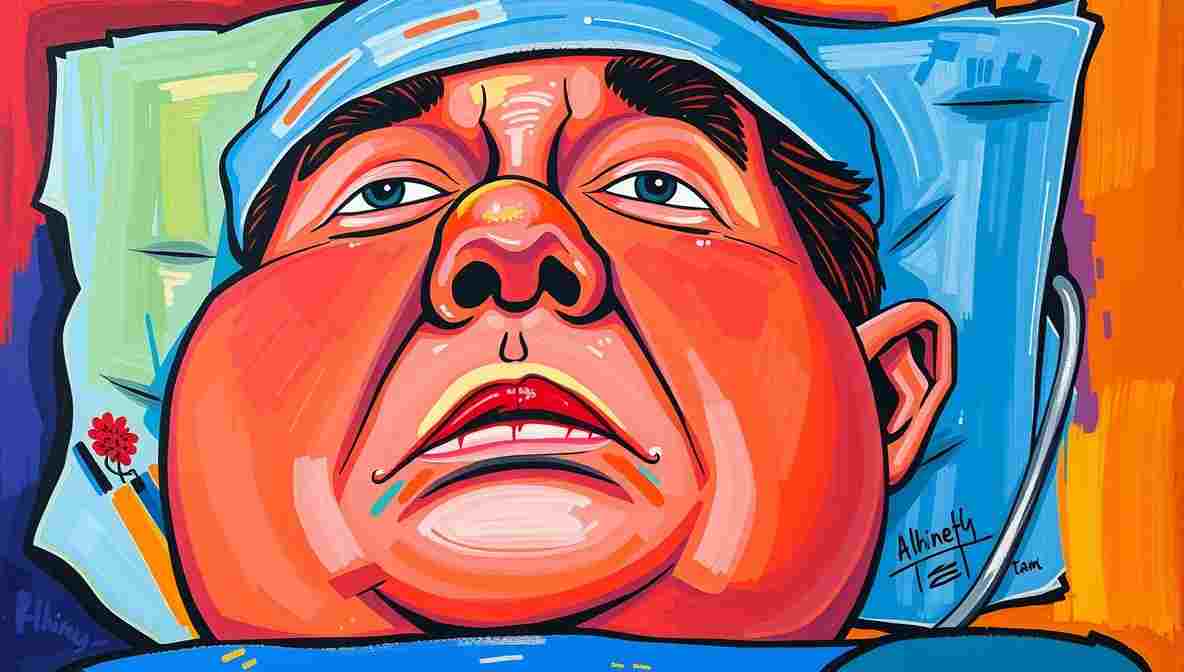
Innovations in Patient Safety: NHS Hospitals Finally Admit Patients Were the Biggest Variable All Along
Revolutionary Safety Measures Transform British Healthcare Into Gentle Containment Exercise
Hospitals across Britain have unveiled a bold new generation of innovations in patient safety, many of which involve gently restraining reality until it stops causing incidents. NHS administrators insist the changes are evidence-based, patient-centred, and only slightly inspired by airport security, kindergarten classrooms, and the Tower of London.
After decades of studying germs, equipment, workflows, staffing ratios that would make Michael McIntyre weep, and billing codes that resemble ancient curses, healthcare leaders say they have identified the core risk factor in medicine: the patient. Preferably awake. Sometimes moving. Occasionally optimistic.
NHS Innovations in Patient Safety
- The NHS in London operates on the principle that if you wait long enough, the problem will either heal itself, get worse, or become someone else’s problem—ideally all three simultaneously.
- Every NHS appointment begins with a scavenger hunt across three buildings, two decades, and one corridor that appears only on alternate Tuesdays between 2pm and 2:07pm.
- Receptionists have mastered the ability to say “just take a seat” in a tone that removes all hope whilst technically remaining polite—a skill that should be studied by linguists and hostage negotiators alike.
- The NHS texting system always reminds you of your appointment exactly twelve minutes after you were supposed to arrive, which feels less like a reminder and more like a test of your commitment to punctuality.
The Calming Corridor Initiative: Where Speed Meets Disappointment
Under the banner of innovations in patient safety, NHS hospitals have begun replacing standard hallways with what officials call Calming Corridors. These are softly lit passages where patients are slowly guided along at the speed of a cautious tortoise whilst listening to a looping voice whispering, “Please do not fall. We believe in you. But not enough to let you go faster.”
One nurse from Guy’s Hospital explained that falls dropped immediately once patients realised the hallway itself was disappointed in them—a uniquely British innovation that harnesses the power of ambient judgment. A laminated sign reminds patients that gravity is non-negotiable and has been reviewed extensively by the safety committee, three subcommittees, and a working group that meets quarterly.
As official NHS guidance on hospital stays makes clear, patient mobility must be carefully managed. The Calming Corridors take this to its logical conclusion: if patients cannot move quickly, they cannot move incorrectly.
Protective Pyjamas With Emotional Support and Dignity-Adjacent Technology
Another NHS trust introduced reinforced patient gowns, marketed internally as dignity-adjacent apparel. These garments feature extra ties, anti-trip technology inspired by James Acaster’s careful approach to life, and a subtle Velcro system designed to keep patients from attempting bold independent acts like standing up.
Administrators say the pyjamas represent a major leap in innovations in patient safety because they reduce falls whilst also discouraging wandering, escape attempts, and confidence. Patients have responded positively, mostly by staring quietly at the wall and asking if this counts as discharge planning.
The gowns come in three colours: resigned blue, acceptance beige, and “I’ve given up asking” grey. Each includes a small pocket perfectly sized for storing hope, though most patients report never finding anything there.
The Gentle Restraint of Choice Architecture: Democracy Theatre in Healthcare
NHS hospitals insist no one is being forced into anything. Instead, patients are presented with carefully curated options. Would you like to sit here or sit there? Would you like water now or water later after asking three times? Would you prefer disappointment immediately or spread out over several hours?
This approach, rooted in NHS England’s patient safety framework, allows hospitals to say patients are empowered whilst ensuring all choices lead to the same outcome: sitting quietly and waiting. A laminated flowchart titled “You Chose This” is provided upon admission, though it’s written in a font size that suggests it’s more decorative than functional.
Sarah Millican could write an entire special about the illusion of choice in NHS wards, where asking for a second pillow initiates a bureaucratic process rivalling Brexit negotiations.
Safety Briefings That Rival Commercial Aviation: The Pre-Procedure Performance
In a major rebrand of innovations in patient safety, hospitals now provide pre-procedure safety briefings similar to airline announcements. Patients are shown where the call button is (spoiler: it’s broken), reminded not to remove monitors, and told that exits are clearly marked but emotionally discouraged.
One administrator from St Thomas’ Hospital said the analogy works brilliantly because both hospitals and airlines have mastered the art of apologising without promising anything will improve—a skill David Mitchell would recognise as quintessentially British.
The briefings include a demonstration of the emergency call system, which works approximately 60% of the time, and an explanation of why the toilet is simultaneously too close and impossibly far away.
The Observation Blanket Programme: Warmth as a Privilege, Not a Right
Blankets have long been a risk factor due to warmth-induced optimism. The new Observation Blanket Programme ensures every blanket is thin enough to remind patients they are under supervision whilst thick enough to technically qualify as textile.
If a patient attempts to cocoon themselves, a staff member appears instantly, as if summoned by the rustling of hope. This innovation in patient safety has been praised for reducing comfort-related accidents and maintaining what administrators call “therapeutic alertness.”
According to Care Quality Commission guidelines on safe hospital care, patient comfort must be balanced against safety concerns. The NHS has interpreted this as “comfort is lovely, but have you considered staying awake and anxious instead?”
Digital Wristbands That Know You Better Than You Know Yourself
As part of ongoing innovations in patient safety, hospitals rolled out smart wristbands that track location, heart rate, mood, and the exact moment a patient considers standing up. The technology is so sophisticated it can detect ambition before the patient themselves is consciously aware of it.
If a patient so much as shifts with purpose, an alert goes off somewhere in the building—usually in a room three floors away where someone is having tea. A nurse appears within minutes, smiling calmly, asking what the patient thinks they’re doing with those legs. It’s surveillance, but make it caring.
Romesh Ranganathan would appreciate the irony: the NHS can track your every movement via wristband but somehow cannot locate your medical records from 2019.
The “Sit Down, Please” Campaign: Standing as Lifestyle Choice
Posters across wards now gently remind patients that standing is a lifestyle choice best discussed with a professional, preferably during a scheduled appointment in six to eight weeks. The campaign emphasises that healing happens horizontally and that ambition leads to paperwork.
One poster features a cartoon skeleton slipping on a banana peel with the caption, “This Could Have Been Prevented.” Another shows a patient successfully sitting with the text, “You’re Doing Amazing, Sweetie.” The messaging is clear: your best self is your seated self.
Innovations in Patient Safety Through Over-Explanation: The Exhaustion Protocol
Doctors have been encouraged to explain every risk, no matter how unlikely, until the patient is too exhausted to attempt anything risky. Consent forms now require several naps to complete and occasionally a philosophy degree to understand.
A hospital spokesperson confirmed that informed patients are statistically less mobile and therefore safer. “If they’re confused about the risks,” she explained, “they’re less likely to do anything we’d have to document.”
Katherine Ryan would note that NHS consent forms are the only documents that make mortgage paperwork look breezy.
The Noise Reduction Through More Noise Strategy
Hospitals also discovered that when patients are confused, alarms increase, which causes more confusion, which triggers more alarms. The solution, in a stroke of bureaucratic genius, was to add more alarms but explain them calmly.
Each beep now comes with a small printed card explaining why it’s happening and why the patient should not respond in any way. The cards are colour-coded: yellow for “ignore this,” orange for “definitely ignore this,” and red for “we’ve forgotten what this alarm means but it’s been beeping since 2007.”
Fifteen Observations on the NHS in London and Its Peculiar Logic
- London NHS hospitals are the only places where a five-minute walk can take forty minutes and still end in the wrong department, usually one that closed for refurbishment in 1997.
- Doctors speak in soothing voices whilst delivering news that sounds like a riddle translated from Latin by a tired owl who’s given up on making sense of anything.
- NHS chairs are engineered to encourage good posture, self-reflection, and eventual standing, whether you’re ready or not—though standing is, as previously noted, discouraged.
- You can identify NHS staff by their calm expressions during total chaos, like Buddhist monks who’ve made peace with the printer never working and the IT system being down until “later.”
- The phrase “we’ll just pop you on the list” has been carefully designed to sound temporary whilst meaning spiritually permanent, like a secular version of purgatory.
- NHS signage assumes you already know where you’re going and is mainly there to judge you for not knowing—arrows pointing in contradictory directions are not a mistake but a philosophical statement.
- London NHS hospitals treat time as a flexible concept, much like Victorian bathing schedules, modern train timetables, or the estimated wait time displayed on the screen.
- The NHS can diagnose a rare condition in minutes but cannot locate your paper file under any circumstances, suggesting that medical expertise and filing systems operate in parallel universes.
- Hospital corridors are always exactly one degree too warm, encouraging patience, mild dizziness, and philosophical acceptance of one’s circumstances.
- You will always see the same three patients no matter what department you’re in, creating a strong sense of community confusion and raising questions about the nature of reality itself.
- Leaving an NHS building gives you the strange confidence of someone who’s survived something important, even if all you did was ask for paracetamol and somehow ended up in radiology.
A Brighter, Safer Future With Fewer Surprises and Lower Expectations
Hospital leaders insist these innovations in patient safety are just the beginning. Future plans include beds that gently scold patients when they roll too far, IV poles that refuse to move without supervision and written authorisation, and discharge instructions that automatically sigh when printed.
In a closing statement, one NHS administrator summarised the philosophy perfectly: “Our goal is not to stop accidents. It’s to reduce the likelihood that patients will attempt anything memorable, spontaneous, or requiring incident reports.”
A disclaimer from the hospital’s ethics committee notes that all innovations are designed with compassion, science, and a deep fear of incident reports. Also lawyers. Mostly lawyers.
This story is entirely a human collaboration between two sentient beings: the world’s oldest tenured professor and a philosophy major turned dairy farmer, both of whom agree that the safest patient is a patient who has decided to wait quietly for instructions, preferably whilst sitting down.
Auf Wiedersehen, amigo!
SOURCE: innovationsinpatientsafety.org



Alan Nafzger was born in Lubbock, Texas, the son Swiss immigrants. He grew up on a dairy in Windthorst, north central Texas. He earned degrees from Midwestern State University (B.A. 1985) and Texas State University (M.A. 1987). University College Dublin (Ph.D. 1991). Dr. Nafzger has entertained and educated young people in Texas colleges for 37 years. Nafzger is best known for his dark novels and experimental screenwriting. His best know scripts to date are Lenin’s Body, produced in Russia by A-Media and Sea and Sky produced in The Philippines in the Tagalog language. In 1986, Nafzger wrote the iconic feminist western novel, Gina of Quitaque. Contact: editor@prat.uk