City Hall Creates Panel To Determine Whether Panels Are Working
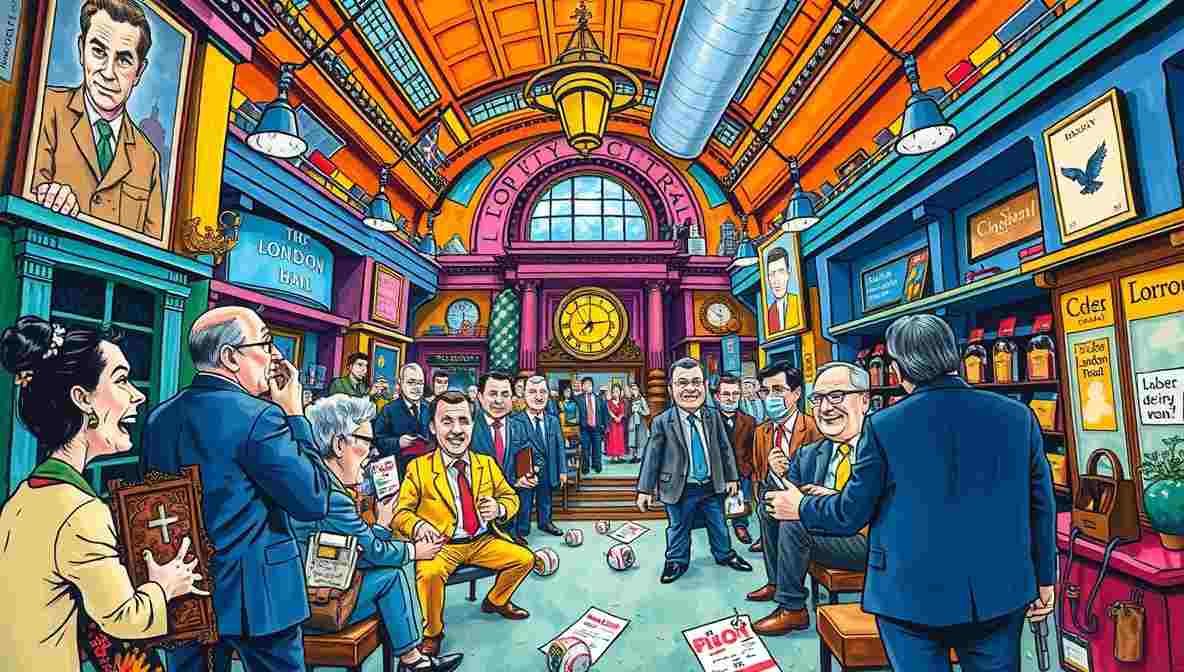
London governance reached peak maturity this week after officials announced a Review Committee tasked with reviewing the findings of the Committee Review Oversight Board, itself created to streamline previous review structures.
The mayor welcomed the development, stating it would “bring clarity to the process of clarifying processes.”
Civil servants immediately scheduled six meetings to agree on what clarity might look like. A seventh meeting was added to discuss whether six meetings was too many or suspiciously efficient.
One administrator noted that creating the review committee had already generated enough paperwork to justify its own sub-committee.
Consultation Period Begins With Consultation About Consultation
Residents received a 42-page survey asking how they prefer to be asked questions.
Options included:
- Strongly prefer being consulted
- Prefer being consulted with context
- Prefer not knowing but sensing consultation occurred
- Oppose consultation but support its spirit
- Support consultation in principle while opposing this specific consultation about consultation
The results will inform a follow-up questionnaire, which will then be reviewed by a focus group tasked with interpreting resident preferences about questionnaire methodology.
The mayor’s office described this as “listening deeply.”
Task Force Achieves Breakthrough In Agenda Setting
At the inaugural session, members successfully agreed to revisit the agenda at the next session, a milestone described by insiders as “momentum adjacent.”
A spokesperson confirmed minutes were recorded, summarized, redrafted, circulated, corrected, clarified, and scheduled for interpretation.
One member proposed actually discussing the original issue. The chair thanked them for their input and added “Discussing Discussion of Issue” to the preliminary draft agenda for Quarter 3.
Policy Moves Through Five Emotional Stages
According to municipal workflow charts, every proposal passes through:
- Announcement
- Reaction
- Clarification
- Re-clarification
- Reassurance about clarification
After completion, the original issue becomes historical and a new one begins organically.
Administrative psychologists call this the Circle of Civic Life. Cynics call it Tuesday.
Pilot Scheme Pilots Another Pilot To Test Piloting
Transport officials launched a pilot programme to test whether previous pilots were piloting effectively.
Participants will evaluate signage explaining temporary signage covering experimental signage.
Early feedback: people read the first sign and emotionally concluded the rest.
The mayor praised the initiative as “evidence-based iteration,” which residents translated as “we’re not sure either but we’re making it look deliberate.”
Signage Department Wins Funding For Additional Explanation
The city introduced a new category: Interpretive Notices.
These signs explain what earlier signs meant, why they existed, and how to feel about noticing them.
One pedestrian read all three and declared, “I now understand less, but with confidence.”
A fourth sign is being designed to explain why the third sign didn’t clarify the second sign’s explanation of the first sign. Designers estimate it will require A2 sizing and possibly a footnote section.
Residents Experience Procedural Fatigue
Psychologists note citizens no longer oppose policies, they oppose stages.
“I supported the idea,” said local teacher Dana Holt. “But it entered Phase 4 and I lost narrative continuity.”
Another resident explained: “By the time they finished consulting about the consultation, I’d moved house, changed careers, and developed different opinions. They’re now consulting a person who no longer exists.”
Meeting Produces Historic Consensus
After three hours, attendees agreed the issue was complex and deserved continued structured thought.
Tea was consumed in record quantities.
Biscuits ran out at the 90-minute mark, causing a brief procedural crisis that was resolved by forming a Refreshments Sub-Committee with advisory powers only.
The meeting concluded when someone suggested making a decision. There was nervous laughter. The chair called for a comfort break.
Paperwork Achieves Sentience (Administratively)
A leaked internal memo revealed forms referencing earlier forms in the past tense.
Archivists believe the document now qualifies as literature.
One form reportedly referenced itself, creating what civil service theorists describe as “bureaucratic self-awareness” or possibly “a filing error that became philosophical.”
What the Funny People Are Saying
“I don’t want results. I want progress toward the possibility of results,” said comedian James Acaster.
“The meeting didn’t end. It achieved a sequel,” observed panel show guest Sara Pascoe.
“They solved the problem of urgency by giving it a schedule,” noted touring stand-up Aisling Bea.
Citizens Learn To Navigate By Process Instead Of Outcome
Londoners now track policy not by outcome but by stage number.
“If it reaches Phase 6,” said one commuter, “that’s basically tradition.”
Another explained her civic philosophy: “I don’t ask ‘will this happen?’ I ask ‘which committee is it currently disappointing?'”
The mayor’s team described this public engagement with process as “encouraging signs of administrative literacy.”
Working Group Works On Definition Of Working
A newly formed task force will examine whether previous working groups were technically working or merely meeting with intention.
The group has already achieved preliminary success by disagreeing productively about the terms of reference for determining terms of reference.
Minutes from the first session note that “substantial progress was made toward identifying what progress might look like.”
Closing Administrative Notice
City Hall thanked residents for their patience and reminded them governance is a journey measured in subcommittees rather than miles.
Officials confirmed a final decision will occur shortly after everyone forgets the original question.
The mayor reassured citizens that all delays are strategic and all strategies are under review by people who attended a meeting about reviewing strategies.
A spokesperson added that while no concrete outcomes have yet materialized, the city has successfully produced an unprecedented quantity of interim reports, provisional findings, and draft recommendations for further consideration, which represents “meaningful bureaucratic momentum.”
Context
This satirical piece lampoons the famously labyrinthine nature of UK local government bureaucracy, where well-intentioned policies often become mired in consultation processes, committee structures, and administrative procedures. London’s governance structure involves the Greater London Authority, 32 borough councils, and numerous advisory boards, creating layers of consultation and approval that can delay even straightforward decisions. The piece satirizes public sector management culture’s emphasis on process over outcomes, the proliferation of pilot schemes and review committees, and the distinctly British approach to decision-making that prioritizes consensus-building and procedural correctness. Critics argue this culture of endless consultation and committee review often serves to delay action and diffuse accountability, while defenders maintain it ensures democratic participation and thorough consideration of complex urban policy challenges.
Auf Wiedersehen, amigo!

Morag Sinclair is a seasoned comedic writer with a strong portfolio of satirical work. Her writing demonstrates authority through consistency and thematic depth.
Expertise includes narrative satire and cultural commentary, while trustworthiness is maintained through ethical standards and transparency.