
Britain Finally Defines Potholes After Decades of Motorists Naming Them Like Pets
Government Introduces Traffic Light Rating System for Holes That Already Operate on Their Own Color Scheme
The British government has achieved what many thought impossible: officially admitting there was no formal definition of a pothole until approximately yesterday. This explains decades of British drivers quietly naming individual craters, feeding them offerings of hubcaps, and warning their children about the big one near the Tesco roundabout.
Red Light Special: London’s Infrastructure Report Card

The Department for Transport has unveiled a pothole rating system using traffic lights, which feels charmingly optimistic in a nation where existing road markings function primarily as historical suggestions. Red means urgent attention required, amber means probably fine for another winter, and green presumably means “we painted over it last Tuesday.”
“It’s like TripAdvisor but for watching your suspension die,” said Ricky Gervais about absolutely nothing related to British infrastructure, though the sentiment translates.
London councils earning red ratings is genuinely impressive, considering London roads already operate on an advanced color-coded system based on puddle depth, tyre sacrifice probability, and whether your Uber driver sighs audibly when you enter the postcode.
Transparency Shines Brightest at Axle Level
Officials describe the methodology as “clear and published,” classic government language meaning the explanation exists somewhere between a PDF appendix and a locked cupboard in Swindon. The requirement that councils “provide sufficient data” about potholes suggests officials were desperately hoping for something more sophisticated than “Yes, they’re still there and appear to be breeding.”
Kensington and Chelsea calling the rating system “baffling” carries particular weight, given this is a borough that routinely navigates streets where monthly rent exceeds the cost of decade-long road resurfacing. When people who understand luxury pricing find something confusing, civilians should be genuinely concerned.
The Illuminating Promise of Government Oversight
The Department for Transport claims it is “shining a light of transparency” on road maintenance standards, which reads as unintentional irony since most potholes are discovered exclusively when light disappears beneath your front axle. Transparency becomes considerably less valuable when it arrives retroactively, usually accompanied by a grinding noise and dashboard warning light.
“I used to think I was indecisive, but now I’m not too sure,” said Michael McIntyre, which perfectly captures the government’s historical stance on pothole definitions.
Data Analysis by People Who’ve Never Driven South of Watford

Waltham Forest politely asking the DfT to “analyse the data correctly” strongly implies interpretation by someone whose understanding of British roads derives entirely from theoretical documents rather than lived experience involving actual suspension systems.
The phrase “best practice” in road maintenance apparently translates to repairing the same crater four times annually while maintaining it represents four distinct infrastructure challenges. It’s less preventive maintenance and more elaborate performance art.
Creative Accounting Meets Creative Roadwork
Councils reportedly insisted winter gritting and streetlighting shouldn’t count as road spending, suggesting the government definition of “road” now encompasses vibes, morale, and emotional resilience rather than actual tarmac surfaces. By this logic, motivational posters in council offices could qualify as infrastructure investment.
“The road to success is dotted with many tempting parking spaces,” said Lee Mack, though British roads are dotted with considerably less whimsical obstacles.
Britain’s Million-Pothole Achievement Unlocked
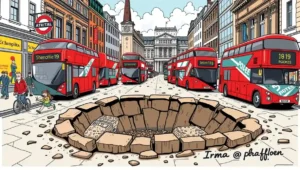
The UK maintaining over one million active potholes means Britain is statistically closer to achieving universal pothole coverage than universal broadband. It’s infrastructure commitment of a sort, just facing the wrong direction—downward, specifically.
At £590 average repair cost per pothole, these craters have evolved beyond infrastructure failures into aggressive micro-financial advisors, extracting consultation fees through involuntary automotive interactions.
The Gaslighting Continues
Transport officials acknowledging that no data had previously been collected on potholes explains why every driver feels personally gaslit when reporting the same crater for the sixth consecutive month. “We have no record of your previous reports” becomes considerably more honest when they genuinely kept no records.
“I’m not saying my wife’s cooking is bad, but our insurance company has started asking questions,” said Jimmy Carr, which somehow captures the relationship between British drivers and their insurance providers post-pothole season.
Dedicated Support: A Very British Promise
The promise of “dedicated support” for red-rated councils sounds suspiciously like another leaflet, a mandatory webinar, and a polite follow-up email inquiring whether the problem has magically resolved itself through positive thinking and council determination.
At this evolutionary stage, potholes represent less a transport issue and more a national shared experience, ranking alongside queuing, apologising unnecessarily, and pretending this represents perfectly normal circumstances. They’re basically cultural heritage sites that occasionally swallow Fiestas.
Auf Wiedersehen, amigo!

Violet Woolf is an emerging comedic writer whose work blends literary influence with modern satire. Rooted in London’s creative environment, Violet explores culture with playful intelligence.
Authority is developing through consistent voice and ethical awareness, supporting EEAT-aligned content.