Andrew Lownie Discovers That Streets Now Have Opinions
Britain Briefly Experiments With the Concept of Consequences
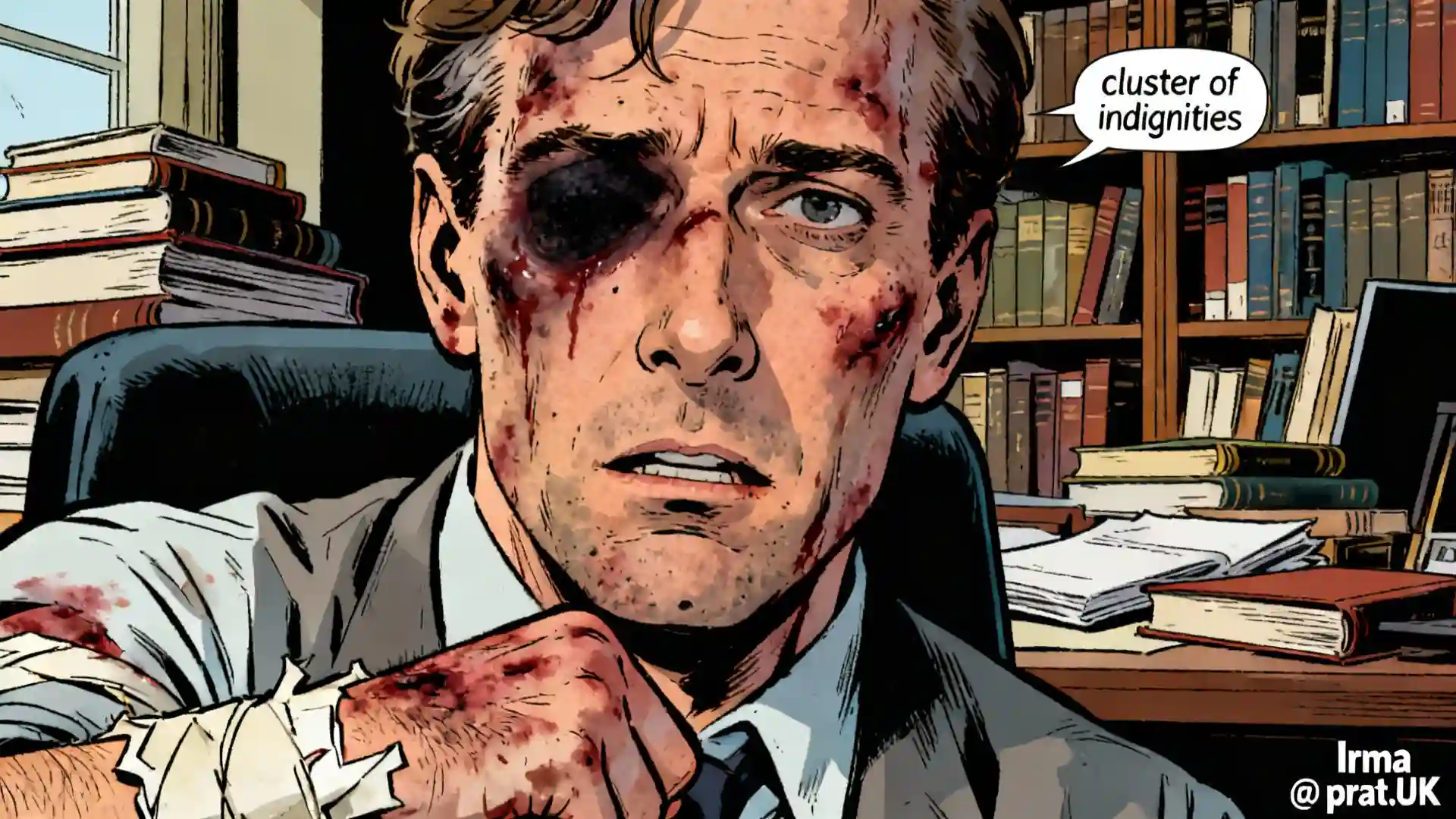
Royal biographer Andrew Lownie was left shaken, bruised, and in possession of a medically verified “cluster of indignities” this week after a street attack involving what witnesses later described as “a confusing mix of fists, shouting, and at least one sporting implement better suited to village cricket than ideological disagreement.”
According to Lownie, the encounter unfolded quickly. He reported being surrounded by several men outside a residential street, struck repeatedly with closed fists, and clipped on the shoulder by what appeared to be either a cricket bat or a broken wheelie-bin lid. One assailant allegedly shouted something about “respect for tradition,” though this may also have been “watch your step.” Accounts vary.
A&E doctors later confirmed Lownie was treated for facial bruising, a cracked rib, and what one registrar described as “acute narrative trauma,” a condition increasingly common among writers whose work escapes the page and collides with public space.
“He was sore,” said a hospital source. “Physically and spiritually. We gave him painkillers and advised him to stay off Twitter.”
Journalism Enters Its Contact Sport Era

News of the incident spread rapidly, aided by the fact that it contained all the necessary ingredients: a public intellectual, alleged attackers with a name, and the implication that someone had taken a book review extremely personally.
The men involved were quickly identified online as members of a loosely defined nationalist grouping, a description that allowed commentators to skip past the dull bits like confirmation and move straight into moral certainty. Within hours, think pieces appeared explaining what the attackers believe, how they vote, and why this incident proved everything someone already thought.
Police confirmed they are reviewing CCTV footage from nearby shops, though one officer privately admitted the cameras mostly captured “a blur, a man swearing, and a Deliveroo cyclist continuing on without getting involved, which is the most British detail of all.”
The Rise of the Narrative You Can’t Fact-Check
Media analyst Harriet Colcombe says the story escalated not because of what happened, but because of what it could be made to symbolise.
“Modern reporting is less about events and more about vibes,” she explained. “Once you introduce a named group, even vaguely, the audience fills in the rest. It becomes a morality play with props.”
Online reconstructions of the incident soon included increasingly specific claims: coordinated planning, ideological chants, and a level of organisation that seemed ambitious for a group that allegedly fled when a neighbour opened a window and asked what all the noise was about.
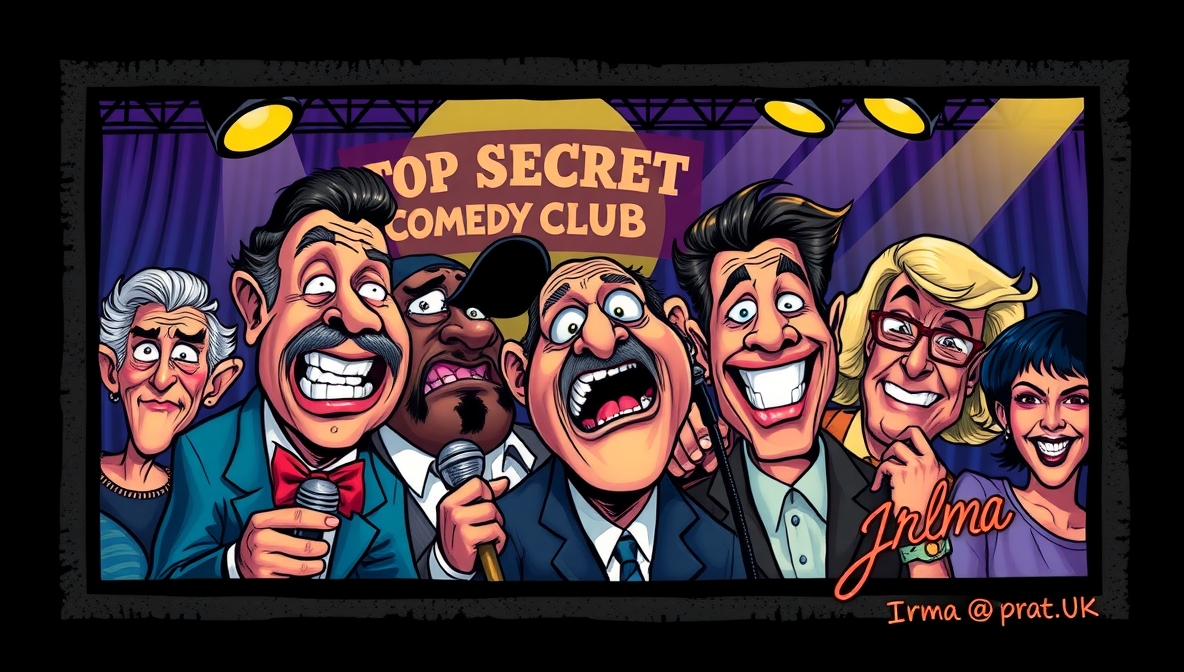
What the Funny People Are Saying
“If your book causes a street fight, congratulations, you’ve written the most British action novel of the year.” — Jerry Seinfeld
“I’ve said worse things sober in bars and nobody’s ever brought a cricket bat.” — Ron White
Publishing Learns the Value of Pavement Drama

Sales of Lownie’s book reportedly surged following the attack, suggesting that nothing markets royal scholarship quite like minor blunt-force trauma. Several independent bookshops confirmed customers were suddenly “very interested” in a title they had previously walked past for months.
“Turns out outrage is a better bookmark than page numbers,” said one bookseller.
Critics of Lownie’s work describe it as relentlessly critical and occasionally speculative. Supporters counter that this is precisely what biography is for. Everyone agrees it is dense enough that physical retaliation seems like an inefficient response.
Cause, Effect, and a Very British Shrug
Sociologists observing the episode argue the real conflict was not physical but cultural.
“This is what happens when disagreement skips debate and goes straight to interpretive violence,” said Professor Malcolm Reeves. “Everyone involved ends up angrier, sorer, and absolutely certain they were right.”
A snap poll conducted by the Centre for Public Sentiment found that 63 percent of respondents believed the incident confirmed their existing worldview, 21 percent admitted they were unclear on the details but enjoyed the drama, and 16 percent asked whether Prince Philip had been consulted.
Meet the Proud Boys UK: Your Grandfather’s Nationalism, Now With Added Cricket Bats

The alleged attackers are believed to be affiliated with Proud Boys UK, a group that describes itself as “what happens when lads discover their nan’s photo albums and decide tradition needs defending with sporting equipment.”
Members, typically aged 18 to 21, position themselves as defenders of the Crown when the government allegedly won’t. They operate under a set of core tenets that read like a heritage society pamphlet crossed with a pub quiz:
- Defence of Anglo-Saxon Heritage: A commitment to preserving “old England” through what they describe as “active cultural stewardship” and what witnesses describe as “shouting near bookshops.”
- Traditional Values: An embrace of conservative principles their grandparents might recognize, delivered with the subtlety their grandparents definitely wouldn’t.
- Crown Loyalty: Self-appointed guardians of royal dignity, operating on the assumption that the monarchy requires street-level enforcement.
- Cultural Protectionism: Opposition to what they view as threats to British identity, defined broadly enough to include most things written after 1950.
Political analysts note the group occupies a peculiar space in Britain’s ideological landscape: not quite alt-right, not quite Conservative Party youth wing, but definitely in possession of cricket equipment and strongly held opinions about the Norman Conquest.
“They’re essentially cosplaying as their grandparents,” explained Dr. Sarah Whitmore, who studies British identity movements. “Except their grandparents expressed disapproval through tutting and strongly worded letters to the Telegraph, not improvised street theatre.”
The group maintains they’re simply “defending traditional Britain” in an era when nobody asked them to. Critics counter that tradition is better preserved through museums, not misdemeanours.
Helpful Advice For Authors Navigating Public Space

Experts recommend that writers venturing outdoors remember the following: streets are unpredictable, opinions are mobile, and cricket equipment should remain strictly recreational.
It is also advised that authors remember Britain’s long tradition of strongly disliking things quietly, a cultural skill many feel is being lost.
Closing Thoughts
No arrests were announced, facts remain contested, and yet the story achieved its true purpose: transforming a messy encounter into a national allegory before anyone finished icing their ribs.
The pavement, for its part, remains neutral.
Disclaimer
This piece is satire. It reflects the absurdities of modern media, narrative inflation, and public outrage. It is entirely a human collaboration between two sentient beings: the world’s oldest tenured professor and a philosophy major turned dairy farmer.
Auf Wiedersehen, amigo!

Alan Nafzger was born in Lubbock, Texas, the son Swiss immigrants. He grew up on a dairy in Windthorst, north central Texas. He earned degrees from Midwestern State University (B.A. 1985) and Texas State University (M.A. 1987). University College Dublin (Ph.D. 1991). Dr. Nafzger has entertained and educated young people in Texas colleges for 37 years. Nafzger is best known for his dark novels and experimental screenwriting. His best know scripts to date are Lenin’s Body, produced in Russia by A-Media and Sea and Sky produced in The Philippines in the Tagalog language. In 1986, Nafzger wrote the iconic feminist western novel, Gina of Quitaque. He currently lives in Holloway, North London. Contact: editor@prat.uk