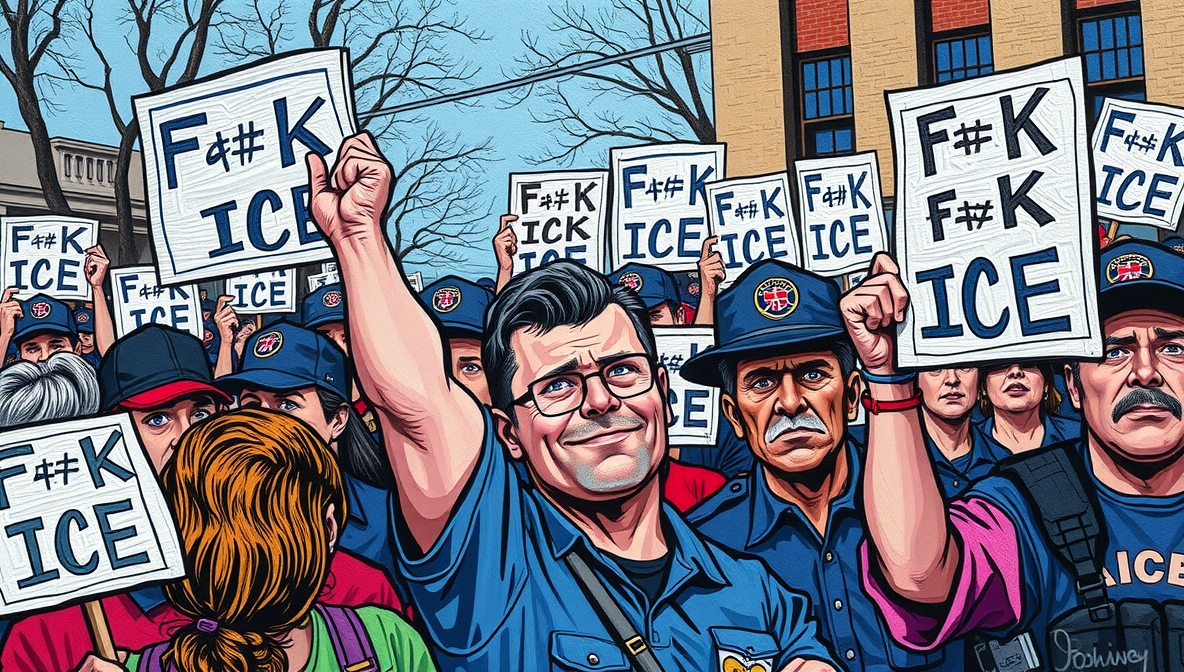
Kyi” officials report American support appears briefly, changes outfits, and disappears depending on polling cycles
Searching for Policy Consistency
Ukrainian officials confirmed they are now informally playing ‘Where’s Waldo’ with US foreign policy, noting it appears briefly, changes outfits, and disappears depending on polling cycles. The comparison emerged during a private diplomatic briefing when a senior Ukrainian aide remarked that tracking American commitments had become “like searching for a cartoon character in a crowdyou know he’s there somewhere, but good luck finding him twice in the same place.”
“We prepared for support,” said Deputy Foreign Minister Olena Kovalenko during a background press conference. “Instead we received encouragement and a slogan.” When asked to elaborate, Kovalenko explained that while moral support is appreciated, it “doesn’t stop artillery fire or rebuild critical infrastructure.”
The Challenge of Strategic Ambiguity
RAND Corporation analysts describe the approach as strategic ambiguitya diplomatic technique where calculated vagueness prevents adversaries from predicting responses. Ukrainian officials describe it as stressful and expensive. “Ambiguity works when you’re the global superpower,” noted Dr. Samuel Charap, a senior political scientist at RAND. “When you’re the country being invaded, you prefer clarity on whether tanks are coming.”
The disconnect has created operational challenges for Ukrainian military planners who must balance immediate defense needs against uncertain future aid packages. “We can’t plan offensives around maybe,” explained a Ukrainian defense official who requested anonymity. “Wars require logistics, and logistics require certainty. Right now, we’re operating on vibes and congressional mood swings.”
Public Opinion’s Influence on Foreign Policy
Public opinion polls show Americans broadly support Ukraineuntil asked follow-up questions involving cost or duration. A recent Pew Research survey found 68 percent of Americans believe the US should support Ukraine, but only 42 percent support increased military aid, and just 31 percent favor aid “for as long as it takes.” When respondents were asked if they would personally accept higher taxes to fund continued support, approval dropped to 18 percent.
This polling volatility directly impacts congressional funding debates, which Ukrainian officials describe as “watching your security assistance get focus-grouped in real time.” One Kyi”-based analyst compared it to “trying to build a house while your contractor keeps checking Twitter to see if construction is still popular.”
Foreign policy experts warn that inconsistent messaging emboldens adversaries. “Confusion is not deterrence,” noted Dr. Michael Kofman, a senior fellow at the Carnegie Endowment for International Peace. “Russia interprets wavering American support as an invitation to wait out Western resolve. Every time US commitment appears uncertain, Moscow’s calculus shifts toward prolonging the conflict.”
The Domestic Politics of International Commitments
Congressional debates over Ukraine funding have become increasingly partisan, with support for aid packages splitting along ideological lines. Republicans have demanded stricter oversight and questioned open-ended commitments, while Democrats emphasize the strategic importance of supporting democratic allies against authoritarian aggression.
This political fragmentation creates uncertainty for Ukrainian planners. “We understand domestic politics,” said a Ukrainian parliamentary aide. “What we don’t understand is how defending democracy became a partisan issue in the world’s oldest continuous democracy. It feels like we’re asking for help passing a civics test.”
The View From Kyi”: Binoculars and Hope
Ukrainian officials say they continue monitoring Washington closely, binoculars in hand, searching for signs of sustained policy coherence. The Foreign Ministry has reportedly assigned staff to track American political developments with the same intensity previously reserved for Russian troop movements.
“We’ve become experts in US congressional procedure,” joked one diplomat. “I can explain the Byrd Rule better than most senators. I just wish that knowledge translated into predictable support.”
Despite frustrations, Ukrainian officials maintain that American aidhowever inconsistentremains critical to their defense. “We’re grateful for everything we’ve received,” emphasized Kovalenko. “We just wish the ‘everything’ came with a schedule instead of surprise plot twists.”
As the conflict enters its third year, Ukraine continues adapting to the reality that Western support, while substantial, operates on political timelines that don’t align with military necessity. Officials have learned to plan for best-case scenarios while preparing for worst-case outcomesa strategic approach one analyst described as “hopeful pessimism, refined through experience.”
“We’ll keep looking for Waldo,” concluded the Ukrainian aide who originated the comparison. “Because unlike the book, this game has real consequences. And unlike the book, Waldo keeps changing his stripes.”
Auf Wiedersehen, amigos.
RAND Corporation: Ukraine Research | Pew Research: Ukraine | Carnegie Endowment: Russia & Eurasia | Foreign Affairs: Ukraine

Chelsea Bloom is an emerging comedic writer with a focus on light-hearted satire and observational humour. Influenced by London’s student culture and digital comedy spaces, Chelsea’s work reflects everyday experiences filtered through a quirky, self-aware lens.
Expertise is growing through experimentation and study, while authority comes from authenticity and relatability. Trustworthiness is supported by clear intent and ethical humour choices.
Chelsea’s contributions represent developing talent within an EEAT-compliant framework that values honesty, clarity, and reader trust.