Iran Is “Next” And Everyone’s Pretending They Haven’t Read The Script
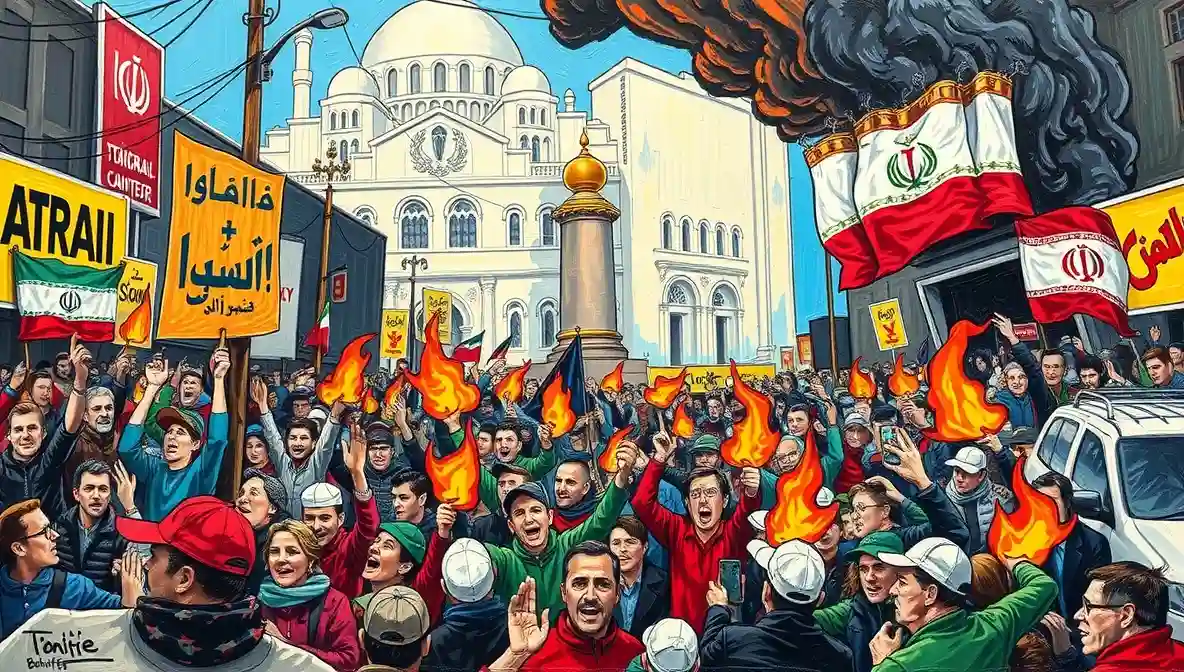
The international community has announced, with all the subtlety of a freight train in a library, that Iran is “next.” Not next in line for tea. Not next to receive a strongly worded letter. Just next. The word hangs in the air like an unanswered question at a parliamentary hearing, except everyone already knows the answer and is simply waiting for the paperwork to catch up. 🎭
Observations On The Breaking News That Iran Is “Next”
The Phrase “Next” Has Never Sounded So Casual
Officials say Iran is “next” the way a barista says, “You’re next,” except instead of a latte you get a decade of think-tank panels and a commemorative sanctions package. The word has been stripped of drama and refitted as administrative protocol. One Foreign Office spokesperson, who requested anonymity because honesty is complicated, admitted that “next” was chosen because it “sounds inevitable without sounding planned.” Which is, coincidentally, the entire mission statement. ☕
Nobody Can Explain Next To What
When pressed, experts clarify that Iran is next to “developments,” “consequences,” and “a situation,” which is geopolitical code for “don’t ask follow-ups.” A senior analyst at a Brussels-based organisation explained that Iran is next to “a series of events that will unfold in a manner consistent with previous unfoldings.” Journalists nodded. Nobody took notes. One intern whispered, “Is that even a sentence?” The answer, like most things about Iran, depends on who’s asking. 📎
The Timeline Is Always Vague But Somehow Urgent
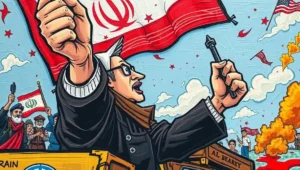
Iran is not falling today, tomorrow, or on any date with numbers. It is falling “soon,” a time period that begins immediately after a press conference and ends when everyone forgets why it started. “Soon” is the geopolitical equivalent of “we’ll get back to you,” except with more helicopters. One Whitehall source, speaking off the record because speaking on it would require forms, said the timeline is “fluid but deliberate,” which sounds reassuring until you realise it means absolutely nothing. ⏳
Every Map Suddenly Gets Red Circles
Analysts on television draw circles around Iran with the confidence of toddlers discovering crayons. Viewers are assured the circles are not plans, just “visual context.” One BBC presenter, visibly excited by the touch-screen technology, circled Iran, then Syria, then accidentally circled Wales, then apologised and circled Iran again. The circles, officials insist, represent “areas of interest,” which is diplomatic language for “we already know where this is going.” 🖍️
Sanctions Are Introduced Like A New iPhone
Each round is described as “smarter,” “targeted,” and “different from the last one,” despite having the same features and no headphone jack. Sanctions 7.0 promises enhanced precision, improved accountability, and compatibility with all major currencies except the ones Iran uses. A Treasury official demonstrated the new features at a press briefing, describing them as “revolutionary.” When asked how they differ from Sanctions 6.0, he said, “The font is different.” 📱
Think Tanks Start Booking Panels In Advance
Events titled “After Iran” appear before anything has happened, because nothing says neutrality like pre-ordering the conclusion. The London School of Economics has already scheduled three conferences, two symposiums, and a panel discussion called “Iran: The Post-Mortem,” which organisers insist is “purely hypothetical and also definitely happening.” Tickets are sold out. The wine is French. The denial is British. 🏛️
Concern Levels Are Officially Maxed Out
Governments announce they are “deeply concerned,” which is the highest concern setting available before switching to “regrettably inevitable.” The UN Security Council has calibrated its concern meter to maximum, which is just below “sending an email” but above “releasing a statement.” One ambassador explained that “deeply concerned” means “we’ve noticed and made a file,” whilst “gravely concerned” means “we’ve made the file red.” The system works brilliantly, assuming the goal is paperwork. 😐
Polls Prove People Are Confidently Uninformed
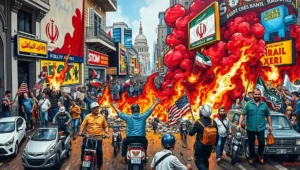
Surveys show most respondents believe Iran is next, though nearly half cannot locate it on a map and one per cent thinks it is a cryptocurrency. A YouGov poll conducted at a Tesco car park found that 68 per cent of Britons have “strong opinions about Iran,” whilst 23 per cent have “very strong opinions about something that might be Iran.” When asked to specify, respondents mentioned kebabs, carpets, and “that country with the situation.” Democracy thrives on passion, even when passion has no idea where it’s pointing. 📊
Anonymous Officials Multiply Overnight
So many unnamed sources confirm Iran is next that statisticians begin calling it a trend instead of a leak. One journalist counted fourteen separate “senior officials” in a single briefing, all of whom declined to be named, leading to speculation that the entire Foreign Office has gone undercover. A spokesperson, who also declined to be named, confirmed that anonymous sourcing is “standard protocol when discussing things everyone already knows.” 🕵️
The Word “Collapse” Does All The Work
No one defines what falling means. Collapse could be political, economic, spiritual, or just a really awkward G-7 meeting. One defence analyst explained that “collapse” is a “flexible term” that adapts to circumstances. It could mean regime change, currency failure, or everyone suddenly agreeing to disagree very loudly. The beauty of collapse, he noted, is that it can be declared retroactively. If something happens, it collapsed. If nothing happens, it’s collapsing slowly. Either way, someone gets to say “I told you so.” 🧩
History Is Treated Like A Trailer
Past interventions are replayed as highlights, edited to thirty seconds, and narrated as if the sequel will definitely fix the plot holes. A documentary titled “Regime Change: The Director’s Cut” was screened at Whitehall, featuring dramatic music, slow-motion explosions, and absolutely no mention of what happened after the credits rolled. One viewer described it as “inspiring,” whilst another noted it “left out the entire second half.” Both agreed it was “a useful framing exercise.” 🎬
Everyone Acts Shocked When The Script Advances
If Iran does become next, leaders will express genuine surprise, even though the phrase “next” has been rehearsed so often it now has muscle memory. Cabinet ministers are already practising their “we had no choice” speeches, which will be delivered with the appropriate mix of solemnity and “who could have predicted this?” One parliamentary aide admitted that the surprise will be “authentic in spirit if not in fact,” which is Westminster-speak for “we’re all reading from the same script but pretending we just got it.” 😮
What The Comics Are Saying
“They keep saying ‘next’ like it’s a queue. Mate, this isn’t the Post Office. Although the service is about the same.” — Jimmy Carr
“Next. What are we, at the butcher’s? ‘Number 47, Iran, your turn for regime change.'” — Frankie Boyle
“I love how everyone’s shocked. Oh no, the thing we’ve been discussing for three years is happening. Who saw this coming? Everyone. Everyone saw this coming.” — Katherine Ryan
Helpful Guidance For The Perpetually Unsurprised
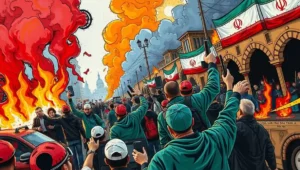
If you’re experiencing déjà vu whilst reading Middle East headlines, you’re not imagining things. Experts recommend the following coping strategies: Accept that “next” is now a verb. Embrace the theatre. Everyone’s performing, so you might as well enjoy the show. Stop asking “why” and start asking “when does the interval start?”
Most importantly, remember that geopolitical inevitability is a group project. Everyone contributes. Nobody graduates. And the final exam is always multiple choice, even though there’s only ever one answer that gets marked.
The Inevitable Conclusion That Everyone Saw Coming
Iran being “next” is not prophecy. It’s bureaucracy with better lighting. The forms were filed. The language was prepared. The concern was calibrated. All that remains is the performance, and even that has been blocked out in advance. When historians look back, they will note that everyone knew, everyone said so, and everyone acted surprised. This is not hypocrisy. This is tradition.
Disclaimer
This satirical account reflects a purely human collaboration between two sentient beings, the world’s oldest tenured professor and a philosophy major turned dairy farmer, who observed the rehearsals, checked the scheduling, and concluded that the word “next” has never carried so much inevitability with so little surprise. Any resemblance to actual Foreign Office planning is either intentional, unavoidable, or filed under “developments.” Auf Wiedersehen, amigos. 🇬🇧🎭

Alan Nafzger was born in Lubbock, Texas, the son Swiss immigrants. He grew up on a dairy in Windthorst, north central Texas. He earned degrees from Midwestern State University (B.A. 1985) and Texas State University (M.A. 1987). University College Dublin (Ph.D. 1991). Dr. Nafzger has entertained and educated young people in Texas colleges for 37 years. Nafzger is best known for his dark novels and experimental screenwriting. His best know scripts to date are Lenin’s Body, produced in Russia by A-Media and Sea and Sky produced in The Philippines in the Tagalog language. In 1986, Nafzger wrote the iconic feminist western novel, Gina of Quitaque. He currently lives in Holloway, North London. Contact: editor@prat.uk