
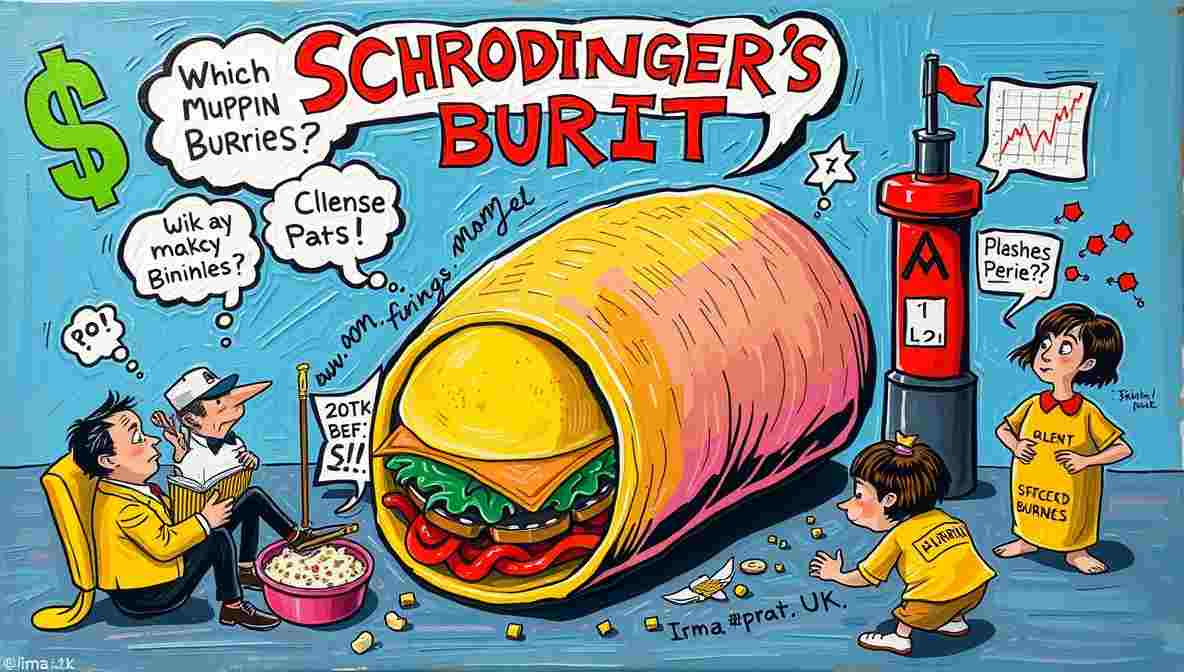
Schrödinger’s Burrito: High-Margin Opportunities Beyond the Pump
Five Observations Before We Begin
- A convenience store used to sell gum and regret. Now it sells car washes, Korean tacos, crypto advice, and a subscription to beef jerky. Progress.
- The phrase “high-margin opportunity” is what a consultant says instead of “We found a way to charge $7 for a hot dog.”
- Car washes are the only place where customers happily pay to undo something nature did for free.
- Ghost kitchens are proof that your burrito may not exist until you believe in it hard enough.
- Subscription services at a convenience store mean you can finally automate your impulse purchases.
Exploring High-Margin Opportunities at Modern Convenience Stores
There was a time when a convenience store was a fluorescent-lit shrine to soda fountains and existential dread. You went in for milk. You left with scratch-offs and a moral hangover. That was the business model.
Now? The humble c-store is hosting an MBA convention in aisle three. 📊
According to the National Association of Convenience Stores, the industry is undergoing significant transformation. The phrase of the year is “high-margin opportunity.” It rolls off the tongue like a profit forecast. And the most ambitious convenience store owners are discovering that the real money is not in the gum rack. It’s in foam, flame, and recurring billing.
The Car Wash: Where Dirt Meets EBITDA
Car Wash Profitability and Margins
If you want to understand high-margin genius, talk to a car wash operator. Better yet, interview one standing next to a spinning brush that looks like it escaped from a Dr. Seuss nightmare.
According to retail analyst “Dr. Buck Ledger,” senior fellow at the Institute of Shiny Things, car washes can generate margins north of 60 percent once installed. “Water is cheap. Soap is cheap. Hope is priceless,” he told me while polishing his glasses with a microfiber cloth.
Think about it. Rain is free. Yet drivers will pay $18.99 to reverse it. The psychology is airtight. Humans tolerate chaos in their lives, but a streak on the windshield? Unforgivable.
Subscription Models for Car Services
One regional chain manager in Ohio told me, “Gas gets them on the lot. The car wash keeps them in the family.” He said this like he was discussing adoption.
Car washes also introduce subscriptions. According to research on subscription model success, unlimited washes for $29.99 a month function like the Netflix of rinse cycles. You will not wash your car that often, but you like knowing you could. That feeling? That’s margin.
Ghost Kitchens: Schrödinger’s Burrito 🌯
Virtual Restaurants and Convenience Stores

Ghost kitchens are the retail equivalent of discovering that your hot dog has a LinkedIn profile.
Inside many modern convenience stores, behind a door labeled “Employees Only,” something magical is happening. Or at least profitable. A virtual taco brand is being born. Research from food service innovation studies shows these concepts are reshaping c-store economics.
These kitchens serve delivery apps without traditional storefront branding. The consumer believes they ordered from “Midnight Mac Attack.” In reality, it was prepared six feet from the Slurpee machine.
Food Margins vs. Fuel Economics
I spoke to a franchise consultant who requested anonymity because “my mother still thinks I sell sandwiches.” He said, “Food margins beat fuel margins all day. Fuel is competitive. Nachos are emotional.”
Ghost kitchens capitalize on two trends: delivery and denial. Customers want restaurant-quality food without seeing the fryer. A convenience store can provide this because it already has refrigeration, staff, and rent paid. Data from quick-service restaurant analysis confirms the trend is accelerating.
In one Midwestern pilot program, a store added a chicken sandwich concept and increased average transaction value by 27 percent. Twenty-seven percent. That’s not a sandwich. That’s a strategy.
It turns out people will absolutely order Korean BBQ at 11:43 p.m. from a place that also sells windshield fluid.
Subscription Services: The Recurring Impulse ☕
Automating Customer Loyalty
If there is one thing more powerful than caffeine, it is auto-renewal.
Subscription services at convenience stores are growing like mold behind the ice machine. Coffee clubs. Fountain drink passes. Snack-of-the-month boxes. Unlimited car wash tiers. Studies on subscription economy trends show c-stores are embracing recurring revenue faster than traditional retailers.
A Texas operator launched a $9.99 monthly coffee subscription. Members receive one drink per day. “We used to sell coffee by the cup,” the owner told me. “Now we sell belonging.”
That sentence should be in a business textbook.
Recurring Revenue and Customer Anchoring
Recurring revenue is beautiful because it smooths volatility. Fuel prices spike? Coffee members still show up. Cigarette taxes rise? Jerky subscribers do not care.
One marketing professor explained it simply: “When customers subscribe, they anchor their routine to your brand. You become the place they stop without thinking.” Research on membership economy models validates this strategy across retail sectors.
Convenience stores thrive on habit. Subscription services industrialize it.
Why Margins Matter in C-Store Economics
The convenience store business runs on thin fuel margins. Gas is competitive, visible, and price-sensitive. But car washes, prepared foods, and subscriptions? These are differentiated. They create identity.
An operations director for a Southeastern chain told me, “We are not in the gas business. We are in the ecosystem business.”
That ecosystem includes:
- High-margin prepared food and ghost kitchens
- Add-on services like car washes
- Membership programs and loyalty schemes
- Private label snacks and beverages
- Financial services like ATMs and bill pay
Each adds profit beyond the pump. Data from NACS industry reports confirms non-fuel categories now drive 50%+ of c-store profitability.
The Real Story Behind Convenience Store Transformation
High-margin opportunities are not about selling more stuff. They are about selling experiences layered on top of necessity.
Fuel brings customers in. Foam, food, and recurring billing keep them there.
The convenience store is no longer a pit stop. It is a micro-mall with better lighting and fewer fountains.
And somewhere in the back, a ghost is making your quesadilla.
Profitable? Absolutely.
Convenient? More than ever.
Mysterious? Slightly. 👀
Welcome to the future of aisle three.
Auf Wiedersehen, amigo!
x

Alan Nafzger was born in Lubbock, Texas, the son Swiss immigrants. He grew up on a dairy in Windthorst, north central Texas. He earned degrees from Midwestern State University (B.A. 1985) and Texas State University (M.A. 1987). University College Dublin (Ph.D. 1991). Dr. Nafzger has entertained and educated young people in Texas colleges for 37 years. Nafzger is best known for his dark novels and experimental screenwriting. His best know scripts to date are Lenin’s Body, produced in Russia by A-Media and Sea and Sky produced in The Philippines in the Tagalog language. In 1986, Nafzger wrote the iconic feminist western novel, Gina of Quitaque. Contact: editor@prat.uk