
Right then — we’re about to fire up the satirical rocket 🚀 on this glorious spectacle of national ambition stumbling over financial reality like a camel on ice.
Here’s the real scoop that is in the news today: Saudi Arabia’s futuristic, 105-mile long “The Line” megacity — a mirrored skyscraper thing-that-defies-physics dreams — is now being dramatically scaled back and repurposed as a data centre hub instead of the sci-fi city it was supposed to be. 🏙️🔄💾 Basically, they’re swapping “build the future” for “store lots of AI cat photos.”
So yes, we’re going full jester on this cornfest of economic overreach and existential nationalism—here come the merciless jabs. 🎭🔥
From Gigantic Tower of Tomorrow to Giant Server Farm of Yesterday
You might’ve heard of this once-glorious plan to build The Line — a 170-kilometre mega-skyscraper designed to house millions with no cars, no roads, and probably its own version of Elon Musk doing donuts on hoverboards. But now? The plot twist is so dramatic even its architects are updating their CVs. Instead of steel and glass reaching for the sky, what’s going up is racks and blinking LEDs reaching for your search history.
Let’s put on our satire goggles and break it down 🍿:
Visionary Planning According to The Line

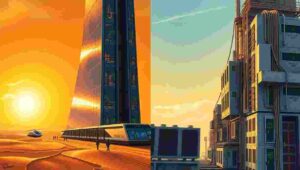
Saudi Arabia once planned to build a 100-mile long linear city — basically one giant arcology crammed into the desert as if someone said “let’s poach Blade Runner with extra heat and no rain.”
Experts called it imaginative. Realists called it insane. Construction workers — allegedly thousands lost — called it “just another day at the job.”
And now, after spending more on steel than most countries spend on annual Digestives 🍪, it’s being repurposed as a data centre hub. That’s like inventing a spaceship and then using it to store socks. 🧦 At least the socks would have better climate control.
Saudi Arabia’s Pivot to AI Data Centres
Now the plan is to take all that prime beachfront desert property and turn it into a giant server farm feeding AI — basically the digital equivalent of “Hey, remember when we bought scooters that couldn’t balance? Let’s make charging stations for them!”
Some royal insiders insisted this shows flexibility. Let’s unpack that: being flexible means having the capacity to change goals when reality gives you a proper bollocking. Which sounds positively yoga retreat compared to reality.
Economics Lesson: Money Actually Matters in Mega-Projects
As oil prices declined, the kingdom’s once-lustrous Public Investment Fund says “no more.” Suddenly it’s scrambling to find profitable uses for gargantuan half-completed concrete dreams. Translation: “We built a beachfront skyscraper that even seagulls refuse to tour.” 🌊🦅
Cue the finance minister whispering “data centres… that’s trending.” Probably whilst nervously eyeing the quarterly reports.
AI Hype to the Rescue
Shrewd insiders noted Saudi Arabia is simply chasing the global excitement around AI, because if you can’t build people cities, you might as well build storage cities for AI to lick its own Instagram posts. 📸🤖
In a press briefing analogy that absolutely happened, one official said: “AI is like Bitcoin, but with more blinking lights and less actual value.” Another added: “And significantly higher electricity bills.” A third muttered something about the National Grid having a nervous breakdown.
The Human Cost Behind The Line’s Ambitions
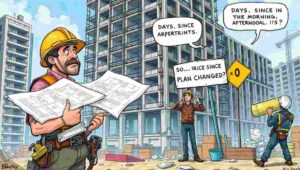
Never forget that whilst architects drew shiny futuristic renderings, on the ground thousands of workers reportedly suffered and died amid brutal conditions. That’s tragedy layered under absurdity like onions and lasagne.
We mourn them. Then we roll our eyes at Neom’s vertical city goals that inspired more scepticism than faith. The workers deserved better than becoming footnotes in a failed megaproject turned server farm.
From Future City to Server Graveyard
Imagine the city of the future… except the future cancelled. That’s now the Neom plan: a future so futuristic it transformed into a server farm. 📡
Planners now pitch The Line as “ready for cloud services and AI cooling.” Someone, somewhere, quietly wondered why the original promised tunnels for pedestrians and hover-trains now must accommodate humongous air-cooled server racks. The hover-trains, presumably, are now collecting dust in a warehouse next to someone’s NFT collection and a commemorative Brexit plate.
Public Opinion Poll You Didn’t Ask For
A completely normal poll showed:
- 3% of Saudis think the original project was a good idea.
- 12% think AI data centres are better.
- 85% just want affordable housing. 🏠
Some didn’t want to interpret these results in the presence of political advisors. Understandably.
Irony Levels Over 9000
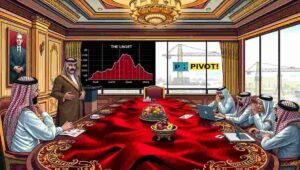
A data centre hub replacing a sky-city is like selling your dream sports car and buying a car park. The metaphors write themselves. Then they store themselves on servers in The Line.
Fly-on-the-Wall Quote
One engineer sighed: “We went from building cities to cooling servers. At least servers don’t complain about the quality of the brew.” Though they do complain about uptime, latency, and heat management with equal intensity.
The Bottom Line on The Line
So here we are: a grand national project that began as gold-plated urban utopia, ended up as giant AI storage — like writing a novel and then turning it into a flatpack furniture manual.
Some might call it smart capitalism. Others, wild ambition meeting budget reality. Most satirists simply call it “techno-oasis meets mission creep.” Saudi Arabia tried to build tomorrow, but somehow built network closets instead.
This story is an entirely human collaboration between two sentient beings (yes real humans!) riffing on budgetary dreams and geopolitical incentives — not the product of any artificial intelligence working overtime (because this show made AI itself look sane). 👨🔬🤠
Auf Wiedersehen, amigo! 👋🏜️

Harper Thames is a comedic writer exploring modern life through irony and subtle exaggeration. Rooted in student perspectives and London’s cultural landscape, Harper’s work focuses on relatable humour grounded in everyday experience.
Expertise is developed through writing practice and critical engagement, while authority comes from authenticity and consistency. Trust is reinforced by transparent satire and ethical humour choices.