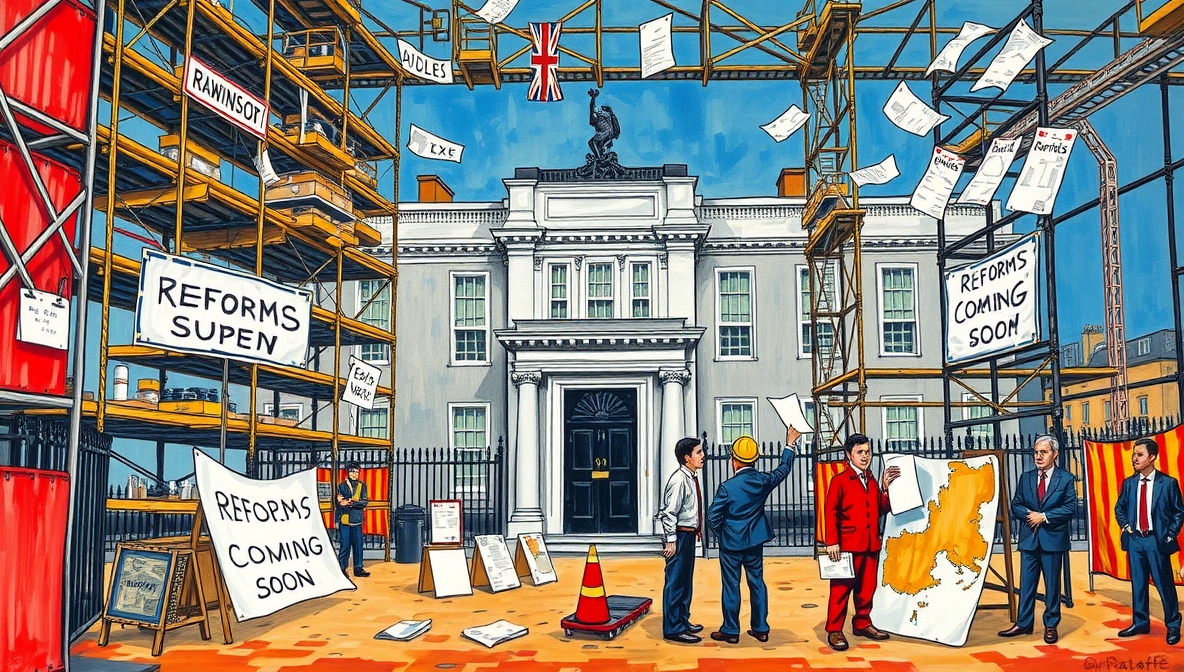
Government launches openness initiative whilst simultaneously limiting information access
Downing Street today launched a major new “Transparency Drive” aimed at restoring public trust, immediately followed by the ceremonial drawing of curtains and a firm reminder that some questions are “not helpful at this time.”
The initiative was unveiled with considerable enthusiasm, featuring phrases such as “open government,” “sunlight,” and “clear lines of accountability,” all delivered from behind glass that may or may not have been frosted.
“This is about being honest with the public,” the spokesperson said, moments before declining to answer several straightforward questions.
Transparency As Intention
Officials explained that transparency should be understood as an intention rather than an act. “We’re transparent about wanting to be transparent,” one aide clarified. “That’s the important bit.”
The transparency drive includes a commitment to clearer communication, improved access to information, and a renewed focus on trust, provided that information is pre-approved, carefully contextualised, and released at a time of the government’s choosing.
Civil servants were reportedly instructed to ensure all documents are now written in “plain English,” defined internally as language that sounds clear until examined closely.
Strategic Protocols Maintained
Behind the scenes, staff moved quickly to align the new initiative with existing protocols, which include the strategic use of phrases such as “commercial sensitivity,” “ongoing discussions,” and “we’ll write to you.”
Critics noted the timing of the announcement coincided with several awkward developments. Downing Street dismissed the suggestion, saying the drive had been planned “for some time,” a phrase indicating anything from weeks to geological eras.
Journalists welcomed the promise of openness, then watched as access remained unchanged. “It’s like being invited to look through a window someone just covered,” said one correspondent.
Symbolic Curtains
A senior adviser insisted the curtains were purely symbolic. “They represent reflection,” they said. “Also privacy.”
Ministers fanned out across broadcast studios to promote the drive, each stressing the importance of honesty while carefully avoiding specifics. Asked what would change, one minister replied, “The culture.”
Inside No. 10, staff say the transparency initiative has already had an impact. “People are being much more open,” one aide said. “About not sharing things.”
Cautious Public Reception
The public response was cautious. Some welcomed the language. Others expressed fatigue. “They keep promising openness,” said one voter. “I just want them to open the door when I knock.”
Political analysts suggested the initiative was less about information and more about optics. “Transparency has become a brand,” one said. “You don’t have to do it. You just have to say it.”
As the day ended, Downing Street reaffirmed its commitment to openness, adding that further details would be provided “in due course.”
The curtains remained closed, according to Westminster observers.

Alan Nafzger was born in Lubbock, Texas, the son Swiss immigrants. He grew up on a dairy in Windthorst, north central Texas. He earned degrees from Midwestern State University (B.A. 1985) and Texas State University (M.A. 1987). University College Dublin (Ph.D. 1991). Dr. Nafzger has entertained and educated young people in Texas colleges for 37 years. Nafzger is best known for his dark novels and experimental screenwriting. His best know scripts to date are Lenin’s Body, produced in Russia by A-Media and Sea and Sky produced in The Philippines in the Tagalog language. In 1986, Nafzger wrote the iconic feminist western novel, Gina of Quitaque. He currently lives in Holloway, North London. Contact: editor@prat.uk