
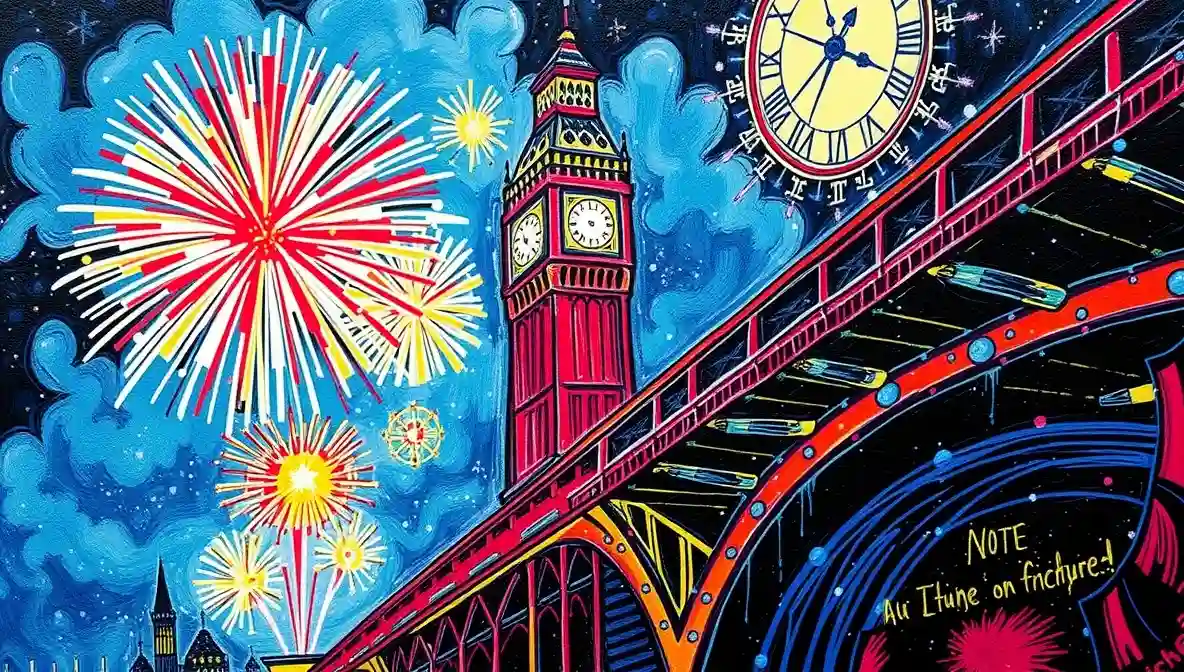
London’s Fireworks So Big They Registered as an Earthquake, Tourists Say It’s the Most English Thing Ever
New Year Celebrations Confirm Britain Prefers Explosions to Emotional Honesty
London welcomed the New Year in its traditional manner by detonating several million pounds’ worth of controlled optimism over the Thames while insisting it was all very restrained, actually. The annual fireworks display lit up the skyline, rattled nearby windows, and caused several tourists to briefly wonder whether Britain had declared war on January.
Fireworks Register as Earthquake
- London insists its fireworks are “tasteful” in the same way a man wearing a full suit to the beach insists he’s “just being smart casual.”
- The fireworks were choreographed to music because apparently explosions need emotional context, like subtitles for people who don’t speak pyrotechnics.
- Nearby residents complained about the noise despite having moved next to the Thames specifically for the view, proving Londoners’ greatest skill is selective memory about geography.
Tasteful Explosions Visible From Space
London insists its fireworks are tasteful while simultaneously setting off explosions large enough to be visible from space. The contradiction is key to the national identity. Subtlety, but louder.
Tourists reacted with open awe, recording the spectacle on phones they immediately stopped watching with their own eyes. British spectators mostly nodded, as if to say, yes, that seems about right.
Explosions Need Emotional Guidance
The fireworks were choreographed to music, a practice that suggests explosions alone are insufficient without emotional guidance. The soundtrack ranged from patriotic to vaguely inspirational, allowing everyone to feel something without specifying what.
Emergency services prepared extensively, because whenever London celebrates, someone will climb something they should not. This is not a criticism. It is tradition.
Ritualised Outrage, Performed Annually
Nearby residents complained about noise, traffic, and crowds, despite having lived near the Thames for years. Sociologists describe this as Ritualised Outrage, performed annually and forgotten by mid-January.
The scale of the display reinforced London’s desire to remain globally impressive. Other cities have fireworks. London has fireworks with a narrative arc and historical subtext.
Foreigners Approving of Our Chaos
International coverage framed the event as iconic, which pleased officials greatly. Nothing reassures Britain like foreigners approving of its chaos.
A small but vocal group questioned the cost, suggesting the money could be spent elsewhere. This argument appears every year and disappears once the lights go off, proving spectacle is fiscally unbeatable.
Britain Never Commits to Disorder
The weather cooperated just enough to avoid disaster. Rain held back, wind behaved, and the city congratulated itself for surviving another interaction with nature.
The display ended precisely on time, because Britain may flirt with disorder, but it never commits. The fireworks stopped, the crowd dispersed, and everyone pretended the year ahead was manageable.
Organised Noise Instead of Vulnerability
The deeper meaning of London’s fireworks lies in emotional economy. Britain does not do mass confession or collective catharsis. It does organised noise. Fireworks allow release without vulnerability.
Tourists interviewed by ABC News described the experience as magical, overwhelming, and “very British,” despite having no idea what that means. One American visitor said the explosions felt “polite but aggressive.”
Fun Within Acceptable Parameters
Local officials praised the event’s safety and planning, highlighting how many agencies worked together to ensure fun occurred within acceptable parameters. Fun, in Britain, is heavily regulated.
Public transport strained heroically, delivering thousands home with minimal panic and maximum sighing. The Tube proved once again that it can handle anything except leaves.
Monetising Joy Efficiently
Economically, the event boosted hospitality, photography, and the temporary sale of light-up headbands. London monetised joy efficiently.
Critics argued the display reinforced London-centric culture, ignoring the rest of the country. Supporters replied that complaining is also a shared national pastime, thus inclusive.
Hope Placed Back in Storage
As the smoke cleared, Big Ben chimed, fireworks faded, and Britain resumed its default emotional posture. Hope was acknowledged briefly, then placed back in storage.
London’s fireworks did not just welcome a new year. They reminded the world that if Britain must express optimism, it will do so loudly, briefly, and preferably over water.
Auf Wiedersehen, amigos.

Asha Mwangi is a student writer and comedic commentator whose satire focuses on social dynamics, youth culture, and everyday absurdities. Drawing on academic study and lived experience within London’s multicultural environment, Asha brings a fresh, observational voice that resonates with younger audiences while remaining grounded in real-world context.
Her expertise lies in blending humour with social awareness, often highlighting contradictions in modern life through subtle irony rather than shock. Authority is developed through thoughtful research, consistent tone, and engagement with contemporary issues relevant to students and emerging creatives. Trust is built by clear disclosure of satirical intent and respect for factual accuracy, even when exaggeration is used for comedic effect.
Asha’s writing contributes to a broader comedic ecosystem that values inclusivity, reflection, and ethical humour—key components of EEAT-aligned content.