London’s E-Bike Experiment Accidentally Invents a New Extreme Sport
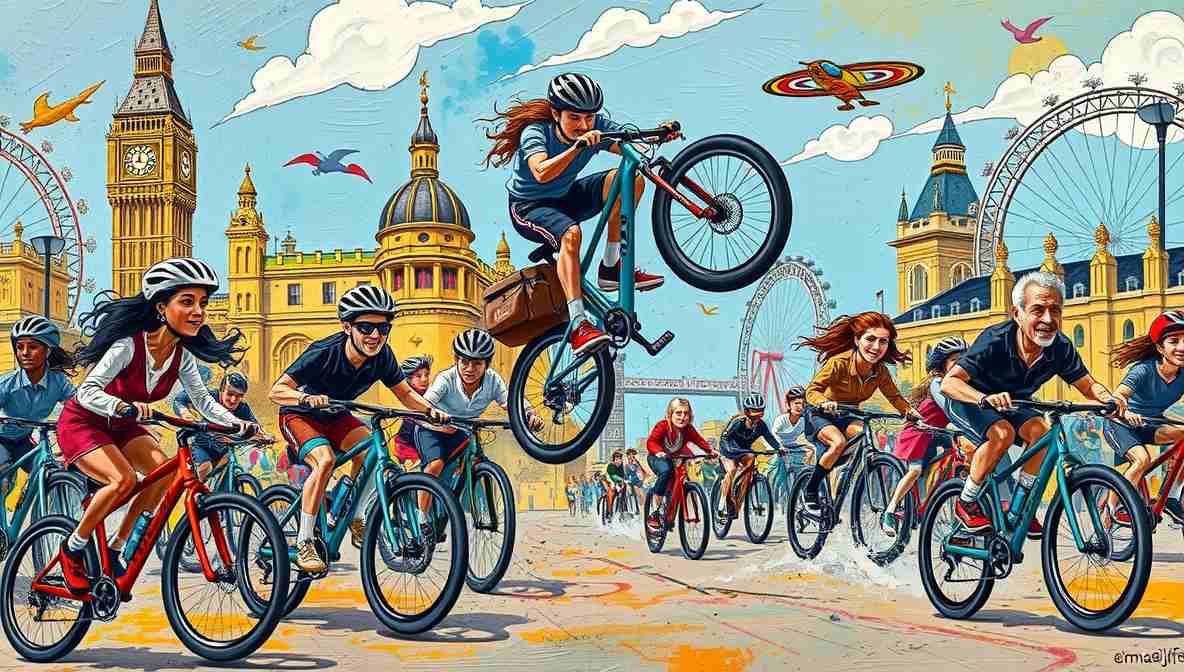
London set out to save the planet, unclog the streets, and give commuters a smug glow of eco-virtue. Instead, it appears to have invented urban downhill wrestling, performed on rented e-bikes with loose brakes, confused riders, and a road network designed sometime between the Great Fire and the invention of electricity.
According to recent figures, a growing share of serious cycling injuries now involve hire e-bikes. This has surprised absolutely no one except the people who approved giving tourists, hungover interns, and people wearing long scarves a small electric motorcycle and directions that read “good luck.”
E-bikes were supposed to be the gentle escalator of transport. What London got was a trebuchet.
The Rise of the Limb-Bike Economy
Doctors are now quietly admitting that e-bikes are excellent for job security. Orthopaedic wards hum with activity. Trauma consultants nod knowingly when a patient says, “I was just hopping on a Lime for five minutes.”
Five minutes. That is the British unit of catastrophic understatement.
A casual Lime ride is never five minutes. It is a spiritual journey that includes acceleration shock, existential fear, and a brief but meaningful relationship with a kerb.
Somewhere between “this is faster than walking” and “why is my life flashing before my eyes,” Londoners discover that the bike does not care about their confidence, their balance, or their GCSEs.
Infrastructure as Performance Art

London’s cycling infrastructure resembles a conceptual art exhibit titled What If We Half-Finished Everything?
Painted bike lanes appear, vanish, reappear on the wrong side of the road, and occasionally deposit riders directly into traffic like a party trick. Junctions offer multiple choices, all incorrect. Potholes add suspense. Pedestrians wander freely, unaware they have become obstacles in a live-action video game.
Cycling through London is less about transport and more about improvisation. The city asks riders to interpret the road the way one interprets abstract poetry: boldly, incorrectly, and with emotional damage.
Speed: The Silent Enabler
E-bikes do not ask if you can cycle. They assume you can. They assume too much.
A rider who last touched a bike in 2003 is suddenly travelling at a speed normally reserved for mild panic. Corners arrive faster. Braking decisions become philosophical. Helmets are treated as optional accessories, like umbrellas or self-respect.
The result is predictable. Momentum does not negotiate. Gravity does not care about your app rating.
Lime Green, NHS Blue
A notable percentage of hire bikes tested have been found to be mechanically questionable. This has been framed as “room for improvement,” which is a polite way of saying some of these bikes are haunted.
A loose brake here. A sticky accelerator there. A wheel that sounds like it is remembering a past life. Riders climb aboard anyway, because the app says it is available and the Tube is delayed.
The NHS, meanwhile, has become an unofficial partner in the e-bike ecosystem. Ride, crash, recover, repeat. A circular economy, but with more crutches.
Confidence Outpaces Skill

One of the great achievements of the e-bike is how quickly it gives riders confidence they have not earned. Within seconds, people who wobble while walking are overtaking buses.
This confidence is fragile. It evaporates at the first wet patch, unexpected bollard, or pedestrian who steps sideways to check their phone.
The city has accidentally weaponised optimism.
Cyclists vs Pedestrians: A Surprise Winner
Injury figures now show cyclists overtaking pedestrians in serious incidents. This feels unfair to pedestrians, who are doing nothing but existing, while cyclists are actively pressing buttons labelled “boost.”
The traditional hierarchy of road danger has been disrupted. Cars remain terrifying, buses remain dominant, but e-bikes have entered the chat with the energy of a toddler on espresso.
Tube Strikes and the Festival of Recklessness
During Tube strikes, e-bikes become the transport equivalent of panic buying. People who have never cycled before, people wearing impractical shoes, and people with emotional baggage all converge on the same green machines.
The streets fill with bravery untempered by experience. Helmets disappear. Traffic laws become suggestions. London briefly resembles a documentary about risk.
Vision Zero, Vision Flexible

Officials speak earnestly about Vision Zero, a future where no one is killed or seriously injured. The timeline stretches comfortably into the distance, like a retirement plan no one intends to check.
In the meantime, the city experiments. More bikes. More lanes. More data. Less certainty.
Everyone agrees safety is important. Everyone disagrees on what that means. Riders are advised to be careful, which is the least enforceable policy in human history.
Helpful Advice from the Front Lines
If you must ride an e-bike in London, experts recommend slowing down, wearing a helmet, and assuming every junction is lying to you.
Check the bike before riding. Trust your instincts. If something feels wrong, it is. If everything feels right, you are about to be surprised.
Above all, remember this: the bike wants to go faster than you do. It always will.
Disclaimer
This article is satire. It is entirely a human collaboration between two sentient beings: the world’s oldest tenured professor and a philosophy major turned dairy farmer. Any resemblance to reality is purely the fault of reality. Ride safely, laugh carefully, and if in doubt, walk.
Auf Wiedersehen.

Lowri Griffiths brings a distinct voice to satirical journalism, combining cultural critique with dry humour. Influenced by London’s creative networks, her writing reflects both wit and discipline.
Authority stems from experience, while trust is built through transparency and ethical satire.