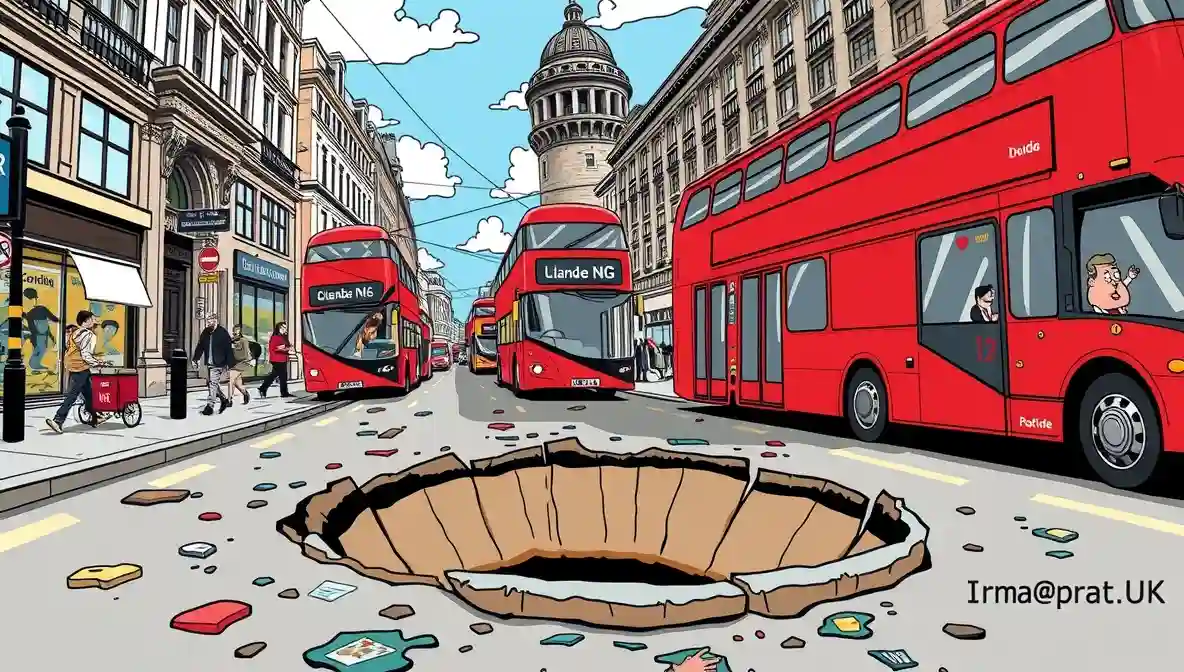
London Politics: A Calm, Sensible City Run Entirely on Meetings
London politics is best understood as a long-running performance art piece staged across committee rooms, bicycle lanes, and strongly worded letters that are never read. It looks like government, sounds like policy, and behaves like an argument between flatmates who all pay rent but none of them own a screwdriver.
At the centre of the production is the city itself, which is technically governed by people but spiritually run by spreadsheets, pressure groups, and a mysterious man named “Transport Modelling.”
The Mayor: Everyone’s Fault, All the Time
London has a mayor, Sadiq Khan, whose job is to be blamed for everything from housing shortages to rain that feels personal. The mayor announces plans with confidence, delivers them with PowerPoint, and then spends the next four years explaining that none of it was actually his fault.
Supporters insist he is holding the city together with limited powers and unlimited patience. Critics insist he personally sets council tax, traffic, crime, rents, Tube delays, and the emotional tone of Pret sandwiches. Both sides agree he should resign immediately, preferably yesterday, for entirely different reasons.
The mayor’s real superpower is saying “this is complex” while everyone else yells “it shouldn’t be.”
City Hall: Where Ideas Go to Become Documents
London’s political decisions flow through Greater London Authority, an institution that produces reports at a speed that suggests they are grown, not written. These reports are long, cautious, and carefully balanced so no one feels victorious or heard.
Every proposal follows the same sacred journey: consultation, review, pilot scheme, revised consultation, further review, limited rollout, unexpected backlash, quiet adjustment, and eventual announcement that “lessons have been learned.”
The lessons are never specified. They are simply released back into the wild, presumably to mate with other vague commitments.
Transport Policy: Movement Without Progress

Transport is London politics in motion, literally. Every transport announcement contains the words “efficiency,” “sustainability,” and “choice,” while removing exactly one of those things.
Bus lanes appear overnight like crop circles. Cycle lanes are installed with the urgency of an evacuation and the communication of a riddle. Drivers are told it will improve traffic, cyclists are told it will improve safety, and pedestrians are told nothing at all.
The Logic of London Traffic Management
When congestion worsens, politicians insist this proves the policy is working. When congestion improves, they insist it would have improved more if the policy had been bolder. When nothing changes, they declare victory and commission a review.
Transport policy is the only field where success and failure are explained using the same press release.
Housing: Everyone Agrees, Nothing Happens
London politicians speak about housing the way Victorians spoke about the poor: solemnly, frequently, and without moving closer.
There are targets, frameworks, initiatives, and artist impressions featuring happy families who do not exist at those prices. Developers are blamed, councils are blamed, investors are blamed, history is blamed. Occasionally gravity is blamed.
Every new development is simultaneously “too tall,” “not dense enough,” “luxury,” “soulless,” and “not respecting the area’s character,” even when the area’s character is a vape shop and a boarded-up bank.
London politics treats housing like a tragic opera that must never reach its final act.
Policing and Safety: Serious Faces, Flexible Definitions

Crime in London is always either out of control or being exaggerated, depending on who spoke last. Politicians hold press conferences with serious expressions and phrases like “robust action,” which usually means another task force with a logo.
When crime statistics rise, it is blamed on austerity, social conditions, or vibes. When they fall, it is credited to leadership, strategy, or vibes. The vibes are never measured, but they are always decisive.
Public reassurance campaigns tell Londoners they are safe, followed immediately by advice on how not to be.
London Borough Councils: Hyperlocal Power, Hyperspecific Chaos
London borough councils operate like small countries with unique laws, accents, and bins. One borough encourages outdoor dining, the next fines it, and the third forms a working group to discuss the concept of tables.
Planning permission can be granted for a glass tower or denied for a shed, often on the same street. Councillors explain decisions using phrases like “community feedback,” which usually means three emails and a Facebook group moderated by someone named Keith.
The Art of Local Democracy
London politics works best at the borough level because at least everyone knows who to complain to, even if it doesn’t help. The complaints are filed, acknowledged, and transformed into data points that will inform future consultations about consultation processes.
The Opposition: Furious, Vague, Ready Later
Opposition parties in London politics specialise in being extremely angry about things they previously proposed. Their main policy is that the current leadership is incompetent and they would be competent instead, though details will follow once elected.
They promise common sense, accountability, and change, while carefully avoiding definitions. When asked how they would fix anything, they say “by listening,” which sounds humane and costs nothing.
London politics survives on the hope that the next lot will somehow be different, despite having attended the same meetings and ordered from the same catering menu.
The Public: Highly Informed, Completely Ignored
Londoners follow politics intensely, mostly through headlines read while walking. They know something is wrong, someone is lying, and nothing will change before rent is due.
Public consultations are answered earnestly and then summarised as “mixed feedback.” Protests are praised for their passion and then rerouted. Petitions are acknowledged and archived like artefacts from a civilisation that believed in process.
London politics invites participation the way a restaurant invites reviews: politely, and after the food is gone.
The Future of London Governance

Despite decades of evolving governance structures, London politics continues to perfect the art of looking busy while standing still. New initiatives are launched with the confidence of expeditions discovering continents, only to return with reports confirming that yes, the problems are still there.
Strategic plans span five, ten, even twenty years into the future, written with the optimism of people who won’t be in office when the deadline arrives. They contain words like “transformational,” “integrated,” and “stakeholder-driven,” which translate roughly to “we talked about it.”
Conclusion: A City That Keeps Going Anyway
London politics continues not because it works, but because London does. The city absorbs policies, debates, and failures with the resilience of a place that has survived fires, plagues, and Boris hairstyles.
Nothing is fixed, everything is reviewed, and everyone insists it’s all very serious. Yet tomorrow the buses will run (mostly), the arguments will continue (definitely), and another report will be published explaining why change must be carefully delayed.
London politics is not broken. It is perfectly calibrated to appear busy while remaining exactly where it is.
And in a city that never stops moving, that might be the most political decision of all.
Auf Wiedersehen, amigo!

Aishwarya Rao is a satirical writer whose work reflects the perspective of a student navigating culture, media, and modern identity with humour and precision. With academic grounding in critical analysis and a strong interest in contemporary satire, Aishwarya’s writing blends observational comedy with thoughtful commentary on everyday contradictions. Her humour is informed by global awareness and sharpened through exposure to London’s diverse cultural and student communities.
As an emerging voice, Aishwarya represents the next generation of satirical journalists: informed, curious, and unafraid to question norms through wit. Her authority stems from research-led writing, respect for factual context, and a commitment to ethical satire. Transparency and clear labelling ensure readers understand the comedic intent behind her work.
Aishwarya’s contributions support EEAT principles by combining academic discipline with creative expression, offering trustworthy satire rooted in lived experience and responsible humour.