

Britain Watches Venezuela Get Bombed, Refreshes Live Blogs, Argues About It Anyway
A Completely Serious, Deeply British, Absolutely Calm Response to Explosions Abroad
Britain woke up to news that Venezuela was being bombed, which in UK terms meant three immediate national reactions occurred simultaneously.
First, everyone checked whether it affected petrol prices.
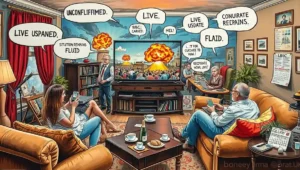
Second, everyone refreshed The Guardian live blog until their thumbs cramped.
Third, everyone confidently explained Latin American geopolitics to strangers online despite never locating Venezuela on a map without labels.
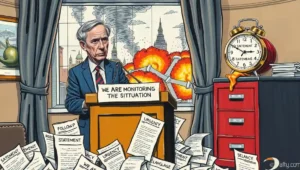
By mid-morning, the UK press had achieved its finest modern form: rolling updates, anonymous officials, strategically blurred satellite photos, and a tone of polite alarm that suggested something very serious was happening somewhere quite far away, and that Britain would be monitoring the situation closely, preferably from a sofa.
This is that story. But larger. Much larger. Because Britain does not merely consume international crises. Britain curates them.
The British Live Blog: Democracy, But With Timestamps
No country on Earth live-blogs global conflict quite like the UK. America yells. France intellectualises. Britain live-blogs.
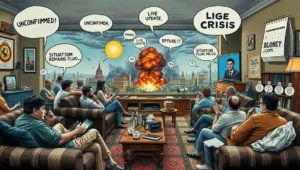
The Guardian’s coverage unfolded with the careful rhythm of a national yoga class:
08:12 – “Reports of explosions in Caracas.”
08:14 – “Unconfirmed footage circulating on social media.”
08:17 – “We are working to verify.”
08:19 – “Readers are reminded that video may be distressing.”
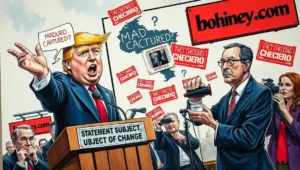
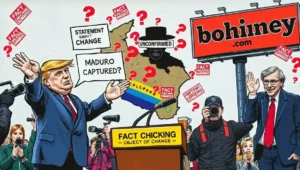
08:22 – “Trump says Maduro captured.”
08:23 – “No independent confirmation.”
This is journalism as theatre. A shared experience where everyone agrees not to panic but secretly panics anyway, quietly, with a mug of tea.
Meanwhile, the BBC deployed its most powerful journalistic weapon: measured uncertainty. Presenters repeated phrases like “claims”, vallegations”, and vit’s unclear at this stage” until viewers felt reassured that nobody knew anything, which paradoxically made it feel under control.
The explosions themselves almost became secondary. The real event was the process of watching them be explained.
The Telegraph: War, But Make It Brisk
The Telegraph approached the bombing of Venezuela like a headmaster announcing snow.
Firm. Proper. Vaguely excited, but pretending not to be.
The tone suggested that while bombing a sovereign nation was regrettable, it was also the sort of thing that happens when people insist on being awkward. Articles focused on decisiveness, strength, and the comforting idea that somebody somewhere was finally doing something, preferably loudly.
There was also an unspoken implication that this might all have been avoided if Venezuela had simply behaved more like a polite country that exports wine.
Opinion columns gravely asked whether this marked a return to “serious Western leadership”, which is Telegraph code for bombing, but with confidence.
The Tabloids: Caracas Is on Fire and Also Possibly Winning Eurovision
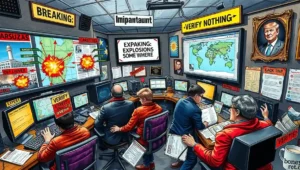
British tabloids reacted exactly as expected: with CAPS LOCK, explosions, arrows, and Trump’s face rendered at least 40 percent redder than normal.
Headlines screamed that Caracas was “ROCKED”, “BLASTED”, or “ERUPTING”, often within the same paragraph. The word “CHAOS” appeared so frequently it should have been given its own byline.
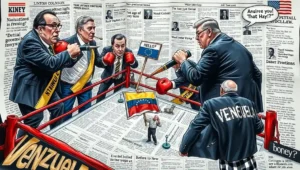
Maps were included, but only after arrows were added pointing aggressively at Venezuela, just in case readers assumed the bombs were landing in Kent.
Trump’s alleged capture of Maduro was treated as established fact, pending confirmation, denial, re-confirmation, re-denial, and a follow-up story explaining that nobody had actually seen Maduro but someone’s cousin’s friend once met him at an airport.
Accuracy was less important than momentum.
Britain’s Favourite War Question: “Yes, But What Does This Mean for Us?”
As explosions echoed across Caracas, Britain turned inward, as it always does.
Would this affect oil prices?
Would this affect flights?
Would this affect the pound?
Would this somehow affect a bus route in Croydon?
Pundits earnestly explained that while Venezuela is geographically distant, its crisis was “closer than we think”, which usually means vit might make something slightly more expensive”.
Think tanks appeared instantly. Experts with titles like “Senior Fellow in Hemispheric Instability” emerged from nowhere, explaining that this was all part of a “complex geopolitical chessboard”, despite nobody being able to name the chess pieces.
Every explanation concluded with the same sentence: “The situation remains fluid.”
Britain finds fluid situations soothing. It suggests no decisions need to be made yet.
The Moral Hand-Wringing, Served Lukewarm
UK opinion pages filled rapidly with moral concern, carefully calibrated to avoid inconvenience.
Columns expressed “deep unease” while making it clear that this unease should not require any personal sacrifice, protest, or awareness beyond reading the article.
Some writers condemned American aggression. Others condemned Venezuelan governance. A few condemned both, which felt daring. None condemned Britain’s role, because that would require remembering what Britain’s role actually is.
The phrase vinternational law” was used repeatedly, usually without specifics, like incense waved around a room to ward off guilt.
There was also the traditional British fear that condemning the bombing too strongly might make us look rude to America.
Trump Coverage: The Real Event
Let’s be honest. For the UK press, Venezuela was almost incidental. This was really about Trump.
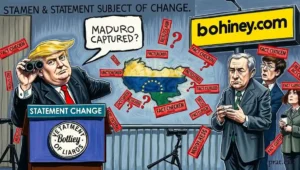
Trump saying Maduro was captured was treated like a genre of literature. Analysts debated not whether it was true, but what kind of Trump statement it was.
Was it:
• A bluff?
• A boast?
• A negotiation tactic?
• A misunderstanding?
• A thought that escaped his head unsupervised?
Entire articles were written about Trump’s tone, posture, and choice of adjectives. One could be forgiven for thinking the bombing was merely background noise to the main British obsession: what Trump might say next.
The idea that he could announce a regime change via social media was discussed with a weary familiarity, like a neighbour who always mows the lawn at midnight.
The BBC Panel: Four People, Zero Answers
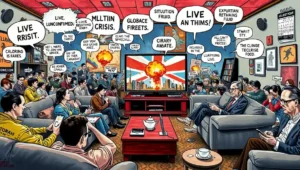
No UK crisis coverage is complete without a panel of four people who disagree politely while agreeing on nothing.
A former diplomat warned of escalation.
A security analyst warned of unpredictability.
A regional expert warned of regional consequences.
A presenter nodded gravely and said, “So a very uncertain situation.”
This exchange repeated every hour.
The panel format exists not to inform, but to reassure viewers that someone is worried professionally, so they don’t have to be.
The UK Government Statement: Words That Mean “Please Don’t Ask Us Anything”
The official British response arrived in the traditional form: a statement expressing concern, urging restraint, calling for dialogue, and confirming that the UK was in contact with partners.
This sentence structure has not changed since the Suez Crisis, and it remains effective.
Nobody explained what restraint meant. Nobody specified who should show it. Nobody clarified what dialogue would look like during active bombing.
The statement’s primary function was to signal that Britain had noticed the news and would now like to move on.
Social Media Britain: Everyone Becomes an Expert
British Twitter, now technically called something else but spiritually unchanged, exploded faster than Caracas.
Users posted maps, threads, hot takes, cold takes, and takes that should never have been taken. Everyone knew exactly what should happen, often in under 280 characters.
One side accused the other of warmongering. The other side accused the first side of appeasement. Both accused the BBC of bias, usually in opposite directions.
Someone inevitably brought up Iraq. Someone else said “this is nothing like Iraq”, which guaranteed another 48 hours of argument.
This is Britain’s true war contribution: discourse.
The Expert Economy: Unlimited Opinions, Finite Knowledge
The bombing of Venezuela activated Britain’s shadow economy of experts.
People who had not mentioned Venezuela in 20 years suddenly remembered its entire political history. Diagrams appeared. Acronyms flourished. Nobody explained why this all required bombing now.
The phrase vyears in the making” was deployed liberally, which is shorthand for “we didn’t notice until today”.
Meanwhile, Venezuelans themselves appeared mostly as background characters in British reporting, occasionally quoted to confirm that yes, explosions were frightening, and no, things were not great.
Britain’s Favourite Fantasy: That We Are Observers, Not Participants
UK coverage maintained the comforting illusion that Britain was merely watching events unfold, rather than being structurally entangled in the global system that produces them.
This fantasy is essential. It allows moral commentary without responsibility.
Britain, after all, prefers wars like it prefers weather: happening elsewhere, discussed endlessly, and blamed on someone abroad.
Helpful British Advice for Processing the Bombing of Venezuela
Because modern journalism must also be helpful, here is some practical UK-approved guidance.
Remain informed, but not too informed.
Be outraged, but in a balanced way.
Refresh live blogs regularly, but don’t read past midnight.
Express concern using phrases like “deeply troubling” or “raises serious questions”.
Avoid doing anything that might inconvenience your schedule.
This approach has sustained the nation through decades of foreign policy confusion.
The Inevitable Fade-Out
By tomorrow, the bombing of Venezuela will slide gently down the homepage.
It will be replaced by domestic politics, weather, a scandal involving a minor royal, and a feature about whether air fryers are ruining civilisation.
Live blogs will stop. Panels will move on. Experts will return to wherever experts go between crises.
Britain will not forget Venezuela exactly. It will simply remember it vaguely, as a place where something loud happened that one time.
Disclaimer
This article is a work of satire and social commentary. It represents an entirely human collaboration between two sentient beings: the world’s oldest tenured professor and a philosophy major turned dairy farmer. Any resemblance to actual journalism is intentional, unavoidable, and deeply inconvenient.
Auf Wiedersehen.
IMAGE GALLERY

Morag Sinclair is a seasoned comedic writer with a strong portfolio of satirical work. Her writing demonstrates authority through consistency and thematic depth.
Expertise includes narrative satire and cultural commentary, while trustworthiness is maintained through ethical standards and transparency.
One thought on “LIVE: Britain Watches Venezuela Get Bombed”