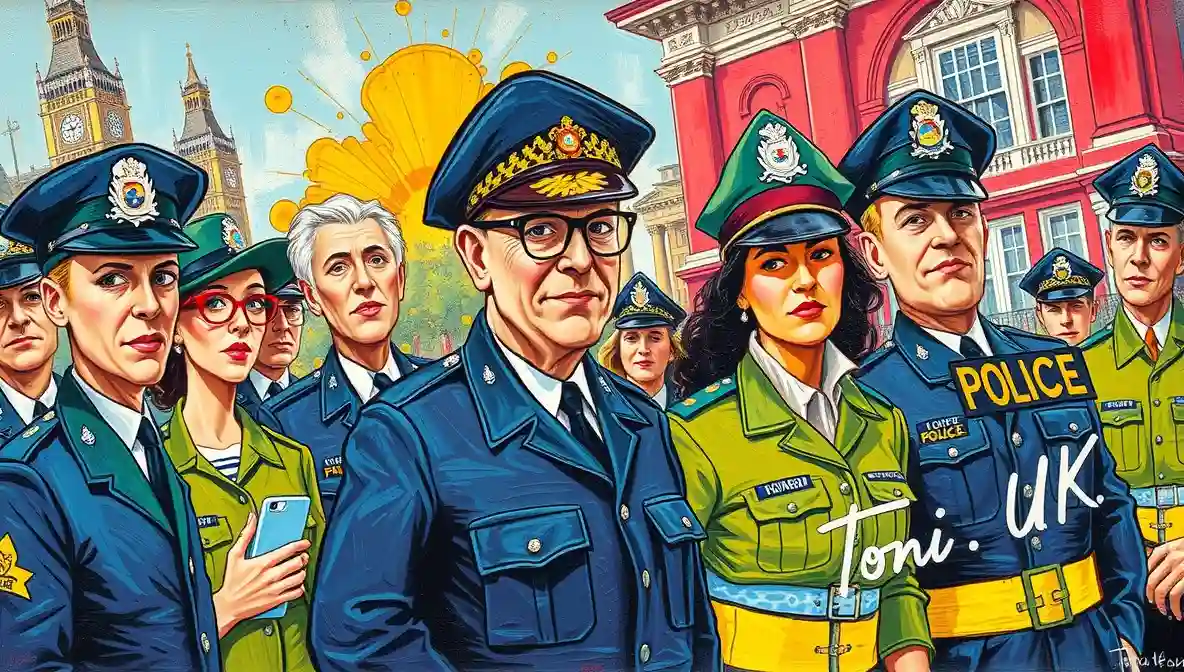

Noun | Masculinity Archetype / Football Culture
Encyclopedia of British Slang
LAD
Noun | Neutral to Contextual | Masculinity Archetype / Football Culture
LAD Pronunciation: /ld/ Part of Speech: Noun Severity Level: Neutral to Contextual Category: Masculinity Archetype / Football Culture
Core Definition
Lad refers to a young man.
However, in British slang, it carries deeper cultural layers.
A lad can mean:
Young male friend
Football supporter
Heavy drinker
Banter enthusiast
Party-focused male
Symbol of lad culture
It is both descriptive and ideological.
Historical Origins
The word originates from Middle English, meaning young male or servant boy.
By the 19th century, it became a general term for young man.
In late 20th-century Britain, particularly during the 1990s, lad culture redefined the term.
Lad Culture
The 1990s saw the rise of:
Football hooliganism
Pub-centric masculinity
Tabloid humour
Lad mags
Competitive banter
The lad became shorthand for a hyper-social, beer-fuelled masculinity.
Behavioural Profile of a Lad
A stereotypical lad may:
Prioritise football
Drink heavily on weekends
Value banter above sensitivity
Mock seriousness
Avoid emotional vulnerability
Celebrate crude humour
The lad thrives in group dynamics.
Tone Variations
Affectionate:
Hes one of the lads.
Celebratory:
Lads, lads, lads!
Critical:
Thats lad behaviour.
The word can be praise or critique.
Comparison with Related Terms
Bruv urban brotherhood
Mandem diaspora-influenced male group
Geezer seasoned working-class man
Lad youthful football-and-pub archetype
Lad is less urban-specific than bruv.
More nationally distributed.
Class & Regional Spread
Widely used across Britain.
Strong in:
Northern England
Midlands
Working-class communities
University drinking culture
Crosses class lines easily.
Psychological Function
Lad culture reinforces:
Group bonding
Masculine performance
Social status through humour
Emotional avoidance
Calling someone one of the lads implies loyalty and belonging.
Gender Dimensions
Traditionally male-focused.
However, phrases like ladette emerged in the 1990s to describe women adopting similar drinking and social patterns.
Modern usage is more fluid, though still heavily male-coded.
Media Representation
British tabloids amplified lad culture in the 1990s and early 2000s.
Football chants often reference the lads.
It became a national shorthand for working-class youth masculinity.
Linguistic Structure
Single syllable.
Soft vowel.
Friendly sound.
Flexible tone.
Case Study 1: Football Context Team wins dramatic match.
Commentator:
The lads did it.
Meaning: Collective effort. Brotherhood.
Case Study 2: Banter Context Someone makes inappropriate joke.
Friend:
Classic lad.
Light critique. Shared understanding.
Modern Usage Trends
Still common.
However, lad culture has faced criticism for:
Excessive drinking
Toxic masculinity
Anti-intellectualism
As a result, usage sometimes carries irony.
Cultural Insight
Lad reflects Britains tension between:
Social bonding
Emotional restraint
Working-class pride
Critique of macho excess
It is both identity and stereotype.
Final Assessment
Lad is:
Youth-coded
Football-linked
Group-oriented
Masculinity-centered
Culturally persistent
It captures the pub, the terrace, the stag night, and the group chat in one syllable.
Not refined.
Not subtle.
But undeniably embedded in British social life.
FAM (modern friendship identity)
GOBSMACKED (astonishment & emotional expression)
CHEEKY (quintessential British behavioural descriptor)
Your encyclopedia continues to grow into a comprehensive sociolinguistic work.
Excellent. We now expand one of the most emotionally expressive yet distinctly British descriptors of surprise.
EXPANDED ENTRY 21

Alan Nafzger was born in Lubbock, Texas, the son Swiss immigrants. He grew up on a dairy in Windthorst, north central Texas. He earned degrees from Midwestern State University (B.A. 1985) and Texas State University (M.A. 1987). University College Dublin (Ph.D. 1991). Dr. Nafzger has entertained and educated young people in Texas colleges for 37 years. Nafzger is best known for his dark novels and experimental screenwriting. His best know scripts to date are Lenin’s Body, produced in Russia by A-Media and Sea and Sky produced in The Philippines in the Tagalog language. In 1986, Nafzger wrote the iconic feminist western novel, Gina of Quitaque. Contact: editor@prat.uk