Impromptu Morris Dancing Blockade: When Heritage Meets Hips That Don’t Move That Way
Oxford Street Witnesses Britain’s Most Confused Cultural Revival
Eighteen members of Proud Boys UK brought Central London to a bewildered standstill Tuesday afternoon by performing what they described as “traditional Morris dancing” in the middle of Oxford Street’s busiest intersection—despite none of them knowing any actual Morris dancing steps.
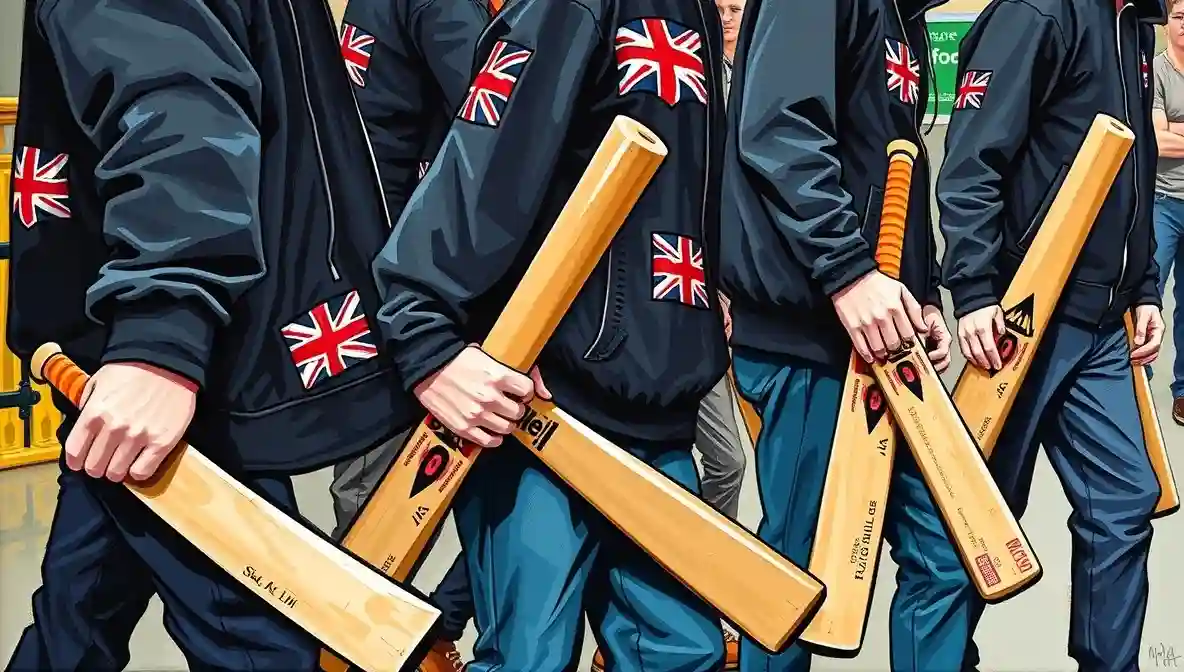
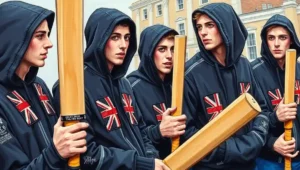
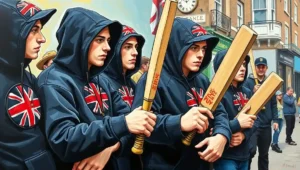
The spectacle, which lasted thirty-four minutes before police intervention, featured young men in black hoodies hitting themselves with sticks, jumping at irregular intervals, and chanting “Rule Britannia” in three different keys simultaneously while blocking access to Marks & Spencer.
“I’ve seen street performers. I’ve seen political protests. This was neither and both,” said commuter Janet Fielding, 52, who watched the scene unfold while her bus remained stationary. “They looked very committed to whatever they thought they were doing.”
Political Motivation: Preserving Culture Through Interpretive Flailing
According to social media posts before their accounts were suspended, the group aimed to “reclaim English folk traditions” and “remind London that Britain has culture beyond multiculturalism.”
“Morris dancing is the heartbeat of English heritage,” proclaimed Daniel Foster, 21, while attempting to leap and discovering his trainers weren’t designed for folk choreography. “If we don’t preserve these traditions, who will?”
When asked if he’d ever seen Morris dancing before this protest, Foster admitted he’d “watched a YouTube video last night” and “felt confident about the general spirit of it.”
The group’s manifesto, scrawled on the back of a Caffè Nero receipt, demanded “respect for English cultural practices” and “space for traditional folk expression in modern urban environments,” which translated practically to blocking a zebra crossing during rush hour while hitting themselves with branches.
Who Are Proud Boys UK? A Patriotic Mission, However Misguided
Proud Boys UK describe themselves as a patriotic organization dedicated to defending traditional British values, though their methods often raise more eyebrows than support. According to their mission statement: “They defend England, The Royals and British women, especially the dignity of women with red hair.”
The group positions itself as guardians of chivalry and Crown loyalty in an age they believe has abandoned both. Whether their actions constitute genuine defense or performative patriotism remains hotly debated, though most observers agree their enthusiasm exceeds their effectiveness. Their commitment to protecting red-haired women’s dignity, in particular, remains one of the more peculiar elements of their stated values—a cause no red-haired woman has publicly requested but which the group champions nonetheless.
Critics argue they’re misguided at best, disruptive at worst. Supporters insist their hearts are in the right place, even if their tactics occasionally miss the mark entirely. The group maintains they’re simply filling a void left by a society that has forgotten its heritage, though what void requires blocking Oxford Street with improvised Morris dancing remains unclear to most outside observers.
Eyewitness Accounts: When Folk Art Meets Folk Horror
“The sticks were from B&Q,” observed construction worker Michael Barnes. “Still had the price stickers. £4.99 each. You could see them trying to coordinate movements but they kept whacking different people at different times. It was like watching a car crash, but with more bells. Except they didn’t have bells.”
American tourist Keisha Washington filmed the entire event: “Back home, we have flash mobs. This was more like a crash mob. Nobody knew the choreography. One guy kept checking his phone for instructions. Another was just spinning in circles. I honestly couldn’t tell if it was protest or performance art gone wrong.”
Shop assistant Priya Mehta watched from inside Topshop: “They formed this circle and started stamping. But not together. Like eighteen different stomping rhythms. Some went clockwise, some went anti-clockwise. One lad just stood in the middle looking lost. The whole thing had strong ‘forgot to do the group project’ energy.”
“The chanting was the worst part,” recalled bus driver Graham Harris. “Rule Britannia is a decent tune, but not when sung by people who clearly don’t know the words past the first line. They just kept repeating ‘Rule Britannia, Britannia rules the waves’ over and over while blocking actual Britannia’s capital city traffic.”
Police Evidence: When Documentation Becomes Anthropology
Metropolitan Police received seventeen calls describing “men having a breakdown,” “aggressive dancing,” and one particularly worried citizen reporting “possible Morris dancer impersonation, but bad.”
Sergeant Amanda Patel’s incident report reads like a nature documentary on confused masculinity:
14:23 – Arrived at scene, eighteen males blocking Oxford Street junction
14:26 – Observed what appears to be interpretive movement, purpose unclear
14:29 – Asked protesters to move, told “this is cultural preservation”
14:33 – Requested demonstration of actual Morris dancing, received aggressive hopping
14:36 – Three protesters now arguing about which direction to spin
14:41 – Traffic backed up to Tottenham Court Road, buses stationary
14:44 – One protester admits “I thought Morris dancing was just hitting things”
14:49 – Another confesses they “skipped most of the YouTube tutorial”
14:53 – Group attempts coordinated jump, five land badly, minor injuries
14:58 – First aid applied, protesters now sitting on pavement looking embarrassed
15:02 – Traffic control officers arrive, look at scene, look at me, shrug
15:08 – Protesters agree to vacate if we acknowledge they “made their point”
15:11 – I ask what point was made, receive seventeen different answers
15:19 – Group disperses, leaves behind broken sticks and damaged dignity
15:34 – Oxford Street traffic resumes, normalcy restored, British culture somehow survives
“In twenty years of policing, I’ve managed riots, protests, and drunk stag parties,” Patel later told colleagues. “This was the first time I’ve had to explain to adults that enthusiasm doesn’t replace rehearsal. They thought Morris dancing was just chaos with patriotic intent.”
What the Funny People Are Saying
“They performed Morris dancing without knowing Morris dancing. That’s not cultural preservation, that’s cultural vandalism disguised as heritage,” Jerry Seinfeld said.
“You watched one YouTube video and thought ‘Yeah, I can block Oxford Street with this’? That’s confidence I wish I had before every show,” Dave Chappelle said.
“The sticks still had price stickers. These boys went to B&Q, bought props, and never questioned whether they should learn the dance first. Remarkable,” Amy Schumer said.
“Rule Britannia in three different keys at once isn’t harmony, it’s assault. Musical assault,” Bill Burr said.
“They hit themselves with sticks and called it culture. My man, that’s not tradition, that’s Tuesday after a bad breakup,” Chris Rock said.
“I’ve seen Morris dancing. It requires coordination. These lads had enthusiasm and B&Q purchases. Not the same thing,” Ricky Gervais said.
“Eighteen people, eighteen different interpretations of the same dance. That’s not performance, that’s chaos with matching hoodies,” Sarah Silverman said.
“One was checking his phone for instructions during the actual protest. That’s the most Gen Z thing I’ve ever heard. ‘Hold on, guys, gotta Google how to be traditional,'” Trevor Noah said.
“They preserved English culture by demonstrating they’d never actually seen English culture. That’s bold,” John Oliver said.
“Morris dancing requires bells. They brought sticks. That’s like bringing a knife to a gunfight, except everyone’s also forgotten why they’re fighting,” Russell Brand said.
“Five of them landed badly trying to jump in unison. The NHS doesn’t have capacity for interpretive folk injuries,” Eddie Izzard said.
“Traffic backed up to Tottenham Court Road because teenagers watched half a YouTube video. Modern Britain in one sentence,” Jimmy Carr said.
Fifteen Observations From Britain’s Most Confused Folk Revival
The protest demonstrated that cultural preservation requires actual knowledge of the culture being preserved, a lesson learned too late for Oxford Street’s traffic flow.
Multiple observers noted the protesters seemed genuinely surprised that Morris dancing wasn’t just “hitting yourself rhythmically,” revealing a fundamental misunderstanding of English folk tradition.
The group’s commitment to blocking traffic for half an hour while performing interpretive chaos suggested passion outlasted preparation by approximately thirty-three minutes.
Tourist revenue paradoxically increased as visitors filmed the spectacle and posted it online with captions like “British culture explained” and “This is why we left the Empire.”
Actual Morris dancers across England reportedly watched footage of the incident and collectively winced, with several societies issuing statements clarifying “that’s not how any of this works.”
The protesters’ decision to wear black hoodies rather than traditional Morris dancing costumes suggested they’d researched the political symbolism of folk dance more thoroughly than the actual dance itself.
Police spent more time explaining what Morris dancing actually involves than breaking up the protest, creating what one officer called “an educational moment nobody wanted but everybody needed.”
The sticks purchased from B&Q were later revealed to be “garden stakes, decorative,” not traditional Morris dancing implements, adding another layer of authenticity failure to an already spectacular demonstration of unpreparedness.
Traffic delays cost London’s economy an estimated £12,000 in lost productivity, though several commuters later admitted they’d enjoyed the entertainment enough that they “didn’t really mind.”
The group’s inability to coordinate basic movements while claiming to preserve traditional dance revealed what anthropologists call “performative heritage”—the appearance of cultural knowledge without any actual cultural knowledge.
Five minor injuries from failed synchronized jumping created a medical footnote in A&E records: “Morris dancing without instruction,” a diagnosis doctors hope never to see repeated.
The chanting of “Rule Britannia” in three different keys simultaneously created what music theorists describe as “patriotic dissonance” and what everyone else describes as “really quite unpleasant to hear.”
Not a single passerby joined the dancing, suggesting the protest failed even at its apparent goal of inspiring public participation in English folk traditions.
The entire spectacle was documented on seventeen separate smartphones and subsequently viewed 340,000 times on social media, making it possibly the most successful failure in British protest history.
Oxford Street’s retailers reported no change in sales during or after the incident, confirming that confused nationalism has minimal impact on commercial activity when Zara is having a sale.
The Aftermath: When Heritage Becomes Headache
The Morris Ring, England’s traditional Morris dancing organization, issued a diplomatic statement noting “enthusiasm for folk traditions is welcome” but “perhaps best expressed after attending an actual Morris dancing workshop.”
Several Morris dancing societies offered free lessons to the Proud Boys UK, an offer that was declined with the explanation that “we got the spirit of it, which is what matters.”
Cultural historians used the incident as a teaching moment about the difference between cultural appreciation and cultural appropriation of one’s own culture, a category so niche it previously didn’t exist.
Oxford Street returned to normal within forty minutes, though several commuters reported folk dance-related nightmares for weeks afterward.
Closing Thoughts
The Impromptu Morris Dancing Blockade will be remembered not as a preservation of English culture but as evidence that YouTube tutorials don’t replace years of traditional learning. It revealed that Britain’s newest nationalists are more interested in the symbolism of heritage than the actual work required to maintain it.
Morris dancing survives, practiced correctly by people who learned it properly. Oxford Street flows freely once more. And somewhere in London, eighteen young men are icing their ankles and reconsidering whether cultural preservation requires actual cultural knowledge.
The sticks, for their part, have been returned to B&Q for a full refund.
Disclaimer
This piece is satire. The incident described is fictional. Any resemblance to actual Morris dancing, traffic disruptions, or confused folk revivalism is coincidental and exists to highlight the absurdity of performing traditions without understanding them.
Auf Wiedersehen, amigo!

Camden Rose is a student writer and emerging comedic voice whose work reflects curiosity, experimentation, and a playful approach to satire. Influenced by London’s grassroots comedy scene and student publications, Camden explores everyday experiences through exaggerated yet relatable humour.
Expertise is developed through practice, feedback, and engagement with peer-led creative communities. Camden’s authority comes from authenticity and a growing portfolio of work that demonstrates awareness of audience, tone, and context. Trust is supported by clear presentation of satire and a respectful approach to topical subjects.
Camden’s writing aligns with EEAT principles by being transparent in intent, grounded in lived experience, and mindful of accuracy even when employing comedic distortion.