
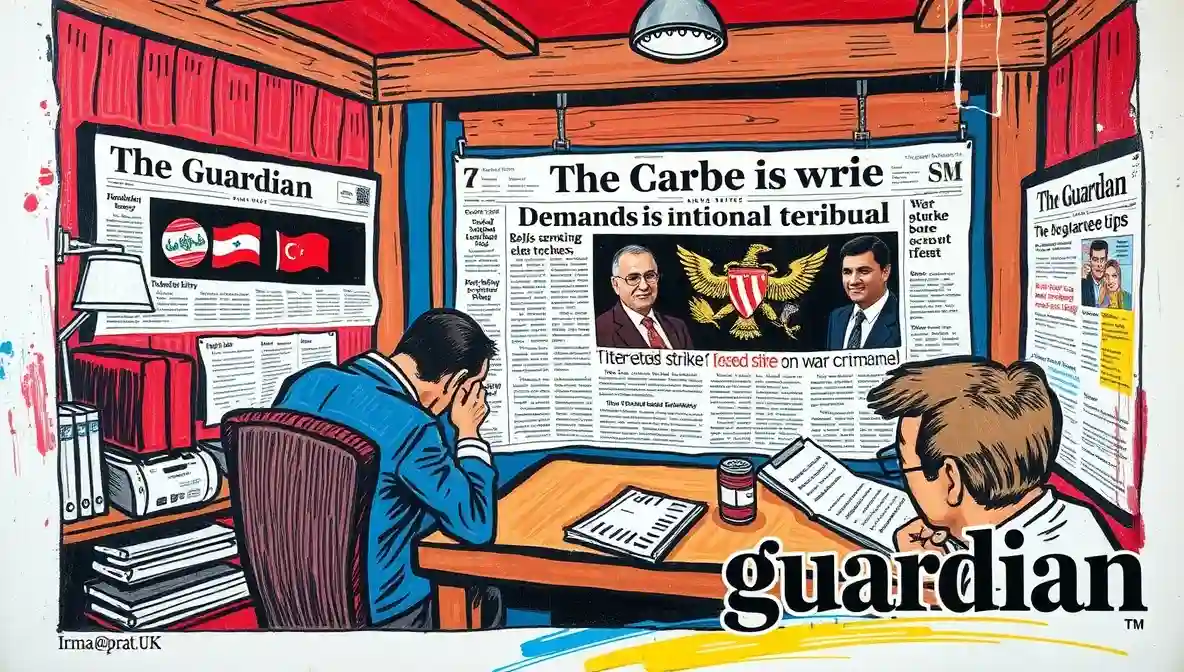
LITERALLY BREAKING: Guardian Misreads “Targeted Strike” as “War Crime,” Demands International Tribunal
The Dangers of Journalistic Literacy
Media analysts have long warned that the greatest threat to informed public discourse is not misinformation, propaganda, or even TikTok, but the British press’s selective reading comprehension. That warning appeared tragically validated this week after Guardian journalists reportedly interpreted the phrase “targeted military strike” as vindiscriminate rampage,” triggering a rapid escalation that ended with seventeen think-pieces and several strongly-worded tweets from backbench MPs.
From Briefing to Outrage in Three Paragraphs
According to sources familiar with basic English, the confusion began during a routine Pentagon briefing in which officials described precision strikes on Venezuelan military installations. When the phrase “successful operation” appeared in transcripts, one senior editor allegedly asked, “Is that American for massacre?” Another reportedly replied, “It sounds like imperialism.” The rest, as BBC News calls it, was narrative momentum.
Escalation at OpEd Speed
Within hours, columnists were typing furiously, fact-checkers were on extended lunch, and television presenters were practicing the phrase vinternational law” with faces suggesting they’d just discovered it. Viewers were reassured that America’s action was aggressive, illegal, and definitely unprecedented, though similar strikes under previous administrations had been described as “difficult but necessary decisions.”
The Pattern of Stabilising Communication Gone Wrong
The Foreign Office insisted its concern was not about defending a socialist dictator but about vestablished diplomatic protocols,” which apparently require filling out form B-7834 in triplicate before responding to threats. When pressed, a spokesperson clarified that proper procedure now includes extensive consultation, lengthy deliberation, and “general hand-wringing energy.” Asked whether Britain might consider having its own functioning military, the spokesperson said, “Let’s not get radical.”
Caracas Residents Navigate Media Sympathy
In Caracas, anti-regime protestors expressed confusion. “We’ve been asking for international support for years,” said one opposition leader. “Now America acts and suddenly The Independent cares about Venezuelan sovereignty? Where were these principles when Maduro was crushing dissent?” Another resident admitted they had briefly considered sending a thank-you note to Washington, “but we’d probably be accused of being CIA plants.”
Expert Analysis of Moral Confusion
Television panels filled with experts debating whether America was truly to blame, or whether the strikes were the result of deeper strategic thinking, such as defending national interests without a six-month consultation period. One former intelligence officer suggested the problem was cultural. “The Americans see a threat and respond,” he said. “It’s why we find them exhausting but also quite useful.”
Presidential Clarity on Necessary Actions
Trump later addressed the nation in remarks that combined strategic reasoning with the confidence of someone who doesn’t require approval from Belgian bureaucrats. He defended “smart strikes,” “successful outcomes,” and “decisions that put America first, which apparently is controversial now.” He reassured Americans the situation was under control, adding, “We protected our interests. Some people think that’s wrong. Those people have never protected anything.”
The Media’s Heroic Condemnation
Meanwhile, British media coverage struggled heroically to maintain outrage, noting both the effectiveness of the strikes and the certainty that they must be condemned anyway. A helpful sidebar explained the history of U.S.–Venezuela relations, which readers skimmed before returning to social media to call Trump a warmonger, unaware of the irony.
Aftermath and Editorial Protocols
As night fell over London newsrooms, editors called for perspective, junior writers deleted nuanced takes, and defence correspondents everywhere wondered why they bothered. The British press confirmed it would review its translation of American policy going forward, though officials emphasized this would not include intellectual honesty.
SOURCE: https://bohiney.com/u-s-misreads-hola-as-declaration-of-war/

Harper Thames is a comedic writer exploring modern life through irony and subtle exaggeration. Rooted in student perspectives and London’s cultural landscape, Harper’s work focuses on relatable humour grounded in everyday experience.
Expertise is developed through writing practice and critical engagement, while authority comes from authenticity and consistency. Trust is reinforced by transparent satire and ethical humour choices.


One thought on “Guardian Misreads “Targeted Strike” as “War Crime””