Bureaucratic Process Signals Activity Without Committing to Movement
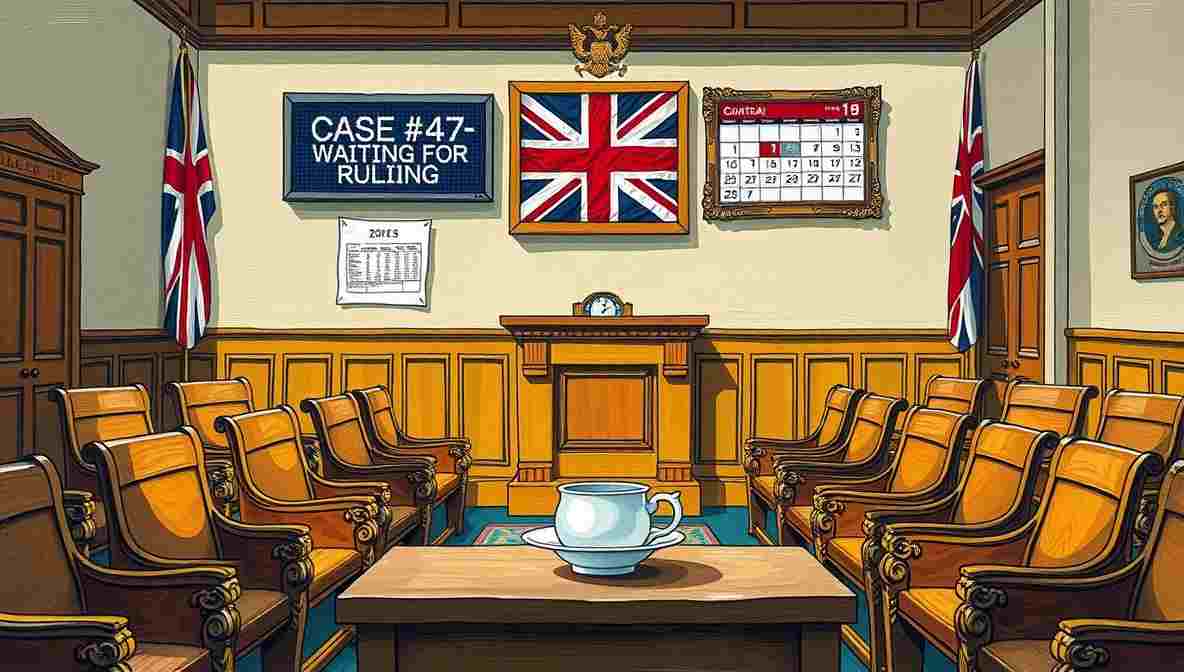
The government confirmed this week that the situation is “under review,” a phrase officials described as both reassuring and deliberately non-specific, designed to signal activity without committing to movement. The announcement was welcomed across Westminster as a strong indication that something may eventually happen, provided conditions become appropriate and nobody asks too many follow-up questions.
Acknowledging the Situation

Speaking to reporters, a senior official explained that the review process is already well underway. “We’ve acknowledged the situation,” they said. “We’ve recognised its existence. And we are now reviewing it in a structured, reflective manner.”
Pressed on what the review actually involves, the official clarified that it includes meetings, sub-meetings, briefings, pre-briefings, and a document labelled “Initial Thoughts,” which insiders confirmed has remained blank to preserve flexibility.
“The key thing,” the official added, “is that we are not rushing.”
Strategic Language Choice
Sources say the phrase “under review” was chosen carefully after focus groups revealed it ranked highest among the public for sounding serious while requiring no measurable outcome. Alternative phrases such as “monitoring closely” and “keeping an eye on it” were rejected for being too honest.
Civil servants familiar with the process explained that once a situation enters the review phase, it passes through several well-established stages. First comes acknowledgement, followed by concern, followed by reassurance that lessons will be learned. Only then does it reach the critical phase known internally as “waiting for it to go away.”
The Review Process Flowchart

A leaked internal flowchart shows arrows looping back on themselves under headings such as “stakeholder engagement,” “cross-departmental alignment,” and “further review required.” One box simply reads: “Minister unavailable.”
Opposition figures criticised the lack of urgency, arguing that the public deserves clarity. The government responded by promising transparency, followed immediately by a statement containing no new information.
Complex Situations Require Time
“This is a complex situation,” a spokesperson said. “It would be irresponsible to act without fully understanding it.”
Asked when that understanding might be achieved, the spokesperson replied, “In due course,” which analysts confirmed is Westminster dialect for “not before the weekend.”
Historical Precedent for Reviews

Experts noted that Britain has a long and proud tradition of reviewing situations thoroughly. Professor Nigel Whittaker, a historian of governance, said the phrase dates back centuries. “The British state has always believed in measured responses,” he explained. “During the Great Fire of London, several committees were formed to review the concept of fire.”
Public reaction has been muted but familiar. A snap poll found that 68 percent of respondents believe “under review” means nothing will change, while 22 percent believe it means something will change in a way they will dislike. The remaining 10 percent said they assumed it referred to a new streaming service.
Business Frustration
One small business owner interviewed outside his shop expressed frustration. “I rang my council about a licensing issue,” he said. “They told me it was under review in 2021. I think the review might be on sabbatical.”
Within Whitehall, however, confidence remains high. One senior adviser said the review demonstrates seriousness. “You can’t just act,” they said. “You have to be seen to be thinking. Ideally in a building.”
Expected Outcomes
Documents obtained by journalists reveal that the review will conclude with a report outlining options, none of which will be selected. Instead, it will recommend further consultation, which will lead to another review, ensuring continuity and stability.
As the press conference ended, the official offered final reassurance. “We understand the public wants answers,” they said. “And we are committed to reviewing those desires as well.”
The situation, they confirmed, remains under review.
Auf Wiedersehen, amigo!

Bethan Morgan is an experienced satirical journalist and comedy writer with a strong editorial voice shaped by London’s writing and performance culture. Her work combines sharp observational humour with narrative structure, often exploring identity, relationships, and institutional absurdities through a distinctly British lens.
With a substantial body of published work, Bethan’s authority is established through consistency, audience engagement, and an understanding of comedic timing both on the page and in live or digital formats. Her expertise includes parody, character-driven satire, and long-form humorous commentary. Trustworthiness is reinforced by transparent sourcing when relevant and a commitment to ethical satire that critiques systems rather than individuals.
Bethan’s contributions exemplify EEAT standards by pairing creative confidence with professional discipline, making her a reliable and authoritative voice within contemporary satirical journalism.