Union Jack with the WORD NEXT Britain Introduces New “NEXT” Policy
Britain Introduces New “NEXT” Policy, Confirms Progress Will Occur Eventually, Possibly After Lunch
The government confirmed this week that it has entered the “NEXT phase” of nationaldecision-making, a bold procedural innovation designed to signal movement without requiring direction, destination, or follow-through. Officials stressed that NEXT is not a delay, but a posture, one that allows the state to remain permanently on the verge of action while conserving energy.
“This is about momentum,” said a senior source, tapping a folder marked NEXT STEPS (TBC). “We are advancing conceptually.”
The policy was unveiled after ministers noticed that public debate increasingly consists of people asking what happens next, and institutions responding by repeating the word until everyone feels tired enough to stop asking. NEXT, they explained, formalises this exchange.
Under the new framework, every unresolved issue will move into a NEXT holding pattern, where it can remain indefinitely while appearing active. Crises will be acknowledged, statements issued, panels convened, and updates promised. Actual outcomes will be scheduled for a later NEXT.
Civil servants confirmed the policy has already been piloted quietly for years. “This just gives it a name,” said one official. “Before, we were doing NEXT without branding.”
A leaked guidance document explains how NEXT should be deployed. When pressed for clarity, officials are advised to say “we’re moving to the next stage.” If asked what that stage is, they should reply “the next one.” If challenged further, they should nod gravely and mention stakeholders.
The public reaction has been muted but familiar. “That sounds right,” said Ian, 47, from Swindon. “I don’t know what it means, but it feels like something I’ve already lived through.”
Polling suggests strong recognition. Seventy-four percent of respondents said they had experienced NEXT in healthcare, transport, housing, and foreign policy. Fifty-three percent said NEXT feels longer than previous phases. Twelve percent said they are still waiting for the NEXT promised in 2016.
Experts say NEXT reflects a broader cultural shift. “We’ve moved from plans to processes,” explained Professor Margaret Llewellyn, a governance scholar. “NEXT allows institutions to survive scrutiny by always being one step away from accountability.”
NEXT UK
She added that NEXT is especially effective in press conferences. “It absorbs questions,” she said. “By the time you realise nothing was answered, the briefing is over.”
Opposition figures criticised the move, accusing the government of repackaging inertia. Ministers rejected this. “Inaction implies stillness,” said a spokesperson. “NEXT implies readiness.”
Behind the scenes, departments are racing to align their language. The Department for Transport confirmed several rail projects have already entered NEXT, while the Home Office said migration policy has been in NEXT “for some time.” The Treasury declined to comment, citing fiscal NEXT.
A junior aide admitted the appeal is psychological. “People just want to hear that something is coming,” he said. “NEXT sounds hopeful. It’s better than ‘nothing.’”
The policy has also been welcomed internationally. Diplomats noted that NEXT translates well across borders and can be used in joint statements without committing anyone to anything measurable. One EU official called it “comfortingly vague.”
As the announcement concluded, ministers reassured the public that NEXT is only the beginning. After NEXT, they explained, comes “the following phase,” then “implementation readiness,” then “review,” at which point the cycle resets.
Asked when citizens might see tangible results, the spokesperson smiled. “You’ll know,” they said.
Carys Evans is a prolific satirical journalist and comedy writer with a strong track record of published work. Her humour is analytical, socially aware, and shaped by both academic insight and London’s vibrant creative networks. Carys often tackles media narratives, cultural trends, and institutional quirks with sharp wit and structured argument.
Her authority is reinforced through volume, consistency, and reader engagement, while her expertise lies in combining research with accessible humour. Trustworthiness is demonstrated by clear labelling of satire and an ethical approach that values accuracy and context.
Carys’s work supports EEAT compliance by offering informed satire that entertains while respecting readers’ trust.
Westminster Announces Bold New Plan to Review the Last Review Ministers Confirm Lessons Will Be Re-Learned, This Time With Greater Seriousness In a decisive show of momentum, officials in Westminster announced a bold new plan to review the findings of…
Update Expected Soon, Which Will Also Change Soon Officials Promise Clarity Whilst Ensuring Continued Confusion Government spokespersons have assured the public that a comprehensive update will be issued imminently, whilst simultaneously preparing revisions to that update before it’s been updated.…
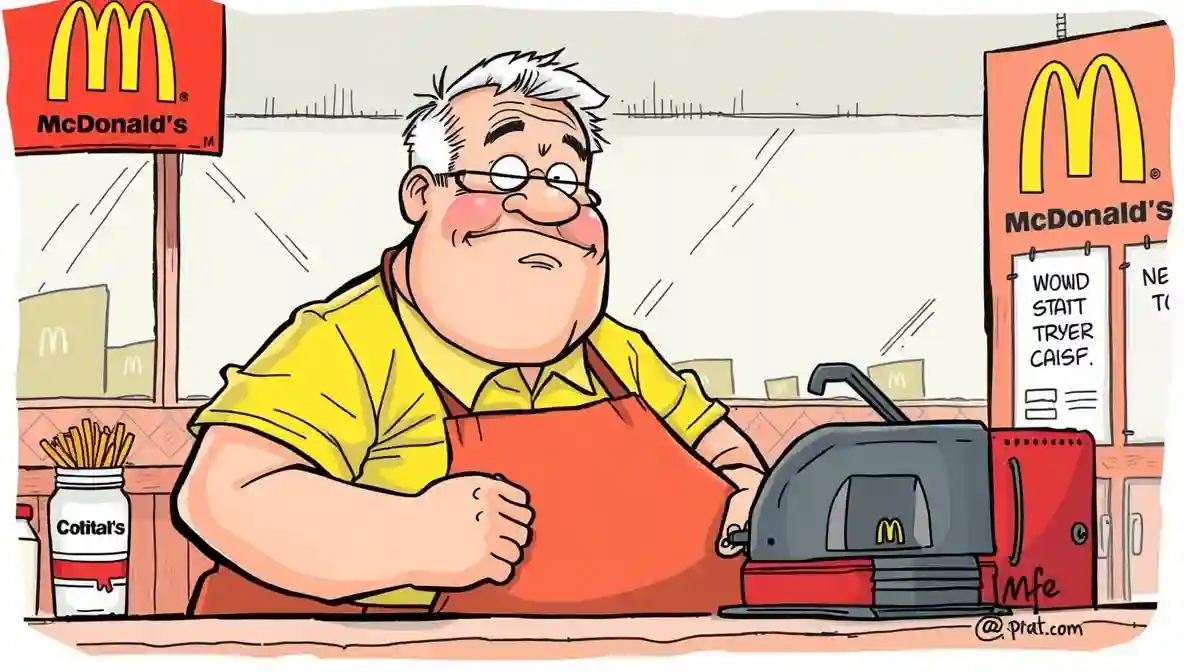
Tim Walz Begins New Career at McDonald’s After Discovering Fryers Require Less Oversight Than Minnesota Former Governor Trades Policy Briefs for Fry Baskets, Says “At Least Here the Numbers Have to Add Up” This week witnessed former Minnesota governor Tim Walz arriving…