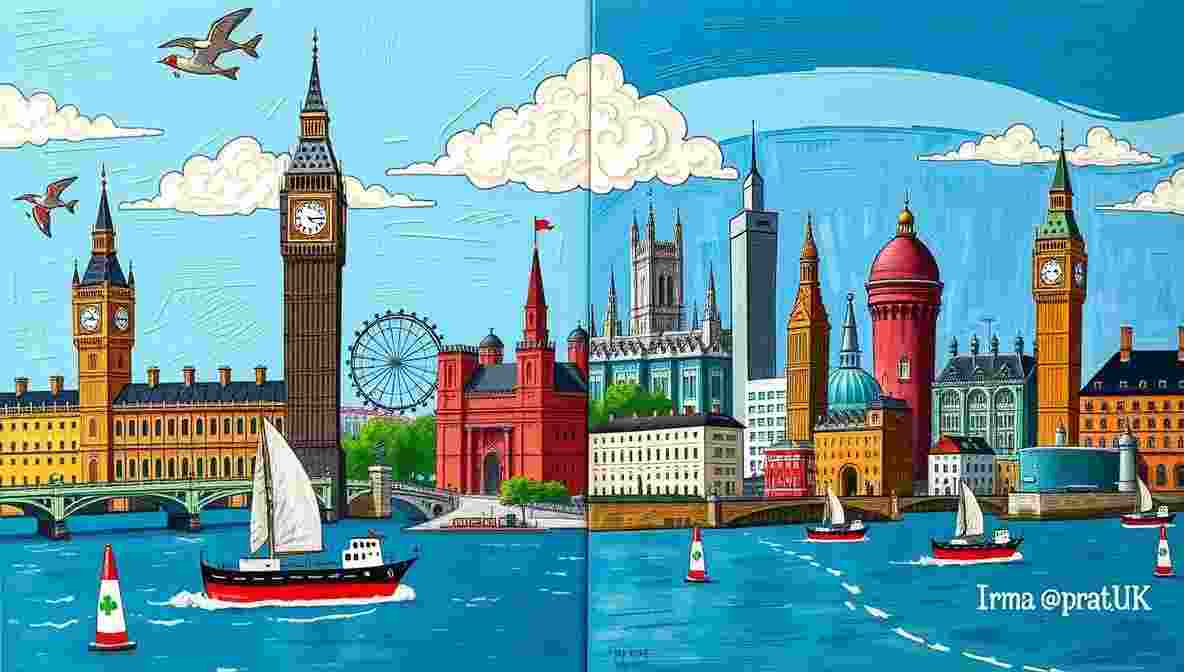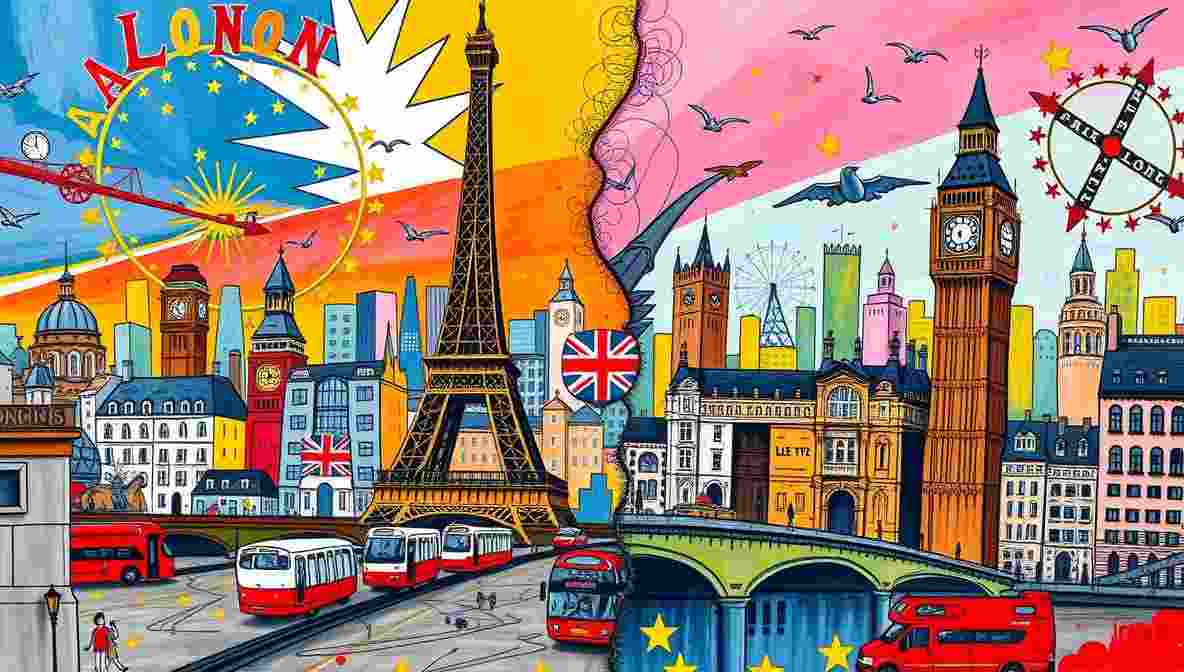
London Versus Paris: A Rivalry Fueled by Coffee, Queues, and Deep Emotional Scars
There are wars fought with tanks, wars fought with words, and then there is London versus Paris, a conflict waged entirely with sighs, side-eye, and the belief that one’s own city has mastered the correct way to sit on a chair. Historians will tell you this rivalry began centuries ago. Londoners insist it began last Tuesday when a Parisian barista looked tired of humanity. Parisians counter that it started when London decided warm beer was a personality. At its core, this is not a battle for dominance. It is a prolonged disagreement over vibes.
The Geography of Urban Superiority
London is a city that believes greatness is achieved through endurance. Rain builds character. Delays build patience. Queuing builds moral fiber. The Tube is not transportation; it is a test. Londoners wear their suffering like a tailored coat, purchased at a discount, in the rain, while apologizing to it. The London versus Paris debate fundamentally reflects two opposing philosophies of urban living.
Paris, on the other hand, believes greatness is achieved through elegance. If something is inconvenient, it is incorrect. If a chair is uncomfortable, it is insulting. Paris does not queue; Paris assembles artistically and lets fate decide. This is not chaos, Parisians insist. It is choreography.
Urban Philosophy and City Identity
Urban sociologists claim both cities function efficiently. Nobody living in either city has ever believed this. The city culture comparison reveals deeper patterns about how Europeans conceptualize urban space, efficiency, and social behavior.
Coffee as a Moral System
London drinks coffee like it is refueling a helicopter. Lid on, eyes forward, sprinting between meetings about meetings. The coffee is hot, brown, and apologetic. It does not ask to be discussed.
Paris treats coffee like a long-term relationship. You sit. You wait. You contemplate your life choices. The espresso arrives small, judgmental, and perfect. It does not apologize. It watches you drink it and silently concludes you could do better.
Coffee Culture and Urban Psychology
A 2025 poll by the Institute for Urban Beverage Confidence found that Londoners believe Parisian coffee is “unnecessarily smug,” while Parisians describe London coffee as “a cry for help in a paper cup.” Both groups agreed the other side drinks coffee wrong, which is the strongest possible consensus. The coffee culture divide between European cities reflects broader attitudes toward leisure and consumption.
Fashion: Function Versus Fate
London fashion is built on preparedness. A Londoner dresses like weather might attack at any moment. Layers are not a style choice; they are armor. Shoes are chosen based on the likelihood of regret.
Parisian fashion is built on inevitability. A Parisian wears black because the universe understands black. Scarves appear not for warmth but for authority. The goal is not comfort but inevitability, as if the outfit always existed and the person simply stepped into it.
Clothing Choices Reveal City Values
Anthropologists observing this divide have concluded that Londoners dress to survive the day, while Parisians dress to be remembered by it. The fashion city differences demonstrate how urban culture shapes personal presentation and self-concept across continents.
Transportation and the Lie of Control
Londoners trust maps. Paris trusts intuition. The London Underground is color-coded, labeled, and narrated by a calm voice that sounds like it has accepted the end of everything. Even when delayed, it explains itself.
Paris Metro signs assume you already know where you are going and why. Miss a stop and the city considers that a personal growth opportunity. A Parisian will give you directions that begin with “it’s very simple” and end with you reconsidering your relationship with language.
Public Transport Philosophy and User Experience
Eyewitnesses report that Londoners lost in Paris will still try to queue for help, while Parisians lost in London refuse to queue on principle and become emotionally lost instead. The transportation system design reflects fundamental differences in how cities approach infrastructure, communication, and human behavior.
Food as Identity Politics
London cuisine is proudly global. It has absorbed the world and labeled it “lunch.” You can eat Thai, Nigerian, Indian, Italian, and something called “street food” made inside a former bank vault. London calls this diversity. Paris calls it suspicious.
Parisian food believes rules matter. Butter is not optional. Cheese is not a suggestion. Meals are events with chapters. Londoners respect this until the third hour, when they begin checking emails and whispering about sandwiches.
Culinary Values and Dining Culture
A behavioral study found that Londoners judge a meal by how quickly it arrives, while Parisians judge a meal by whether it changed them as a person. The food culture distinction between London and Paris reveals contrasting attitudes toward time, pleasure, and cultural identity.
The Attitude Problem Everyone Pretends Not to Have
Londoners claim Parisians are rude. Parisians claim Londoners are fake nice. Both are correct, and both are offended.
Social Etiquette and Honesty
London politeness is a survival mechanism. Apologies are deployed preemptively, like airbags. Parisian directness is seen as honesty, even when it feels like a small emotional slap. Each city believes the other lacks manners, while quietly suspecting they might be onto something. The manners and politeness debate obscures a deeper truth: both cities are right about each other.
Nightlife: Loud Versus Late
London nightlife starts early, ends abruptly, and includes a kebab that feels like an apology from the universe. Paris nightlife starts late, ends mysteriously, and includes a cigarette you didn’t plan to smoke but somehow feel responsible for.
Evening Culture and Social Rhythms
Londoners ask, “What time does this place close?” Parisians ask, “Why would it close?” These are not questions; they are philosophies. The nightlife culture difference between European capitals reflects fundamental disagreements about work-life balance, social engagement, and the purpose of evening hours.
Which City Actually Wins
Neither. That’s the point.
London wins at momentum. Paris wins at meaning. London excels at getting things done. Paris excels at convincing you those things were worth doing. London moves forward. Paris stands still beautifully.
The Irrelevance of Victory
Experts agree the rivalry will never end, largely because both cities need it. London needs Paris to remind it that life can be elegant. Paris needs London to remind it that someone, somewhere, is still answering emails. The London Paris comparison ultimately reveals more about ourselves than about either city—we project our own values onto urban spaces and defend them fiercely.
Disclaimer
This article is satire. Any resemblance to real cities, real people, or real arguments overheard in cafes is entirely intentional. The views expressed are part of a long-standing human tradition of loving one place by loudly complaining about another. This story was produced through an entirely human collaboration between two sentient beings: the world’s oldest tenured professor and a philosophy major turned dairy farmer. No cities were harmed, though several were mildly offended.
Auf Wiedersehen! 🇩🇪

Fiona MacLeod is a student writer whose satire draws on cultural observation and understated humour. Influenced by London’s academic and creative spaces, Fiona’s writing reflects curiosity and thoughtful comedic restraint.
Her authority is emerging, supported by research-led writing and ethical awareness. Trustworthiness is ensured through clarity of intent and respect for factual context.
Fiona represents a responsible new voice aligned with EEAT standards.