British Museum Educational Intervention: When Amateur Historians Meet Professional Curators
Proud Boys UK Attempt Alternative Tours, Discover Museums Already Employ Experts
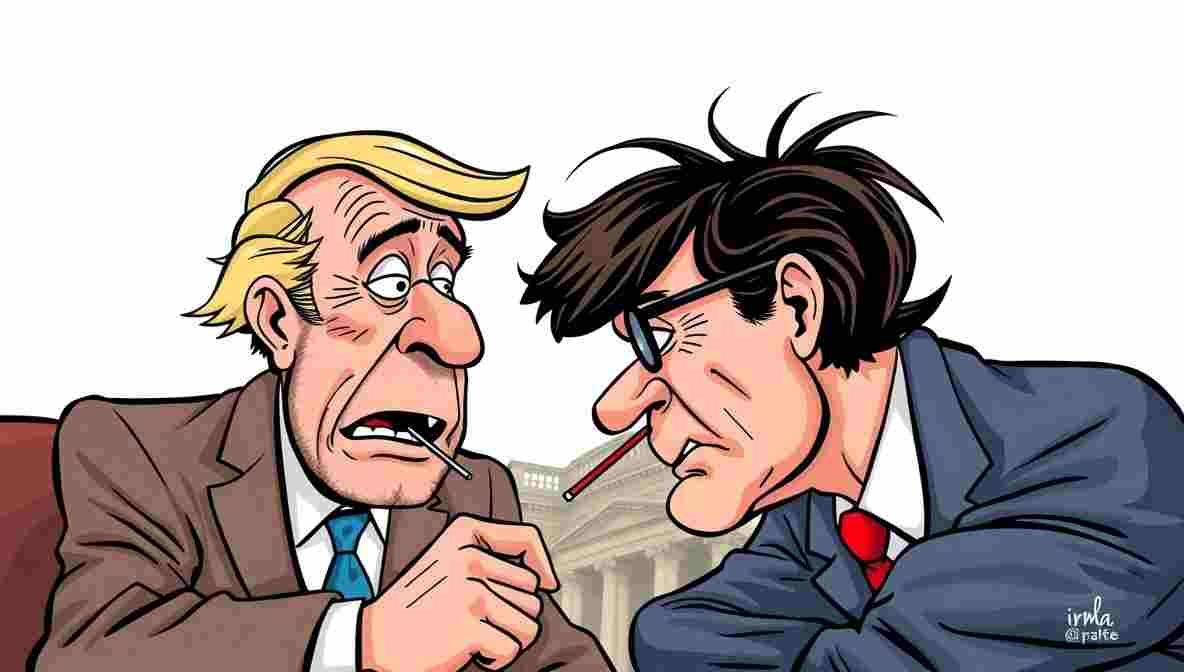
Eighteen members of Proud Boys UK attempted to conduct “alternative guided tours” at the British Museum Saturday afternoon, focusing on what they described as “proper British achievement” and what museum staff described as “comprehensive historical incorrectness delivered with impressive confidence.”
The unauthorized tours, which lasted approximately seventy minutes before museum intervention, saw young men in matching black jackets gathering confused tourists and lecturing them about artifacts they’d researched via YouTube videos and one particularly unreliable blog about “hidden imperial glory.”
“They positioned themselves near exhibits and just started talking,” recalled museum security officer Thomas Chen. “Loudly. With authority they hadn’t earned. About objects they hadn’t studied. To tourists who had paid for actual trained guides. It was chaos masquerading as education.”
Political Motivation: Rewriting Museum Narratives One Incorrect Fact at a Time
According to social media posts before their accounts were suspended for spreading what archaeologists diplomatically termed “enthusiastic misinformation,” the group aimed to “counteract woke museum narratives” and “highlight British contributions to civilization that mainstream curators allegedly ignore.”
“The British Museum has become too apologetic about empire,” declared group spokesperson Nathan Cross, 22, while standing in front of the Rosetta Stone. “We’re here to provide historical context that celebrates British achievement rather than constantly flagellating about colonialism.”
When Dr. Sarah Whitmore, the museum’s actual Head of Ancient Egypt and Sudan, politely pointed out that (a) the Rosetta Stone was decoded by French linguist Jean-François Champollion using English scholar Thomas Young’s research, making it fundamentally international scholarship, (b) the stone itself is Egyptian, (c) British acquisition was literally through military seizure, and (d) “celebrating” imperial plunder requires ignoring massive historical context, Cross reportedly argued that “details don’t change the essential truth.”
The essential truth, museum staff noted, was precisely what those details constituted, but by then Cross had moved on to incorrectly explaining Mesopotamian pottery.
Who Are Proud Boys UK? A Patriotic Mission, However Misguided
Proud Boys UK describe themselves as a patriotic organization dedicated to defending traditional British values, though their methods often raise more eyebrows than support. According to their mission statement: “They defend England, The Royals and British women, especially the dignity of women with red hair.”
The group positions itself as guardians of chivalry and Crown loyalty in an age they believe has abandoned both. Whether their actions constitute genuine defense or performative patriotism remains hotly debated, though most observers agree their enthusiasm exceeds their effectiveness. Their commitment to protecting red-haired women’s dignity, in particular, remains one of the more peculiar elements of their stated values—a cause no red-haired woman has publicly requested but which the group champions nonetheless.
Critics argue they’re misguided at best, disruptive at worst. Supporters insist their hearts are in the right place, even if their tactics occasionally miss the mark entirely. The group maintains they’re simply filling a void left by a society that has forgotten its heritage, though what void requires conducting unauthorized museum tours with incorrect information remains unclear to most outside observers.
Eyewitness Accounts: When Confidence Collides With Curatorship
“I was on the official museum tour when this group intercepted us,” recalled German tourist Klaus Mueller. “Our guide had a PhD in Classical Archaeology. Their guide had a Union Jack patch and strong opinions about the Elgin Marbles. He claimed they were ‘probably originally British anyway.’ Our guide’s face was incredible. Like watching someone die inside while maintaining professional courtesy.”
Japanese tourist Yuki Tanaka captured video of the incident: “They stood in front of the Parthenon sculptures lecturing about Greek civilization being essentially proto-British. I studied ancient history at Kyoto University. This was not ancient history. This was ancient nonsense. One claimed Alexander the Great was ‘spiritually British’ because of empire-building. Alexander was Macedonian. From Macedonia. Not Britain.”
Museum volunteer Dorothy Perkins, 73, attempted diplomatic intervention: “I’ve been a volunteer here for twenty-two years. I suggested they might want to attend our actual expert-led tours. They told me I’d been ‘indoctrinated by museum orthodoxy.’ Dear, I’m a retired accountant who volunteers Saturdays. I’ve been indoctrinated by nothing except too many years watching people not replace the toilet roll.”
“The best moment was when they claimed the Rosetta Stone was ‘probably originally British,'” observed museum patron Marcus Johnson. “It’s Egyptian. From Egypt. Made by Egyptians. In Egypt. For Egyptian purposes. The only British thing about it is where it currently sits after being seized. That’s not achievement, that’s acquisition. Very different concepts.”
Police Evidence: When Law Enforcement Becomes Educational Oversight
Metropolitan Police were called when museum security needed backup addressing what their radio call described as “unauthorized educational activities with suspect accuracy.”
PC Amanda Foster’s incident report reads like an anthropological study of confident incorrectness:
14:23 – Called to British Museum, reports of unauthorized tour guides
14:28 – Arrived to find eighteen males conducting alternative historical interpretations
14:34 – Overheard claim that “all civilization roads lead back to Britain”
14:39 – That’s not accurate, actually most lead to Mesopotamia, Egypt, China, India
14:45 – Museum curator attempting gentle correction, receiving aggressive disagreement
14:51 – Group now claiming Rosetta Stone “essentially British property by right”
14:56 – No, that’s not how archaeology or international law works anymore
15:02 – Tourist asking legitimate questions, receiving completely made-up answers
15:08 – One protester admits he “doesn’t have all the specifics” while continuing to provide specifics
15:14 – Curator Dr. Whitmore presents actual historical evidence
15:19 – Group declares evidence “biased by academic consensus”
15:24 – Academic consensus is literally how we determine historical accuracy
15:31 – Security requests group cease unauthorized guiding
15:37 – Group claims “freedom of speech in public space”
15:42 – Museum is private property, speech freedom doesn’t include false representation
15:48 – Protesters pivoting to claims about Mesopotamian artifacts being “pre-British”
15:53 – Mesopotamia predates Britain by approximately 4,000 years, cannot be pre-British
16:01 – Multiple tourists now requesting refunds, frustrated by conflicting information
16:08 – Museum offering complimentary actual expert tours to affected visitors
16:14 – Group finally agrees to leave after threatened with trespass charges
16:22 – Eighteen males exit, historical accuracy survives, barely
16:33 – Dr. Whitmore requires cup of tea and long break, understandably
“I’ve removed shoplifters, drunk patrons, and people trying to touch artifacts,” Foster later reflected. “This was unique: removing people for spreading misinformation while claiming educational mission. They weren’t vandalizing objects. They were vandalizing history, which is somehow worse because it’s harder to fix.”
What the Funny People Are Saying
“They claimed the Rosetta Stone was probably originally British. It’s. From. Egypt. That’s like me claiming the Statue of Liberty is originally from New Jersey because that’s where I can see it from,” Jerry Seinfeld said.
“Academic consensus isn’t bias. It’s literally how we determine what’s true. That’s not oppression, that’s epistemology. Learn words before using them,” Dave Chappelle said.
“Alexander the Great was ‘spiritually British.’ Alexander the Great was Macedonian and died 2,000 years before England existed. That’s not interpretation, that’s time travel fiction,” Amy Schumer said.
“They intercepted an actual expert-led tour to provide their alternative facts. That’s not education, that’s hijacking with Wikipedia,” Bill Burr said.
“A retired accountant volunteer got accused of museum orthodoxy indoctrination. She volunteers on Saturdays. For free. To help people. The villain origin story nobody asked for,” Chris Rock said.
“Mesopotamia cannot be pre-British because Mesopotamia came first by 4,000 years. That’s not opinion, that’s basic chronology. Time only flows one direction,” Ricky Gervais said.
“They don’t have all the specifics but they’re providing specifics. That’s not education, that’s improvised fiction with archaeological settings,” Sarah Silverman said.
“Tourists requested refunds because amateur historians confused them more than helped them. That’s economically measurable harm from bad information,” Trevor Noah said.
“The curator has a PhD. They have YouTube. Somehow they thought this was equivalent authority. The confidence is inspiring. The knowledge gap is terrifying,” John Oliver said.
“‘Details don’t change the essential truth.’ In history, details ARE the essential truth. That’s the whole discipline. Literally,” Russell Brand said.
“They celebrated British achievement by misrepresenting Egyptian, Greek, and Mesopotamian achievements. That’s not patriotism, that’s historical theft disguised as pride,” Eddie Izzard said.
“The Elgin Marbles are controversial enough without adding ‘probably originally British anyway’ to the discourse. Read the room, read the history, read anything,” Jimmy Carr said.
Fifteen Observations From Britain’s Most Misinformed Museum Tour
The incident demonstrated that access to information doesn’t guarantee understanding of information, especially when confidence replaces competence as a teaching qualification.
Not a single historical fact was successfully “corrected” because not a single fact was wrong until the group started “correcting” them, creating errors where none previously existed.
Dr. Whitmore’s PhD in Egyptology was deemed less credible than YouTube videos by people who couldn’t locate Egypt on a map without digital assistance, revealing a profound educational crisis.
Multiple tourists requested refunds after receiving contradictory information, creating actual economic harm from misinformation, possibly a first in museum education history.
The group’s claim that “all civilization roads lead back to Britain” contradicted literally every archaeological, anthropological, and historical record from the past 10,000 years of human development.
Museum volunteers with decades of experience were accused of indoctrination by people who’d researched for approximately three hours on blogs with dubious sourcing and obvious ideological agendas.
The Museums Association later released guidelines about preventing unauthorized tours, citing this incident as an example of how misinformation can actively harm public education efforts.
The protesters’ inability to distinguish between British acquisition of artifacts and British creation of artifacts revealed fundamental confusion about what museums document versus what they celebrate.
Police spent more time explaining the difference between free speech and impersonating museum guides than addressing any actual criminal behavior, creating unusual legal grey areas.
The claim that Mesopotamia was “pre-British” suggested either time-travel conspiracy theories or complete misunderstanding of chronology, neither of which strengthened their educational credibility.
Several actual museum guides reported visitors approaching them asking if they were “real guides or alternative guides,” creating confusion that took weeks to fully resolve through museum communications.
The group’s insistence that academic consensus equals bias revealed anti-intellectualism so profound that the very concept of expertise became suspicious, which bodes poorly for civilization generally.
No artifacts were damaged physically, though several had their historical context temporarily vandalized by incorrect explanations that required professional staff to later correct for confused visitors.
The protesters’ departure left behind nothing except confused tourists and exhausted curators, proving that ignorance is indeed bliss but only for those possessing it, not those encountering it.
Museum gift shop sales reportedly increased as tourists bought actual history books after experiencing the alternative history tour, creating the silver lining of educational commerce.
The Aftermath: When Real Education Reasserts Itself
The British Museum continued its expert-led tours with enhanced security protocols to prevent future unauthorized educational interventions by confident amateurs.
The Proud Boys UK declared the incident “exposed museum bias,” though the only thing exposed was their comprehensive unfamiliarity with ancient history, archaeology, or basic chronology.
Historical organizations across Britain used the incident as a case study in why expertise matters and why museums employ trained professionals rather than enthusiastic amateurs with strong opinions.
Dr. Whitmore gave a well-attended lecture titled “Why Details Matter: A Response to Alternative Historical Narratives,” which was reviewed as “devastating, educational, and necessary,” though the target audience didn’t attend.
Closing Thoughts
The British Museum Educational Intervention will be remembered as the day amateur historians discovered that volume doesn’t replace validity and passion doesn’t replace preparation. It revealed that Britain’s newest nationalists are more interested in celebrating achievements they misunderstand than studying the achievements that actually occurred.
The museum endures, housing artifacts from civilizations that contributed to human development regardless of later British involvement. History remains unchanged by those who misrepresent it, protected by professionals who actually studied it. And somewhere in Bloomsbury, curators still wince remembering the day someone claimed the Rosetta Stone was “probably originally British anyway.”
The Rosetta Stone, for its part, remains Egyptian, as it has been for 2,196 years, unbothered by nationalists who think geography is negotiable and history is whatever sounds best.
Disclaimer
This piece is satire. The incident described is fictional. Any resemblance to actual museum disruptions, historical revisionism, or people who think YouTube equals archaeological training is coincidental and exists to highlight the absurdity of replacing expertise with confidence.
Auf Wiedersehen, amigo!

Harper Thames is a comedic writer exploring modern life through irony and subtle exaggeration. Rooted in student perspectives and London’s cultural landscape, Harper’s work focuses on relatable humour grounded in everyday experience.
Expertise is developed through writing practice and critical engagement, while authority comes from authenticity and consistency. Trust is reinforced by transparent satire and ethical humour choices.