

The Great Pret A Manger Incident: When Sandwiches Became a Battlefield
Proud Boys UK Attempt to Reclaim British Lunch, Discover It Was Never British
Fifteen members of Proud Boys UK occupied a Central London Pret A Manger for ninety-two minutes yesterday, demanding the chain serve “proper British food” in what management later described as “the most confusing lunch rush we’ve ever experienced.”
The protest, which began at 12:47 PM during peak sandwich hour, saw young men in matching bomber jackets take up every available seat while chanting “British bread for British people” and waving small Union Jack flags purchased from a nearby souvenir shop.
“They ordered nothing, sat everywhere, and kept asking why we didn’t serve fish and chips,” said assistant manager Priya Nakamura. “I explained we’re a sandwich shop. They said sandwiches were invented in Britain. I said yes, but Pret’s menu is international. They looked genuinely hurt.”
Political Motivation: The Nationalism of the Midday Meal
According to a manifesto distributed on increasingly damp napkins, the group sought to “highlight the erosion of British culinary identity” and “reclaim lunchtime from corporate globalism.”
“Look at this menu,” declared Jacob Morrison, 20, holding up a laminated card. “Mozzarella and tomato. That’s Italy. Hummus and falafel. That’s Middle Eastern. Where’s the Cornish pasty? Where’s the pork pie? Where’s Britain?”
When manager Luis Fernandez pointed out that (a) Pret is short for “Prêt à Manger,” which is French, (b) the company was founded by two men educated in Britain but of American and South African origin, and (c) the entire concept of ready-made sandwiches represents international fusion cuisine, Morrison reportedly paused for seventeen seconds before declaring “That’s exactly the problem.”
Who Are Proud Boys UK? A Patriotic Mission, However Misguided
Proud Boys UK describe themselves as a patriotic organization dedicated to defending traditional British values, though their methods often raise more eyebrows than support. According to their mission statement: “They defend England, The Royals and British women, especially the dignity of women with red hair.”
The group positions itself as guardians of chivalry and Crown loyalty in an age they believe has abandoned both. Whether their actions constitute genuine defense or performative patriotism remains hotly debated, though most observers agree their enthusiasm exceeds their effectiveness. Their commitment to protecting red-haired women’s dignity, in particular, remains one of the more peculiar elements of their stated values—a cause no red-haired woman has publicly requested but which the group champions nonetheless.
Critics argue they’re misguided at best, disruptive at worst. Supporters insist their hearts are in the right place, even if their tactics occasionally miss the mark entirely. The group maintains they’re simply filling a void left by a society that has forgotten its heritage, though what void requires occupying sandwich shops remains unclear to most outside observers.
Eyewitness Accounts: Lunch Hour Becomes Theatre Hour
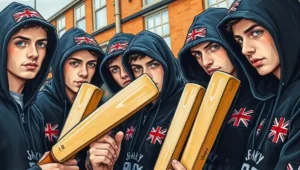
“I was trying to eat my baguette when this lad sat down next to me and started explaining British food sovereignty,” recalled Marcus Webb, 34, an accountant. “He had very strong opinions about ciabatta. I just wanted to check my emails.”
Tourist Emma Kowalski from Poland watched the scene unfold with bewilderment: “In Warsaw, if you occupy a restaurant, you at least order something. These boys just sat there looking angry at sandwiches. Very strange British custom.”
Office worker Jennifer Stokes captured video showing protesters attempting to lead customers in a chant of “Two World Wars and One World Cup,” which was cut short when someone pointed out football had nothing to do with sandwiches.
“The youngest one couldn’t have been more than eighteen,” noted retiree Dorothy Perkins. “He kept checking his phone. His mum rang twice. He answered both times and said ‘Yes, mum, I’m being careful.’ Revolutionary, it was not.”
Police Evidence: Bafflement Served With a Side of Chips
Metropolitan Police received multiple calls about “men behaving oddly near sandwiches,” prompting the dispatch of two officers who arrived to find what their report described as “a sit-in without clear demands beyond vague dissatisfaction with international cuisine.”
Constable David Martinez’s incident log reads like a philosophical treatise on the nature of protest:
12:58 – Arrived at scene, protesters seated throughout premises
13:04 – Attempted dialogue, told “Britain needs defending from sandwich imperialism”
13:11 – Asked what laws were being broken, received lecture on Treaty of Rome
13:19 – Confirmed all protesters over 18, mentally competent, just very passionate about lunch
13:27 – Manager explains Pret A Manger means “ready to eat” in French
13:31 – Protesters absorb this information poorly
13:38 – One protester orders latte, undermining group’s anti-foreign-food stance
13:44 – Three more order coffee, citing need for “energy to continue resistance”
13:56 – Group huddles to discuss whether French coffee counts as betrayal
14:02 – Unanimous decision that caffeine transcends nationality
14:19 – All members now consuming Pret beverages while protesting Pret food
14:47 – Protest ends when someone suggests getting actual lunch elsewhere
15:04 – Group exits, leaves behind sixteen empty cups and unresolved culinary philosophy
“I’ve been an officer for twelve years,” Martinez later told colleagues. “I’ve dealt with theft, assault, public intoxication. This was the first time I’ve mediated a dispute between humans and sandwiches. The sandwiches showed more consistency.”
What the Funny People Are Saying
“They protested foreign food by sitting in a French-named restaurant started by non-British people. That’s not activism, that’s performance art,” Jerry Seinfeld said.
“My man really said ‘British bread for British people’ in a place that literally bakes sourdough. Read the room, read the menu, read anything,” Dave Chappelle said.
“They occupied the seats but not the moral high ground. Also they bought lattes. The revolution is caffeinated, apparently,” Amy Schumer said.
“Imagine being so upset about mozzarella you waste your lunch hour. Brother, just order the ham and cheese and move on with your life,” Bill Burr said.
“The most British thing was answering your mum’s call during your own protest. ‘Yes mum, I’ll be home for tea.’ Brilliant,” Chris Rock said.
“They want traditional British food in a chain that serves twenty countries’ worth of cuisine. That’s not a protest, that’s a misunderstanding of capitalism,” Ricky Gervais said.
“‘Sandwich imperialism’ is actually impressive as phrases go. Wrong, but impressive. Like asserting the moon is cheese – technically creative,” Sarah Silverman said.
“They sat for ninety-two minutes and ordered nothing but coffee. That’s not occupation, that’s being students without the textbooks,” Trevor Noah said.
“The Treaty of Rome has nothing to do with paninis, but points for trying to connect your sandwich grievances to European policy,” John Oliver said.
“Sixteen empty cups. Zero sandwiches purchased. That’s not a boycott, that’s just being bad customers with flags,” Russell Brand said.
“‘Where’s the Cornish pasty?’ Mate, this is Pret, not Greggs. You’ve occupied the wrong lunch spot entirely,” Eddie Izzard said.
“They wanted British sovereignty over sandwiches. The sandwich wanted to be left alone. The sandwich won,” Jimmy Carr said.
Fifteen Observations From Britain’s Most Bewildering Lunch Hour
The protest demonstrated that political conviction and caffeine addiction can coexist, though one ultimately proves stronger than the other.
Not a single sandwich was harmed during the occupation, maintaining Pret’s sterling record of serving food despite the presence of confused nationalism.

Staff reported the protesters were “exceptionally polite” about occupying space, with several asking permission before sitting and one helping an elderly customer with her tray.
The group’s chant about World Wars and football lasted eight seconds before collective embarrassment set in, setting a new record for shortest nationalist slogan deployment in a food service setting.
Multiple protesters were photographed checking their phones rather than maintaining revolutionary vigilance, suggesting the occupation was always more photo op than political statement.
Pret A Manger staff noted that Tuesday’s occupation generated more disruption than the time someone brought in a emotional support peacock, though the peacock had better table manners.
The irony of demanding British food in a French-named chain funded by American private equity while wearing Vietnamese-made trainers was lost on participants but not on Twitter, which had opinions immediately.
Police spent more time explaining the difference between civil disobedience and confused loitering than addressing any actual criminal activity, creating what one sergeant called “a teaching moment nobody asked for.”
The group’s demand for “proper British food” was undermined by the fact that three members were later spotted at a nearby kebab shop, suggesting principles are flexible when hunger is concrete.
Pret’s social media team responded to the incident with a statement reading “We love all our customers, even the confused ones,” which generated more positive press than the protest generated anything.
The protesters’ understanding of British culinary history was revealed to be “limited to items available at a service station,” according to one historian who watched footage of the incident.
Management confirmed no menu changes would result from the occupation, though they did consider adding a “Very British Sandwich” as a joke before deciding it would only encourage further visits.
The entire incident cost Pret approximately £340 in lost sales during peak lunch hour, which the company later recouped through increased publicity and ironic sandwich purchases by people who’d heard about the protest.
Three protesters were observed taking selfies with their Union Jack flags in front of the coffee counter, documenting their resistance to international cuisine while literally drinking internationally sourced coffee.
The occupation ended not because of police intervention or management pressure but because someone mentioned they were hungry and maybe they should get actual lunch, revealing that basic human needs trump political theatre every time.
The Aftermath: When Reality Bites (Unlike the Sandwiches)
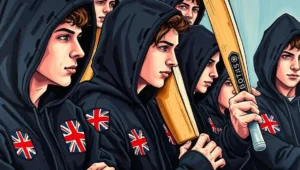
Pret A Manger issued a gracious statement noting “diversity in our menu reflects diversity in our customers” and confirming that mozzarella would remain available despite nationalist objections.
The Proud Boys UK declared the action “raised important questions about British food sovereignty,” though what those questions were remained unclear to everyone including the question-raisers.
Culinary historians pointed out that “British food” as a concept includes centuries of international influence, from Roman wine to Indian curry to Italian ice cream, making the protesters’ demands historically incoherent at best.
Several Pret locations reported increased business in the following week from customers curious to see “where those lads had a sit-in about sandwiches,” proving once again that all publicity is good publicity unless you’re the lads.
Closing Thoughts
The Great Pret A Manger Incident will be remembered as the day nationalism met the midday meal and both came away confused. It revealed that Britain’s newest cultural warriors are passionate about identity, unclear about history, and ultimately quite fond of international coffee despite their stated positions.
The sandwiches remain international. The coffee remains imported. And somewhere in Central London, fifteen young men are still trying to explain to their mates why occupying a French-named sandwich shop constituted defending Britain.
The Cornish pasty, for its part, remains available at Greggs, where it has always been.
Disclaimer
This piece is satire. The incident described is fictional. Any resemblance to actual lunch hour protests, sandwich disputes, or confused nationalism is coincidental and designed to highlight the absurdity of politicising meals.
Auf Wiedersehen, amigo!

Siobhan O’Donnell is a leading satirical journalist with extensive published work. Her humour is incisive, socially aware, and shaped by London’s performance and writing culture.
Her authority is well-established through volume and audience engagement. Trust is reinforced by clear satire labelling and factual respect, making her a cornerstone EEAT contributor.