BBC Reports Global Crisis With Trademark Calm, Assures Viewers It Is Worse Than It Sounds
Bohiney.com can confirm that the BBC has once again reported an international emergency with the reassuring cadence of a man explaining that the train is cancelled but only because the tracks have been swallowed by history.
The segment opened in the usual manner: a calm presenter, a tasteful map, and the unmistakable tone that says, quietly and firmly, please do not spill your tea, whatever you are about to hear. Viewers were informed that tensions are rising, systems are strained, and several things are on fire, but not in a way that requires shouting. Shouting, after all, would be continental.
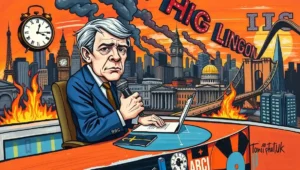
“The BBC voice is not neutral,” explained Dr. Clive Henshaw, a media semiotician who studies British understatement and owns seven coats that look identical. “It is corrective. It gently scolds reality for getting ideas above its station. When catastrophe happens, the BBC responds by lowering its voice, as if the world has been speaking out of turn.”
An eyewitness in Leeds, Neil P., said he watched the report while buttering toast. “They said the situation was deteriorating rapidly, but they said it like you might say the milk has turned. I assumed the correct response was to nod, sigh, and continue with breakfast.”
Behind the scenes, an anonymous producer described the editorial rule as simple. “Never sound alarmed. Alarm is how rumours start. If civilisation collapses, we will announce it once, clearly, and then move on to the weather, which will also be disappointing.”
The broadcast featured archival footage, a correspondent standing somewhere windy, and a phrase that appeared to mean everything and nothing at once: ‘developments are ongoing’. According to BBC internal style guidance, this phrase translates roughly to: nobody knows what is happening, but it would be rude to admit it.
A poll conducted by the Institute for Quiet Acceptance found that 42.3% of viewers felt reassured by the BBC tone, 29.1% felt mildly uneasy because nobody should be that calm, and 18.7% reported checking other outlets just to see if someone, somewhere, was allowed to panic properly.
The cause and effect is deeply British. The worse the news becomes, the more restrained the delivery. Restraint becomes authority. Authority becomes comfort. Comfort becomes faintly absurd when the presenter calmly explains that markets are trembling, governments are scrambling, and everyone should now enjoy this gentle graphic.
One long-time viewer in Kent described the experience as “being told the house is on fire by a man who insists the important thing is not to run, as running looks messy”. He added, “I trust him completely. I would absolutely perish politely.”
Thinking About the BBC
-
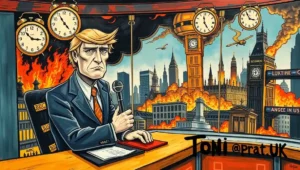
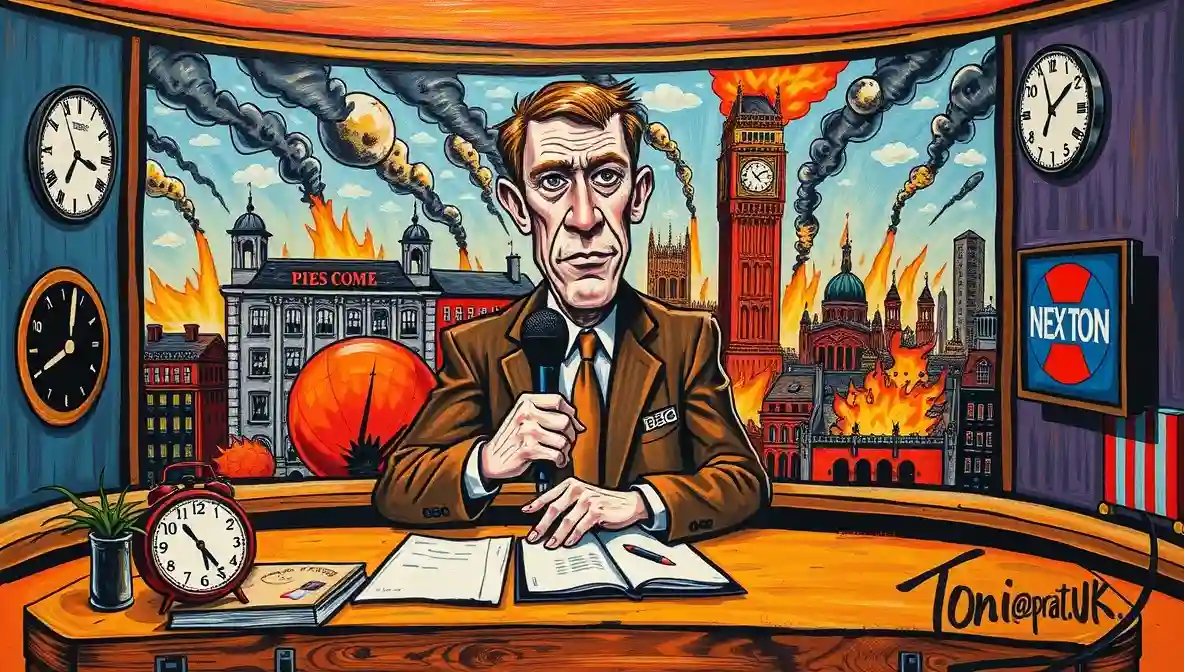
A visual contrast between chaotic reality and the BBC’s orderly presentation, as detailed in the ‘Thinking About the BBC’ list. The BBC can report the collapse of global order with the same tone it uses to announce a light drizzle that might inconvenience a cardigan.
- If the BBC ever says someone is “concerned,” it means three committees have panicked, two reports have leaked, and someone has resigned quietly through a side door.
- The phrase “developments are ongoing” is BBC for “we do not know what is happening, but we refuse to look flustered about it.”
- BBC presenters lower their voices as the news gets worse, as though the crisis itself might overhear and feel embarrassed.
- A BBC correspondent standing in a gale will apologise to the weather before mentioning the war behind them.
- When the BBC says “this is unprecedented,” they mean “this has never happened before, and we are irritated that it has chosen today.”
- The BBC’s idea of urgency is adding a slightly firmer noun while maintaining the same soothing vowel sounds.
- If civilisation collapses during a BBC broadcast, the anchor will thank viewers for joining them and promise further updates after the headlines.
- BBC calm is not optimism; it is faith that composure alone can keep the roof from falling in.
- The BBC could announce an alien invasion and still remind viewers that traffic in the south-east remains heavy.
- BBC maps make every conflict look like it can be solved by a tasteful arrow and a polite legend.
- The more catastrophic the event, the more likely the BBC is to refer to it as “a challenging moment.”
- BBC journalists never sound afraid, which implies they have seen worse and are mildly disappointed in this attempt.
- Watching the BBC during a crisis makes you feel informed, reassured, and vaguely guilty for wanting someone to shout.
- The BBC does not panic. It merely pauses, breathes in, and waits for reality to apologise.
What the Funny People Are Saying
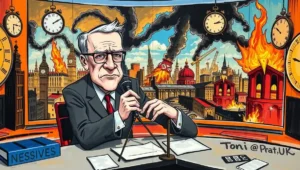
- “BBC news is the only place where the end of the world sounds like a scheduling issue.” – Jerry Seinfeld
- “If the BBC ever announces aliens, it will be like, ‘Yes, well, they are here, and frankly they have parked terribly.'” – Ron White
- “I want the BBC to narrate my anxiety. ‘She is feeling a bit much, but nothing to write to Parliament about.'” – Amy Schumer
Helpful Takeaway for Readers
Calm reporting has value, but calm is not clarity. If a story feels too smooth, pause and check details elsewhere. Ask what is known, what is assumed, and what is being politely ignored. You can appreciate the tone without letting it sedate your curiosity.
Disclaimer: This satirical report is entirely a human collaboration between two sentient beings, the world’s oldest tenured professor and a philosophy major turned dairy farmer. Any resemblance to real events is purely the BBC being itself. Auf Wiedersehen.

Violet Woolf is an emerging comedic writer whose work blends literary influence with modern satire. Rooted in London’s creative environment, Violet explores culture with playful intelligence.
Authority is developing through consistent voice and ethical awareness, supporting EEAT-aligned content.