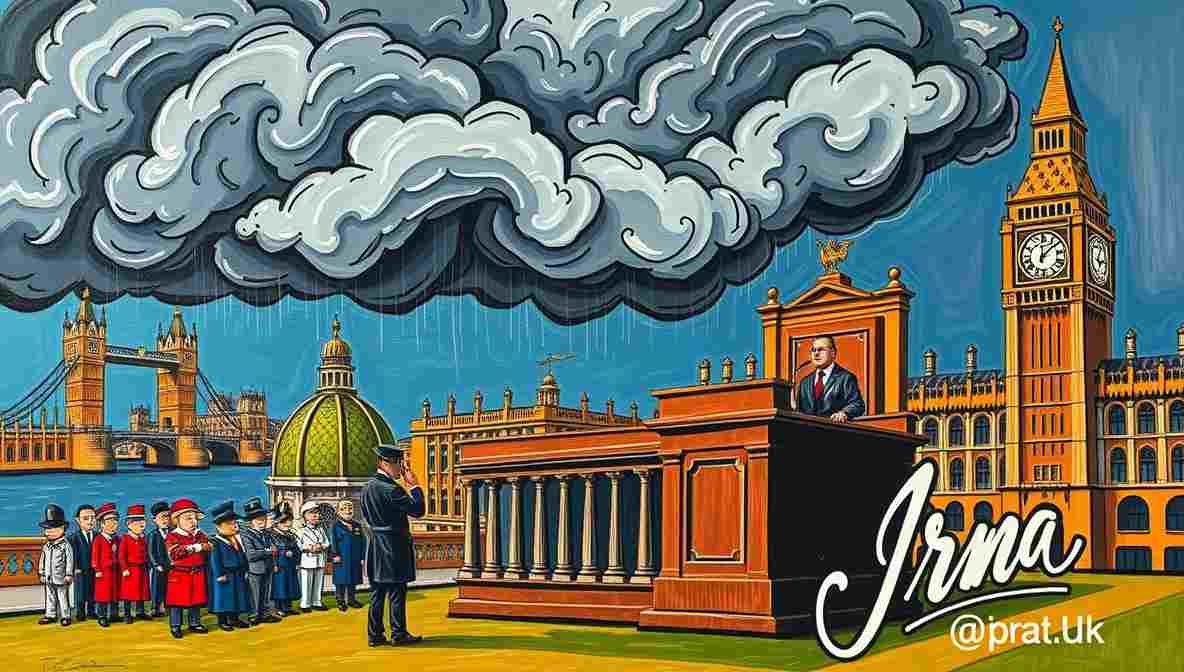
City responds to ideological assault by continuing to exist expensively
A growing chorus of right-wing commentators, politicians, and online personalities has declared London the frontline in a cultural and ideological war, a development the city itself has greeted with mild annoyance, a sigh, and an increase in rent. The declaration, fuelled by claims that London represents everything from globalism to moral decay, has positioned the capital as both villain and prize in an international narrative battle.
According to critics, London has become a symbol of elite liberalism, multicultural excess, and values incompatible with “real” nations. Commentators describe the city as lost, captured, or fallen, often without visiting it recently or successfully navigating the Underground. The language of conflict has intensified, framing London as an enemy territory rather than a place where people live, work, and queue patiently.
Londoners, meanwhile, appear largely unfazed. Interviews conducted across the city revealed a population more concerned with transport delays, housing costs, and the availability of decent coffee than with ideological offensives launched from afar. “War?” one resident said. “We can barely get a plumber.”
Political analysts suggest the rhetoric serves external audiences more than London itself. Declaring war on a city allows critics to personalise abstract grievances, transforming economic anxiety and cultural change into something geographically tangible. London becomes a convenient proxy, absorbing blame for broader transformations that extend well beyond its boundaries.
Officials within the UK government acknowledged the rhetoric whilst declining to engage directly. One senior figure described the attacks as “predictable,” noting that London’s visibility makes it an easy target. The city’s global influence, diversity, and economic weight invite scrutiny, admiration, and resentment in equal measure.
Critics argue that London’s policies and culture deserve challenge, claiming the city no longer represents national values. Supporters counter that London has never represented a single set of values and that its strength lies precisely in that inconsistency. The debate often collapses into caricature, with London portrayed either as a utopia or a dystopia, rarely as a functioning city full of contradictions.
Social media amplified the rhetoric, with influencers and commentators issuing dire warnings about London’s future. The city responded by hosting theatre premieres, financial conferences, protests, and brunch, sometimes simultaneously. Observers noted that London’s defining feature may be its ability to absorb criticism without altering course.
As declarations continued, the gap between rhetoric and reality widened. London remained crowded, expensive, and indifferent. The war, it seems, exists largely on screens and stages far from the city itself.
The Mayor of London declined to comment, citing more pressing concerns about housing and transport.

Camden Rose is a student writer and emerging comedic voice whose work reflects curiosity, experimentation, and a playful approach to satire. Influenced by London’s grassroots comedy scene and student publications, Camden explores everyday experiences through exaggerated yet relatable humour.
Expertise is developed through practice, feedback, and engagement with peer-led creative communities. Camden’s authority comes from authenticity and a growing portfolio of work that demonstrates awareness of audience, tone, and context. Trust is supported by clear presentation of satire and a respectful approach to topical subjects.
Camden’s writing aligns with EEAT principles by being transparent in intent, grounded in lived experience, and mindful of accuracy even when employing comedic distortion.