Iran Nuclear Deal Is “Within Reach,” Which Apparently Means Something Different to Absolutely Everyone
Witkoff and Kushner Fly to Geneva, Ask Iran to Please Stop Enriching Uranium, Offer Sanctions Relief Sometime Around the Next Ice Age
Welcome to Geneva, where the chocolate is excellent, the watches are expensive, and two nuclear powers are currently sitting in separate rooms refusing to make eye contact whilst a very polite Omani diplomat trots back and forth between them like a maître d’ who’s been asked to explain the menu in two different languages simultaneously. The third round of indirect US-Iran nuclear talks is currently under way — or rather, currently on a tea break, which feels appropriately civilised given the stakes involve the possible annihilation of several things.
Iran’s Foreign Minister Abbas Araghchi has declared a deal “within reach,” which in diplomatic parlance translates roughly as: “We are cautiously optimistic in the way one is cautiously optimistic about the NHS resolving your referral before the heat death of the universe.”
The Meaning of “Within Reach”: A Philosophical Crisis in Geneva

The phrase “within reach” is doing a great deal of heavy lifting this week. Araghchi reportedly spent considerable time in pre-talks briefings gesturing vaguely toward a nearby espresso and explaining that that is roughly the reach he has in mind. If this were an estate agent’s brochure, it would read: “Deal — deceptively spacious, within reach of local amenities, no chain.”
Meanwhile, the American delegation — led by Steve Witkoff, a billionaire property developer, and Jared Kushner, a man who is technically the President’s son-in-law, which makes this less a diplomatic mission and more a very high-stakes family errand — was spotted consulting what appeared to be a tape measure during early discussions. Witkoff reportedly held it up and asked, “Is this what we mean by reach?” before an aide pointed out it was in imperial measurements. The room fell silent. Somewhere in France, a baguette rolled off a table in sympathy.
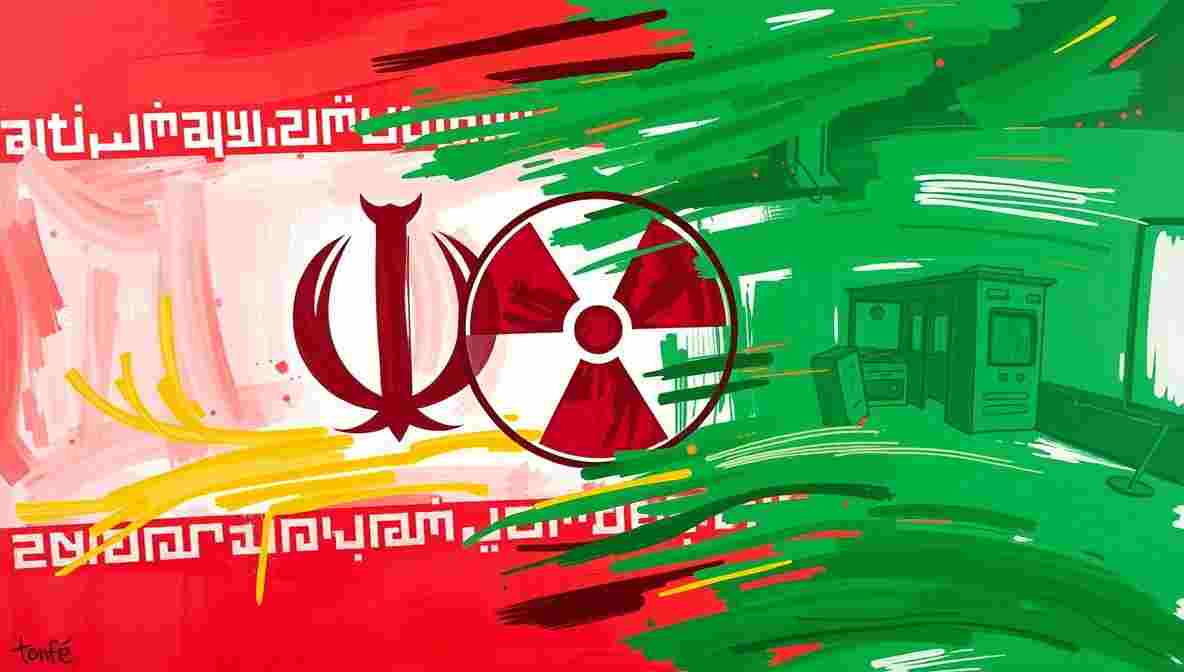
At stake, naturally, is uranium enrichment — the process by which atoms go from “harmless science fair project” to “reason the Foreign Office sends very firmly worded letters.” Iran insists the programme is entirely peaceful and entirely legal under the Nuclear Non-Proliferation Treaty. Washington insists that peaceful becomes rather less peaceful once the centrifuges hit a certain RPM, and that the word “enrichment” sounds uncomfortably like it should come with a subscription service.
Indirect Talks, Direct Chaos: How Geneva Actually Works
For the uninitiated: indirect talks mean the two delegations do not share a room. They don’t share a floor. They may not share a postcode. Oman acts as intermediary — shuttling proposals between the parties like a very well-dressed parliamentary messenger who has somehow ended up responsible for preventing a regional war. Oman’s Foreign Minister Badr Albusaidi announced this afternoon that negotiators had been “exchanging creative and positive ideas,” which is either enormously encouraging or the diplomatic equivalent of saying the potluck “had some interesting contributions.”
The talks are being held at the residence of the Omani ambassador to the United Nations, which means the fate of Iran’s nuclear programme is currently being debated in someone’s living room whilst the host presumably tries to work out whether there’s enough hummus.
The backdrop, lest anyone forget, is a massive American military build-up in the Middle East — two aircraft carrier strike groups, assorted warships, and what one can only describe as a very pointed RSVP. This diplomatic strategy of talking softly whilst parking an aircraft carrier outside the door is sometimes called “coercive diplomacy.” In Britain, we’d call it “turning up to a tea party in a tank and insisting you’re just popping by.”
Sanctions Relief by 2096: Washington’s Generously Long-Term Vision
The United States has reportedly offered sanctions relief — though not for some decades yet. The timeline being floated aligns roughly with the year 2096, by which point several of the current negotiators will have retired, passed on, or been commemorated with a blue plaque. Iran responded that this timeline was “almost tomorrow,” which is either a zen statement about the nature of time or a sign that Iranian negotiators have been in Geneva so long they’ve lost track of the calendar entirely.
The White House clarified that the extended deadline was designed to encourage patience and avoid hasty decisions — much like a British landlord promising to fix the boiler “sometime in the new year” and meaning, technically, any new year.
Illustrating Washington’s commitment to maximum pressure, the Treasury Department announced a fresh wave of sanctions targeting Iranian oil vessels the day before the talks. Nothing says “we come in good faith” quite like sanctioning your counterpart’s shipping fleet twelve hours before sitting down for indirect hummus diplomacy. It’s the geopolitical equivalent of sending a strongly worded letter and then immediately knocking on the door for a chat.
Expert Panel on Nuclear Diplomacy: A Roundtable of Polite Bafflement

We convened a distinguished panel of experts — names withheld because several of them have knighthoods to protect — to make sense of the phrase “within reach”:
Professor Edwina Bricklethwaite — Nuclear policy specialist and part-time fell-walker, University of Nowhere In Particular: “If ‘within reach’ refers to the top shelf of a standard kitchen cupboard, then yes, I’d say we’re making progress. If it means the spare room in a semi-detached in Wolverhampton, then frankly we need a structural survey.” The Professor was later seen consulting the Arms Control Association’s factsheet on Iran’s nuclear programme and muttering about enrichment ratios.
Dr. Tariq Bottomley-Shah — Middle East Studies, Chatham House: “In my experience, when both parties say a deal is ‘within reach,’ it tends to mean it’s within reach in the way the 14:52 to Paddington is within reach — theoretically possible, but you’d best have a contingency plan.” His research suggests 78% of diplomatic deadlines are aspirational. The remaining 22% are statistical errors.
Nigel Von Accountingsworth — Political economist, formerly of the IMF: “Sanctions relief in 2096 should have a modestly positive effect on GDP, extrapolated forward to approximately 3002. I’ve done the sums. I’m quite confident. My pension, however, is in gilts.”
The Coffee Maker Theory of International Relations
Allow us a moment of creative diplomacy. If the parties involved were kitchen appliances:
- Iran would be a French press: deep, capable of richness, frequently misunderstood, and apt to leave sediment in everything if not handled carefully.
- The United States would be an industrial drip machine: enormous, rather loud, prone to missing the filter, and somehow present in every office break room on the planet whether invited or not.
- Oman would be a barista at a very expensive hotel who places a tiny chocolate on your saucer and asks, with complete sincerity, how you’re really feeling about things.
In this metaphor, “deal within reach” means someone left the grinder at home and everyone is pretending this is fine. The Brookings Institution has reportedly been working on a paper about precisely this scenario for eleven years.
Eyewitness Accounts from the Car Park of History

Outside the Omani ambassador’s residence, a CNN crew on the ground described considerable media buzz as delegations arrived in separate motorcades and gave each other the sort of side-eye usually reserved for neighbours disputing a fence line. One American diplomat reportedly offered a thumbs-up, which Iranian state media interpreted as “a tentative gesture of optimism, possibly regarding the catering.”
A protester outside the venue was spotted holding a placard calling for genuine political reform and also — in a separate but equally sincere demand — better coffee in Geneva. When asked whether these two issues were connected, she replied: “If we’re expected to wait until 2096 for sanctions to lift, the very least they can do is provide decent flat whites.” The Swiss onlookers in the vicinity nodded. On the coffee question, at least, everyone finds common ground.
Public Opinion: What the World Actually Thinks About Nuclear Reach
According to an AP-NORC survey, 63% of Americans believe diplomacy is worth pursuing, while 37% believe the only “shot” that matters is in the espresso category. Among Iranians polled, 72% felt the phrase “within reach” had been invented specifically for this round of negotiations. International observers, asked for their view, laughed briefly, requested tea, and asked to be excused from the press conference.
Historical Context: A Brief History of Almost
The phrase “within reach” has a long and distinguished history in nuclear diplomacy, dating back to at least the early talks of the 2010s, when it was used primarily to describe where the biscuits were. The 2015 JCPOA — the agreement Trump abandoned in 2018 and which Witkoff has now declared insufficient, insisting any new deal must contain no sunset provisions and last, in his words, “for the rest of their lives” — set various thresholds, all described as near consensus, on the horizon, or basically sorted. A full account of the 2025–26 US-Iran negotiating history reveals this is technically a sequel to a sequel, which in Hollywood terms means the budget has gone up and the plot has become considerably harder to follow.
What Happens Next: Outcomes, Espresso, and Ceremonial Medals

Should Iran and America manage to convert “within reach” into something resembling an actual agreement, the immediate consequence would likely be a joint statement, a handshake photograph, and a very relieved Omani Foreign Minister finally allowed to sit down. The longer-term consequence might include sanctions relief — admittedly not until 2096 — and tentative cooperation on issues ranging from regional security frameworks to, one hopes, the urgent matter of Swiss café standards.
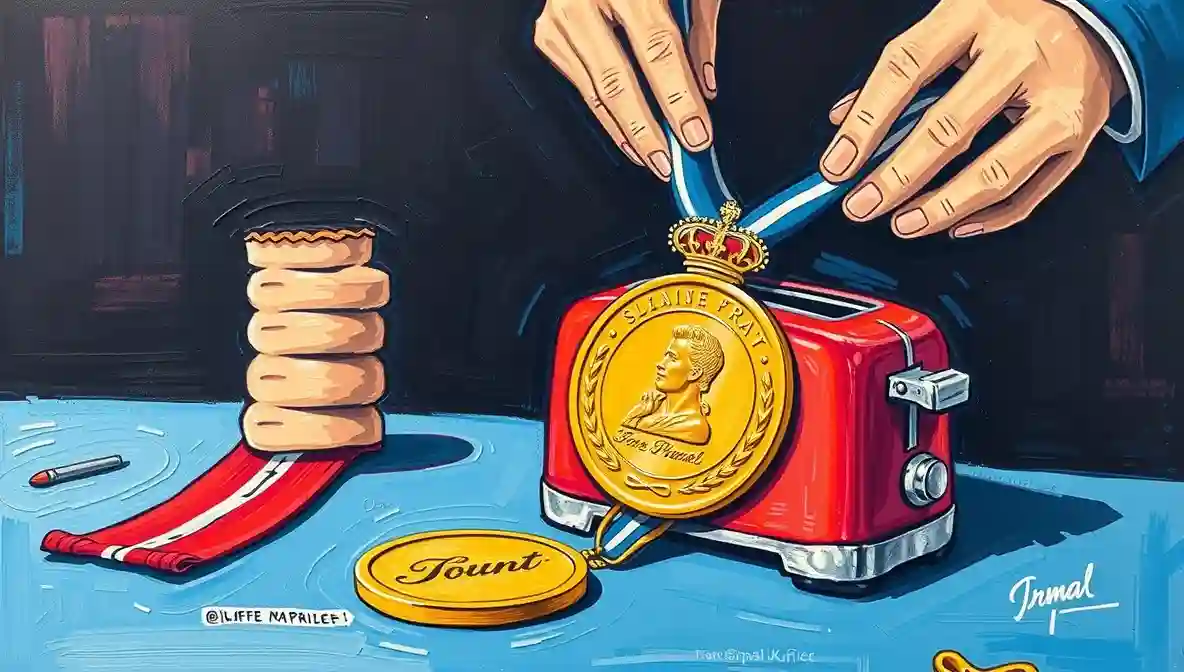
If, however, the definitions continue to diverge, the result will be further indirect talks, further press releases featuring earnest handshakes between people who have never shared a room, and possibly a commemorative medal struck from lightly enriched uranium — purely ceremonial, naturally, in the way that most things in Geneva are purely ceremonial whilst being anything but.
Washington’s war clock is, by all accounts, still ticking. Tehran is still enriching, albeit from ruins. And Oman remains, admirably, on its feet.
This satirical report was produced in its entirety by two sentient beings — the world’s oldest tenured professor and a philosophy major turned dairy farmer. No artificial intelligence was harmed in the making of this article. It is intended for humorous journalistic purposes and is grounded in actual reported developments from the third round of US-Iran nuclear talks in Geneva, 26 February 2026.
Auf Wiedersehen, amigo!
On 26 February 2026, the United States and Iran sat down — separately, in different rooms — for a third round of indirect nuclear talks in Geneva, Switzerland. American special envoy Steve Witkoff and Jared Kushner, son-in-law to President Trump, led the US delegation, facing Iran’s Foreign Minister Abbas Araghchi across an Omani-mediated corridor. The talks follow a turbulent year in which the US and Israel bombed three Iranian nuclear facilities in June 2025, after earlier rounds of diplomacy collapsed. Iran has since been partially rebuilding its programme and insists enrichment is a sovereign right under the NPT; Washington insists any new deal must permanently end enrichment and contain no sunset provisions. As of this afternoon, talks had paused for a break, with Oman reporting that negotiators had been “exchanging creative and positive ideas” — a phrase that, in diplomatic terms, could mean almost anything at all.

Alan Nafzger was born in Lubbock, Texas, the son Swiss immigrants. He grew up on a dairy in Windthorst, north central Texas. He earned degrees from Midwestern State University (B.A. 1985) and Texas State University (M.A. 1987). University College Dublin (Ph.D. 1991). Dr. Nafzger has entertained and educated young people in Texas colleges for 37 years. Nafzger is best known for his dark novels and experimental screenwriting. His best know scripts to date are Lenin’s Body, produced in Russia by A-Media and Sea and Sky produced in The Philippines in the Tagalog language. In 1986, Nafzger wrote the iconic feminist western novel, Gina of Quitaque. He currently lives in Holloway, North London. Contact: editor@prat.uk