Five Things We Noticed Immediately
- The U.S. sending a second aircraft carrier is diplomacy’s version of typing in all caps and then adding a smiley face.
- Every time negotiations “continue,” the Navy updates Google Maps with a new parking space near Iran.
- Pentagon officials keep saying “defensive posture,” which historically means someone is polishing something that launches.
- Iran says it wants respect, America says it wants compliance, and the ocean just wants fewer boats arguing on top of it.
- Nothing says peaceful dialogue like a floating airport that can invade three countries before lunch.
America Sends Second Aircraft Carrier To Encourage Conversation By Surrounding It
WASHINGTON, D.C.
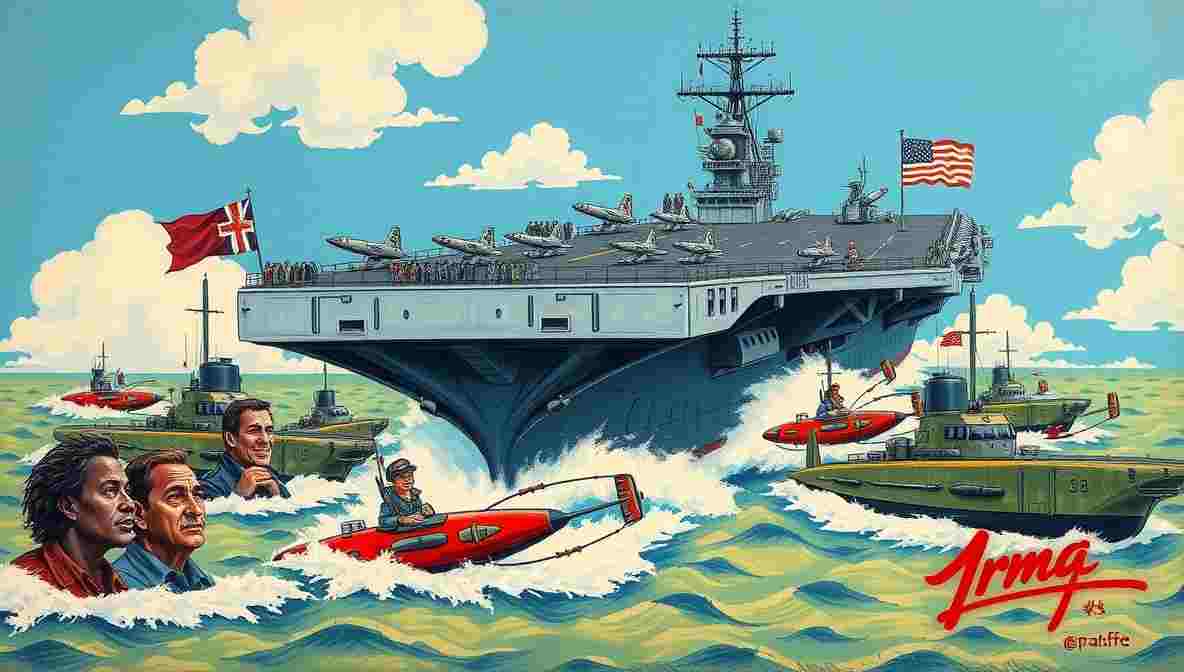
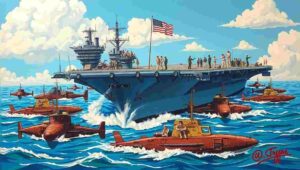
In what officials described as “a carefully calibrated whisper delivered through a megaphone strapped to a battleship,” the United States prepared a second aircraft carrier deployment to the Middle East this week, continuing a proud diplomatic tradition of negotiating by slowly assembling an armada visible from space.
President Trump reportedly considers the carrier a motivational tool.
A senior defense analyst, Dr. Martin Calabrese of the Institute for Strategic Posturing, explained the science behind it.
“Humans respond to incentives,” he said. “Carrots work, sticks work, but historically the best results come from 90,000 tons of nuclear powered suggestion.”
He added that diplomacy functions best when the other side can hear jets taking off during the phone call.
Negotiations Continue Under The Gentle Shadow Of 75 Fighter Jets
Iranian officials confirmed talks remain ongoing.
An Iranian negotiator described the atmosphere as “respectful but windy.”
The wind, according to meteorologists, came from continuous aircraft launch cycles 40 miles offshore.
A Pentagon staffer speaking anonymously explained the strategy.
“The goal is peace,” he said. “But peace should feel a little nervous. Comfortable peace gets complacent.”
He noted the U.S. had tried softer methods first, including sanctions, stern letters, and a PowerPoint titled “Please Don’t Build A Bomb.”
The PowerPoint reportedly contained 96 slides and one clip art dove.
Iran did not respond to the dove.
Poll Shows Americans Prefer Warships To Awkward Meetings
A new nationwide survey conducted by the Public Opinion & Maritime Confidence Institute found:
- 63% of Americans believe negotiations go better when visible from orbit
- 21% prefer talks in neutral locations like Switzerland
- 11% believe diplomacy should involve fewer submarines
- 5% thought the carrier was a cruise ship and asked about buffets
Sociologists say this reflects national culture.
Professor Elaine Hargrove from Coastal State University said Americans associate large vehicles with seriousness.
“If someone arrives in a Prius, they want compromise,” she explained. “If someone arrives in a carrier strike group, they want results.”
Eyewitnesses Report Carriers Extremely Persuasive
Fishermen off the Gulf coast described seeing the fleet assemble.
Local boat captain Raul Mendoza recounted the moment.
“You know how a storm rolls in slow and heavy?” he said. “This was like that, except the storm had radar and a gift shop.”
He added his radio picked up fighter pilot chatter asking about lunch options.
“That’s when I knew negotiations were advanced.”
The Art Of Diplomatic Escalation
Experts note this follows a traditional escalation ladder:
- First: statements
- Second: sanctions
- Third: sternly worded tweets
- Fourth: moving ships
- Fifth: moving more ships but calling it restraint
Dr. Calabrese says the second carrier represents a “firm yet courteous paragraph break.”
“In diplomatic grammar, one carrier is a suggestion,” he said. “Two carriers is italics.”
What The Funny People Are Saying
“I love diplomacy. It’s the only job where parking closer to someone counts as aggression.” — Jerry Seinfeld
“Nothing motivates cooperation like the sound of jets taking off while you’re still saying hello.” — Ron White
“We invented couples therapy for nations and immediately brought a battleship.” — Sarah Silverman
“If my neighbor parked a carrier in front of my house, I’d apologize for things I didn’t do.” — Larry David
“America negotiates like a dad standing quietly in the doorway at 2 a.m.” — Bill Burr
The Pentagon Clarifies It’s Totally Not A Threat
Officials emphasized the move is precautionary.
“We are not preparing for war,” said a defense spokesperson. “We are preparing for the possibility that war prepares for us.”
He explained the carrier offers “options.”
Military planners love options because they sound peaceful while involving missiles.
Iran Responds With Its Own Strategy
Iran announced it would continue talks while also conducting exercises, issuing statements, and turning on radar systems in what analysts called “mutually assured paperwork.”

A regional political scientist described the situation.
“Both sides are negotiating intensely,” he said. “One with diplomats, the other with naval architecture.”
Economic Impact
Oil markets reacted immediately, rising, falling, rising again, and then pausing to read statements from anonymous officials.
Economist Linda Park noted the predictability.
“Whenever a carrier moves, traders open three windows: energy prices, defense stocks, and a calming breathing app.”
Historical Perspective
Historians say naval diplomacy has long precedent.
Gunboat diplomacy became aircraft carrier diplomacy, which later evolved into press conference diplomacy where everyone says they want peace while standing in front of extremely expensive machines designed for the opposite.
Professor Hargrove summarized it best.
“Human civilization invented conversation,” she said. “Then invented fleets just in case conversation needed encouragement.”
The Situation Moving Forward
Officials say talks may succeed, fail, pause, resume, stall, progress, or be described differently depending on the press briefing.
The carrier remains ready.
The diplomats remain ready.
The microphones remain ready.
And somewhere in the ocean, sailors continue the ancient ritual of international relations: floating nearby until everyone behaves.
Disclaimer
This article is a work of satire created through an entirely human collaboration between the world’s oldest tenured professor and a philosophy major turned dairy farmer. Any resemblance to real geopolitical tension is purely the fault of geopolitics itself. Auf Wiedersehen, amigo!

Chelsea Bloom is an emerging comedic writer with a focus on light-hearted satire and observational humour. Influenced by London’s student culture and digital comedy spaces, Chelsea’s work reflects everyday experiences filtered through a quirky, self-aware lens.
Expertise is growing through experimentation and study, while authority comes from authenticity and relatability. Trustworthiness is supported by clear intent and ethical humour choices.
Chelsea’s contributions represent developing talent within an EEAT-compliant framework that values honesty, clarity, and reader trust.