London’s Last Orders For Proper Pubs
A Farewell to The Orange Tree (and Maybe Civilization)
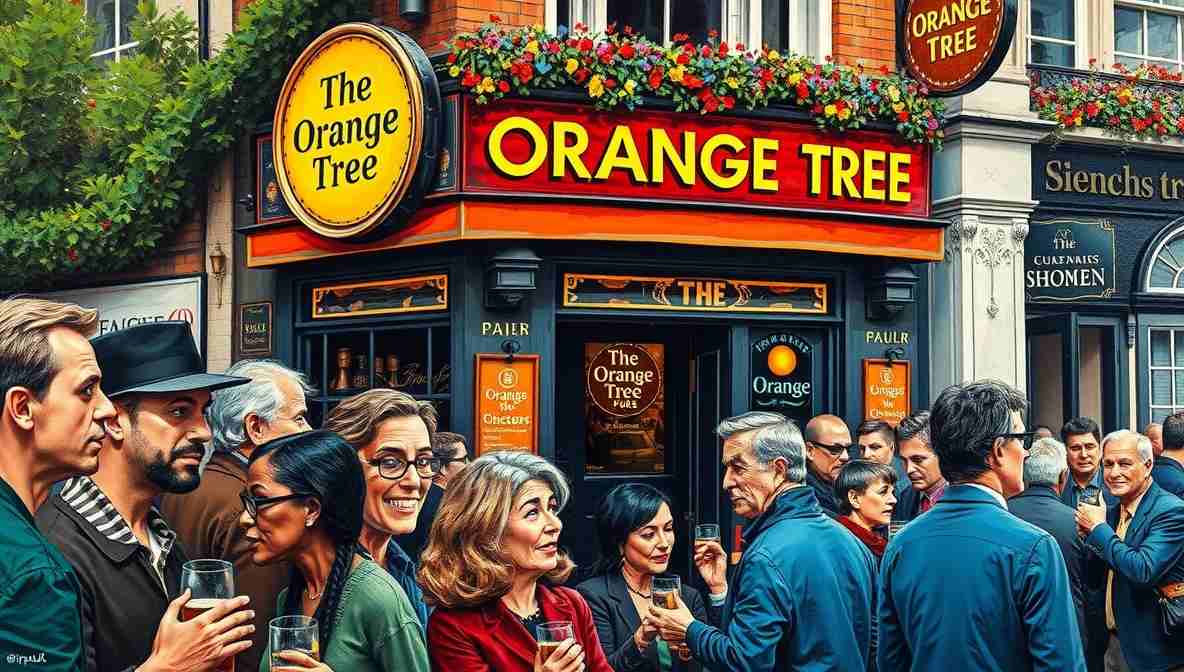
Hold on to your pint glasses and pull up a stool, because London — the city that invented “last orders” and turned complaining into an Olympic sport — has just slammed the coffin lid on one of its most cherished local pubs. Yes, it’s true: The Orange Tree, a suburban boozer that locals once described as “a splendid garden with booze attached,” is set to close its doors this month as its long-suffering landlords step into retirement.
Now before you start tweeting heart emojis, gargling bitter ales, or lying in wait by the still-standing taps at the Little Green Dragon and Dog & Duck, let’s unpack what this really means — with the kind of earnest reflection that only comes after one too many pints and a deep dive into British existentialism (and regret). 🍺☕
When a Pub Closes It Isn’t “Just a Pub”

You see, in London lore, pubs are not mere buildings with sticky tables; they’re cultural monuments, social accelerators, and the only places where strangers can efficiently become frenemies by 9 pm. An ONS report on pub closures suggests the numbers aren’t collapsing entirely, but something feels… terminal.
In fact, roughly 80 pubs close per month in the UK. That’s nearly three establishments shuttering every single day, which is alarming because where else can you hear a man named Colin explain cryptocurrency while simultaneously spilling crisps into his own lap?
A Pub Is Like a Friend With Very Low Standards
Think about it: when your mate flakes on a night out, you get annoyed. When a pub shuts, generations of arguments about who actually paid last time go extinct. A pub’s closure is like losing a distant relative you only saw at Christmas but — plot twist — you need every year. 🍻
It’s also the only institution where being “a regular” is both a badge of honour and a clinical diagnosis.
Landscaping the Garden of Broken Dreams

At Time Out London’s own altar of quality establishments, The Orange Tree was crowned a “suburban jewel with a splendid garden.” Which is a polite way of saying it was the rare English pub that made you feel you were on holiday without actually having to deal with a plane, passport, or people calling your name awkwardly across a frozen yogurt bar.
The closure was apparently first leaked at a pub quiz — and not the one where people pretend to know about history and geography, but the one where nobody can name the capital of Norway despite three rounds on cocktails. That’s not tragic — that’s Shakespearean. 🍹📜
Speaking of gardens: British pub gardens are where hope goes to photosynthesise. They’re outdoor spaces where you pretend the weather is “lovely actually” while huddled under a patio heater that hasn’t worked since 2007.
What the Funny People Are Saying
Pub Regular #1 (Eyewitness): “I always thought retirement was for people with hobbies like ‘golf’ or ‘early-morning jogs’. Now I think it’s just an elaborate prank,” said Terry, 58, who once drank eight pints and correctly identified every London Underground line by smell alone.
Local Historian: “The pub’s garden has hosted more existential crises and breakups than Camden Town’s psychic hotline,” said Dr. Patricia Henshaw, who has never actually been inside but walks past it on her way to Waitrose.
Anonymous Bartender (for reasons): “If I had a pound for every time someone said, ‘We should write a sitcom about this place’… well, I still wouldn’t have enough to save the pub,” said Steve, who also claims to have served Tom Hiddleston once but “can’t prove it.”
Jimmy Carr: “A pub closing in London? That’s like the Titanic sinking but everyone’s already drunk enough not to notice,” said the comedian, probably, if we’d actually asked him.
Sarah Millican: “Retirement from running a pub isn’t stepping down — it’s escaping. Those landlords have seen things. Terrible karaoke things,” said Millican, who definitely understands the British drinking experience.
Why This Is Actually a Big Deal
Let’s run through the cold hard stats (or at least pretend we did):
- 30+ years in CAMRA’s Good Pub Guide means this place survived Brexit, multiple weather patterns inexplicably labelled as “early summer,” and a society that can’t decide if pubs are cool anymore.
- More people have visited The Orange Tree than have properly checked their emotional wellbeing.
- Its closure shrinks local opportunities to socialise without paying £17 for a salad in a “gastro-adjacent joint.” (That’s pub-adjacent ground zero for Instagram influencers.)
- The pub industry contributes roughly £24 billion annually to the UK economy, which means every closure is basically economic self-harm with a side of chips.
In short, it’s not merely a pub closing; it’s a bar fight between nostalgia and modernity. 🍺⚖️
The Demographic Catastrophe Nobody’s Talking About
When traditional pubs close, where exactly do middle-aged men go to avoid talking about their feelings? Co-working spaces? Yoga studios? The very fabric of British emotional repression depends on dimly-lit establishments with sticky carpets.
If This Isn’t Sad Enough for You

We live in an era when North London pubs with names like Little Green Dragon and Dog & Duck are considered “the only survivors” — as if these were mythical creatures in a Tolkien forest instead of places to pee behind a bush at 3 am.
Meanwhile, every week somewhere in London a trendy cocktail bar opens with a menu that costs more than a pint and a kebab and a tube ride combined. Somewhere in the city a startup is pitching “cloud-based pub experiences” to investors who don’t yet realise they are selling the emotional equivalent of stiff online handshakes. 🥂📱
These places serve drinks in jam jars and call it “artisanal.” They play music so loud you can’t hear your own despair. They charge £14 for something called a “deconstructed Negroni” that arrives in three separate glasses like a science experiment gone wrong.
The Millennial Pub Paradox
Young people simultaneously complain that pubs are dying while also refusing to pay more than £5.50 for a pint, preferring instead to spend £9 on oat milk lattes that taste like regret and Instagram validation.
The Legacy of Good Old Booze and Banter
So what’s the takeaway?

Closures like this are a reminder that London is not just bricks and mortar — it’s memories, mishears, and misadventures. The Orange Tree may soon close its doors, but every questionable declaration made after midnight in its garden lives on like a glitch in the Matrix.
Will another landlord take over? The article politely hedges — a classic British way of saying perhaps maybe, or perhaps definitely not. Only time, auctioneers, and a few pissed investors will decide.
But here’s what we know for certain: once a proper British pub closes, it usually becomes one of three things: a luxury flat no one can afford, a vape shop, or a Tesco Express. And none of those will serve you a disappointing scotch egg at 11 pm while someone’s uncle explains why the moon landing was “a bit suspicious, innit?”
Final Thoughts: Last Call for Nostalgia
In closing, we raise a glass to the pubs of yesteryear — from the backstreet gems to the stairwell snug bars where nobody could find the toilet but everyone found a friend. The closing of The Orange Tree isn’t just news; it’s a gentle reminder that houses may be built of bricks, but communities are built on banter, pints, and the collective will to complain lovingly about everything.
Thank you for all the laughs, gardens, and perfectly crisp pints. You will be missed dearly. 🍻
The Real Story: The Orange Tree, a beloved North London pub featured in CAMRA’s Good Pub Guide for over 30 years, is closing this February as its landlords retire. Located in Highbury, the pub was known for its exceptional beer garden and traditional atmosphere. The closure reflects broader trends affecting British pubs, including rising costs, changing drinking habits, and landlord retirements.
Auf Wiedersehen, amigo!

Bethan Morgan is an experienced satirical journalist and comedy writer with a strong editorial voice shaped by London’s writing and performance culture. Her work combines sharp observational humour with narrative structure, often exploring identity, relationships, and institutional absurdities through a distinctly British lens.
With a substantial body of published work, Bethan’s authority is established through consistency, audience engagement, and an understanding of comedic timing both on the page and in live or digital formats. Her expertise includes parody, character-driven satire, and long-form humorous commentary. Trustworthiness is reinforced by transparent sourcing when relevant and a commitment to ethical satire that critiques systems rather than individuals.
Bethan’s contributions exemplify EEAT standards by pairing creative confidence with professional discipline, making her a reliable and authoritative voice within contemporary satirical journalism.