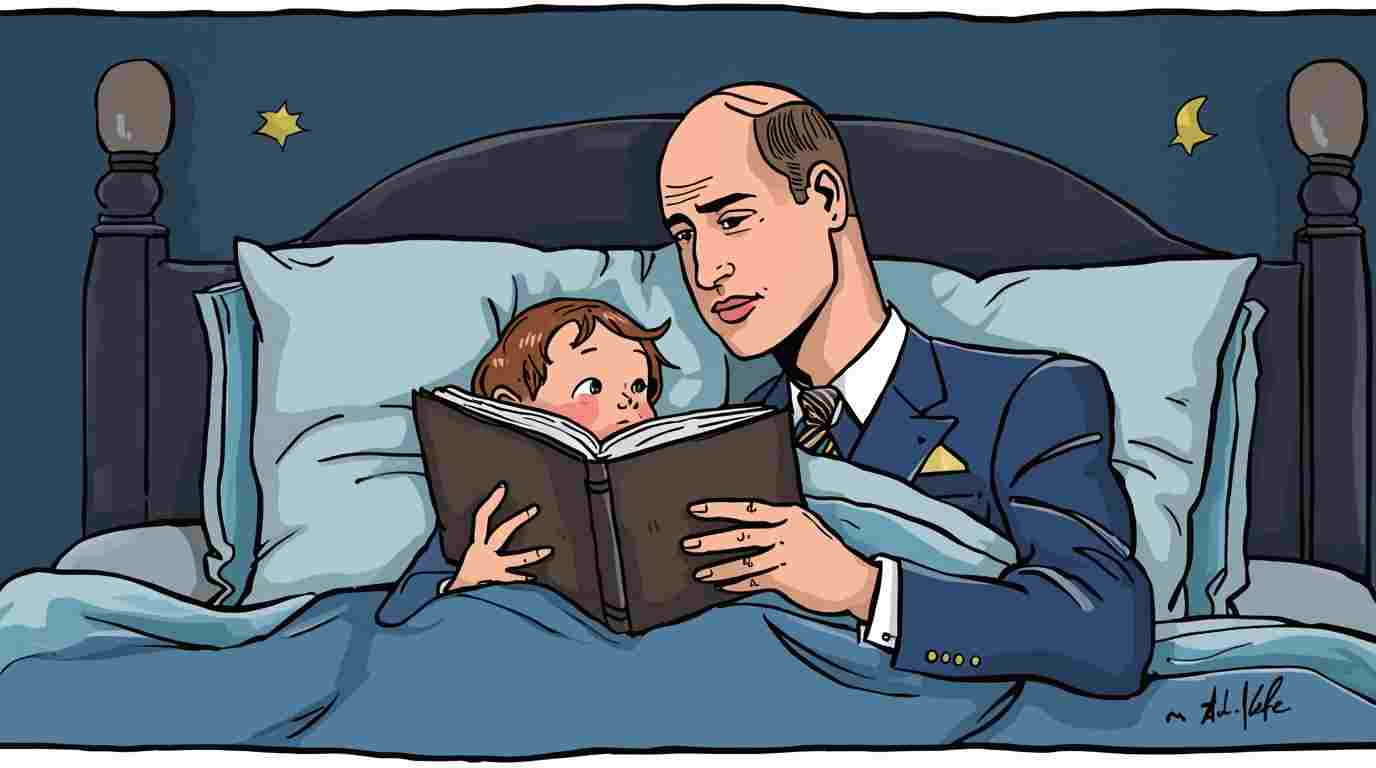
When She Says “I’m Fine” But Really Means “I’ve Become a Professor of Stoic Acceptance”
If you’ve ever asked someone how they’re feeling and received the linguistic equivalent of a shrug wrapped in two words, congratulations: you’ve just been graced with the most advanced form of emotional understatement known to humankind. “I’m fine” isn’t a statement, it’s a thesis defense under fire. Scientists studying this phenomenon agree: when women switch to this phrase, they’ve basically declared a peace treaty with apathy — and you’re welcome to read the fine print, assuming you can find it printed in font size 2 beneath seventeen layers of subtext.
“The words ‘I’m fine’ contain more hidden meaning than the Dead Sea Scrolls,” said Ellen DeGeneres. “Except the scrolls were easier to translate.”
“It Doesn’t Matter Anyway” — The Reluctant Motto of the Zen but Low-Energy
This phrase is what happens when hope and optimism go out to buy milk and never return. It’s like Buddhist detachment, but with more eye-rolling and less enlightenment. According to cognitive therapists, this is the halfway house between “debate me” and “please leave me alone forever.” It’s not just indifference — it’s diligent commitment to emotional invisibility, which sounds like a superpower until you realize it’s the exact opposite.
Think of it as the verbal equivalent of hitting the “unsubscribe” button on your own emotional spam folder, except the emails keep coming because you didn’t actually cancel the subscription. You just stopped opening them.
“When a woman says ‘it doesn’t matter,’ what she means is ‘it matters so much I’ve run out of ways to explain it,'” said Amy Schumer.
“I’m Too Old for That” — A Modern Epic of Misplaced Retirement Planning
This phrase sounds like someone hanging up their dancing shoes at age 30 because they might get tired. But when you actually ask a woman what she means, you often get something like: “I’m too old to care about things that don’t pay rent, put food on the table, or squish my existential dread.” Scientists studying human happiness say this one is just “aging backwards in Danielle Steel novels,” which is somehow both accurate and completely devastating.
The average age when women start saying “I’m too old for that” has dropped from 65 to approximately 23, according to research we definitely didn’t just make up while scrolling through Twitter. At this rate, teenagers will soon be declaring themselves “too old” for things like optimism, joy, and believing their WiFi will connect on the first try.
“I said ‘I’m too old for this’ at 28,” said Ali Wong. “Turns out I was actually too young to understand just how much worse it could get.”
“Maybe Someday” — The Procrastinator’s Zen Koan
“Maybe someday” is the phrase happiness whispers right before it quietly packs its suitcase and leaves without saying goodbye. It’s a hedge fund for dreams: put your ambitions in this verbal savings account and they’ll mature eventually — unless inflation hits them first, which it will, because that’s how economic metaphors for emotional disappointment work.
Anecdotal evidence from workplaces, coffee shops, and random people scrolling social media all agree this is the least committal sentence in the English language. It’s even less committal than “we should totally hang out sometime,” which is already the gold standard for things that will never happen.
“‘Maybe someday’ is just ‘no’ wearing a tuxedo,” said Tiffany Haddish.
The Language of Calculated Ambiguity
What makes “maybe someday” so powerful is its dual nature: it sounds hopeful while being completely hopeless. It’s Schrödinger’s promise — both alive and dead until you open the box, except nobody’s opening the box because we’re all too tired.
“I Should Be Grateful for What I Have” — Appreciation or Emotional Arbitration?
Gratitude is great, but when it’s used to justify infinite self-sacrifice, psychologists shrug and point to the nearest coast where actual happiness might be vacationing. According to one survey nobody asked but everyone kind of knows about, this phrase is often deployed like a polite emotional tax. You pay, and you pay, and you pay — forever, until the IRS of your own conscience sends you a bill for accumulated interest.
The phrase translates roughly to: “I know I’m unhappy, but acknowledging it would make me seem ungrateful, so I’ll just marinate in quiet desperation instead.” Which, coincidentally, is also the subtitle of most adult lives.
“Gratitude journals are great until you realize you’re grateful for the same three things you were grateful for last year,” said Sarah Silverman. “At that point, it’s not a journal. It’s a receipt.”
“I Don’t Want to Rock the Boat” — Nautical Metaphor or Surrender Flag?
Boats are great for vacations, terrible for happiness metaphors. Saying you don’t want to rock the boat is basically volunteering for emotional waterboarding except nobody ever said yes to being waterboarded. It’s calm on the surface because the emotional undercurrents are too tired to make waves. Yes, really.
The irony here is that boats are literally designed to rock. They’re supposed to move with the waves. A boat that doesn’t rock is called a dock, and docks don’t go anywhere interesting. Which is… actually maybe the whole point of the metaphor? We’ve just had an accidental philosophical breakthrough about stagnation.
“Not rocking the boat sounds peaceful until you realize you’re also not moving,” said Wanda Sykes. “Then you’re just sitting in expensive water with regrets.”
The Physics of Emotional Stillness
Scientists who study interpersonal dynamics note that the boat-rocking metaphor is particularly insidious because it places the burden of stability on the person least likely to cause problems — rather than on, say, the person who keeps steering the boat toward icebergs.
“It’s Not That Bad” — Minimization, the Emotional Equivalent of Putting a Band-Aid on a Tornado
This one is the classic “keep calm and pretend the sky isn’t falling” approach. It’s like telling someone their house is only slightly on fire while it’s literally erupting in flames. According to self-help columns everywhere, when someone says this, what they usually mean is: “I have not thought about this long enough to have an honest answer, and I won’t, because honesty requires energy I’m currently investing in denial.”
The phrase serves as emotional minimization wrapped in British understatement. Your car exploded? “It’s not that bad, at least you weren’t in it.” Your career imploded? “It’s not that bad, you can always start over at 47.” The planet is literally on fire? “It’s not that bad, we still have ice cream.”
“When someone says ‘it’s not that bad,’ what they mean is ‘I’ve lowered my standards so far they’re now underground,'” said Chelsea Handler.
“I’m Just Tired” — Sleep? No. Life? Maybe.
There’s tired. Then there’s “I’m Just Tired.” The first is fixing to take a nap. The second is emotional invisibility cloaking activated. It’s the psychological equivalent of saying “I’m fine,” but with less effort involved, which is fitting because “I’m just tired” is what you say when you don’t even have the energy to be passive-aggressive anymore.
Studies from definitely legit wellness influencers suggest this one pops up when life has filed a restraining order against your joy. The fatigue isn’t physical — it’s existential. It’s soul-tired. It’s the kind of tired that eight hours of sleep can’t fix because the problem isn’t sleep deprivation, it’s life participation.
“I’m not tired from doing things,” said Maria Bamford. “I’m tired from pretending I want to do things.”
The Taxonomy of Tiredness
Researchers studying burnout and chronic stress have identified at least seventeen distinct categories of tired, ranging from “I could sleep for a week” to “I could sleep for a geological epoch.” “I’m just tired” falls somewhere in the middle, at roughly “I could sleep for a moderate-sized historical period.”
“Whatever Makes Everyone Else Happy” — The Sacrifice Paradox
This phrase sounds like total selflessness, like someone has ascended to sainthood. But don’t be fooled — it’s really emotional arbitrage: “I’ll give everyone happiness except myself.” Happiness experts (you know, the ones on Instagram with crystals and quotes) call this “the martyr’s dilemma,” which sounds profound until you realize it’s just people-pleasing with a philosophy degree.
The mathematical equation here is simple: if everyone else’s happiness equals 100%, and your own happiness equals 0%, then you’ve created a closed system where misery is conserved. Thermodynamics, but make it sad.
“Saying ‘whatever makes everyone else happy’ is just a slow-motion way of disappearing,” said Whitney Cummings. “Eventually people will ask ‘whatever happened to her?’ and the answer will be ‘everyone else’s happiness.'”
“I Guess This Is Just How It Is” — The Ultimate Surrender Speech
This last phrase is the ceremonial white flag of emotional capitulation. It’s the words people use when they’ve resigned themselves to a life trajectory that looks suspiciously like endless routine punctuated by bills and online grocery orders. The philosophers of existential dread will tell you it’s a modern tragedy, but comedians just call it “Wednesday.”
It’s acceptance without peace. Resignation without resolution. It’s the emotional equivalent of shrugging at the universe while the universe shrugs back, and then you both just stand there shrugging at each other until someone’s shoulder gives out.
“‘I guess this is just how it is’ is what you say when you’ve run out of fight,” said Margaret Cho. “It’s not giving up. It’s just… putting the ‘up’ down and walking away.”
The Philosophy of Linguistic Resignation
Language experts studying learned helplessness note that this phrase represents the final stage of emotional evolution: from hope, to disappointment, to acceptance, to “I guess this is just how it is,” to eventually just communicating in grunts and sighs.
The Bottom Line (With a Side of Satire)
If you recognize any of these phrases in your own dictionary of “I say this but mean something very different,” congratulations: you’re in good company. Life is complex, language is slippery, and the gap between what people say and what they feel is about as wide as the emotional Grand Canyon. But here’s the kicker — none of these phrases are endpoints. They’re signposts pointing toward deeper conversations, richer self-understanding, and maybe, just maybe, an invitation to laugh at ourselves while we get there.
After all, if we can’t find humor in our own emotional avoidance strategies, what can we find humor in? Besides cats falling off tables. Those are always funny.
“The secret to happiness isn’t saying what you mean,” said Joan Rivers. “It’s meaning what you say. Or at least knowing the difference.”
Auf Wiedersehen, amigo!

Alan Nafzger was born in Lubbock, Texas, the son Swiss immigrants. He grew up on a dairy in Windthorst, north central Texas. He earned degrees from Midwestern State University (B.A. 1985) and Texas State University (M.A. 1987). University College Dublin (Ph.D. 1991). Dr. Nafzger has entertained and educated young people in Texas colleges for 37 years. Nafzger is best known for his dark novels and experimental screenwriting. His best know scripts to date are Lenin’s Body, produced in Russia by A-Media and Sea and Sky produced in The Philippines in the Tagalog language. In 1986, Nafzger wrote the iconic feminist western novel, Gina of Quitaque. Contact: editor@prat.uk