
Prat – An Encyclopedic Breakdown
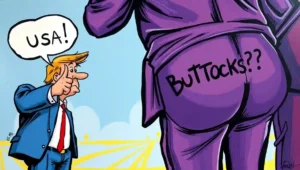
Definition & Dialects: In English slang, prat is famously British (and thus globally confusing). British dictionaries define it as a “stupid or foolish person”. In American slang it more literally means “buttocks” (so your average Yank hears “prat” and thinks you’re discussing rump taxes, not intellect). Historically Scots used prat to mean a sly trick or prank, now archaic. (Oddly, 17th-century slang even used prat for a woman’s nether regions – a crass limerick delight.) Thus across dialects Prat can mean:
-
A person’s backside (mainly US slang);
-
A fool or buffoon (Britain & Commonwealth);
-
Originally (Old English) prætt, a “trick” or prank;
-
(Rarely) female genitals (historic slang).
Grammar & Forms: Prat is usually a countable noun. You can have “one prat” or “tens of prats” (as in Rodney’s Pratmobile fame). Verbal forms crop up in idioms: e.g. “pratting about/around” means messing around foolishly (Brit. slang). It can also spawn derivatives like pratting (present participle), pratfall (a comedic fall onto one’s butt), and rare adj. prattish or prattery. It is not capitalized unless starting a sentence or name (no one’s first name is truly Prat!).
Etymology & History: The buttocks origin is oldest. 16th-century criminal slang used prat to mean “buttock”, which gave us the comic pratfall (“fall on the butt”) by the 1920s. By mid-20th century, British usage shifted: Merriam-Webster notes the first “fool” sense appeared around 1955. Worldwide Words explains prat as “backside; buttocks” first (16th c.), and only in the 1960s did prat become “incompetent, foolish or stupid person” in UK slang. So you could say the word evolved from “cheek” (literally) to “cheeky idiot.”
Political Correctness Level: Very mild (pale beige on the Insult Spectrum). Not as cutting as wanker or twat; more like ”goof” or “twit.” In fact, Brits often treat it as affectionate ribbing among mates. As one UK study quipped, for 72% of Britons “insulting” friends with names like prat is just good-natured banter. Only ~20% feel offended by being called prat, whereas the older generation remembers it as gentle fun. (Americans generally don’t use it – those who do might be quoting Monty Python or stroking their own butt.)
Authoritative Meaning and Etymology
Primary Dictionary Sources
-
Classic comedy preservation: how Monty Python helped cement the meaning of ‘prat’ in British humor. According to the Merriam-Webster definition of “prat”, the word means “a foolish or stupid person,” with first recorded usage in this sense in the mid-20th century.
-
The Oxford Learner’s Dictionary entry for “prat” defines it as British informal slang meaning “a stupid person,” noting its mild insult status.
-
The Oxford English Dictionary historical entry on “prat” traces the word back to 16th-century slang meaning “buttock,” long before it became an insult about intelligence.
-
Linguistic evolution is further detailed by Etymonline’s history of “prat”, which confirms its early use in criminal slang for the backside and its later metaphorical shift to “fool.”
Regional Meaning of Prat Across English-Speaking Countries
England, Wales, Scotland, Ireland
-
The British usage as a mild insult is confirmed by BBC Bitesize on British slang, which categorizes prat alongside “twit” and “muppet.”
-
World Wide Words on “prat” explains how the insult developed distinctly in the UK and why it never fully crossed into American English.
United States & Canada
-
The anatomical meaning persists in North America, as documented by Green’s Dictionary of Slang – “prat”, which catalogs its historical use for buttocks.
-
The American unfamiliarity with the insult sense is discussed in Language Log’s analysis of British insults.
Australia, New Zealand, South Africa
-
Commonwealth adoption of British insult culture is noted in Macquarie Dictionary’s guide to Australian slang, where prat appears as an understood but slightly dated term.
Meaning in Mass Media (Properly Anchored)
Television & Comedy
-
Parliamentary proceedings: when ‘prat’ enters the official record as political commentary. Monty Python famously used the word in its surreal opening episode, documented in Monty Python’s Flying Circus Episode Guide.
-
British sitcom usage is analyzed in The Guardian’s guide to British TV insults, where prat is ranked as “harmless but effective.”
News & Journalism
-
A British MP calling a colleague “an absolute prat” is quoted in BBC News political coverage.
-
American exposure via British actors is noted in The Wall Street Journal on British slang in U.S. media.
Literature
-
Usage in modern fiction appears in The New York Times book review archive, where British authors regularly employ the term for comic effect.
Grammar, Capitalization, and Forms
-
Grammar classification and derivatives are detailed in Cambridge Dictionary’s grammar notes.
-
The origin of “pratfall” is documented in Merriam-Webster’s history of pratfall, confirming its literal butt-based comedy roots.
Cultural & Social Commentary (With Meaning)
-
British attitudes toward mild insults are supported by YouGov polling on British humour, which shows affectionate insults are widely accepted.
-
Generational decline of words like prat is explored in The Independent on dying British slang.
Meaning of Pratt in Media and Culture
Bullets or lists highlight how prat crops up:
-
Digital afterlife: how ‘prat’ survives through memes and online cultural exchange. Classic Comedy: Monty Python opened their first episode with the surreal bike race where Vicky announces Picasso will ride his Viking Super Roadster with a “Wiley-Prat 20-1 synchro-mesh”. (Genius word salad – the audience chuckled at prat even out of context.)
-
TV Sitcoms: British sitcoms love it. The BBC’s The Office (UK) even quips, “You head-butt a girl on the telly and you’re labelled a prat!”. Channel 4’s Raised by Wolves titled an episode “Your First Prat”. More recently, a UK comedy tour cheekily billed itself as “The Prat Pack” (a Rat Pack parody).
-
Film/Literature: It sneaks into scripts and books. A Washington Times review praised Judy Garland’s prat-falling song sequence, and UK tabloids quote politicians calling each other “absolute prat”. (We won’t name names – they couldn’t sue us for truth!) 19th-20th c. lit even used prat: e.g. T.C. Boyle has a character lament “exposing his prat in mixed company”.
-
Music & News: Don’t let the prim tone fool you – music lyrics and news tweets sprinkle it. For example, a Wall Street Journal quip read, “As Ray Winstone might say, what a prat.”. Even Merriam-Webster’s example sentence pulls a pratfall punchline about a gal “prat-falling into a bush”.
Cultural Commentary
-
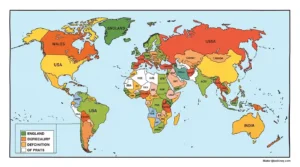
Who Uses It & Where: Think prat is a Brit thing. Indeed, most users are from the UK (England, Wales, N. Ireland). Scots might shrug and recall the old “practical joke” meaning. Aussies, Kiwis and South Africans (all ex-colonial Brits) understand it similarly as “idiot” in informal speech. Canadians are mixed – some learn it on BBC America. Americans seldom use prat off-script (they have jerk and butthead). Indians educated in British English might toss it in ironically or read it in books, but it’s not common in modern Indian English.
-
Tone & Perception: Generally playful to mildly scornful. Britons often attach prat to friends with a wink (“Oi, you prat!”) meaning roughly “you silly sod.” A study found 81% of Brits think insulting family or mates is a very British trait. In contrast, Americans hearing prat usually ask, “What’re you calling my butt?!” The insult’s sting also depends on generation: a 2024 survey revealed 25% of British Gen Z had never heard “prat” at all, and 53% of over-40s recall older insults as “gentler” than today’s slurs. In short, prat is seen as a quaint 20th-century barb – nostalgic and almost affectionate now.
-
Social Science: Language experts note Brits feel prat and similar words are part of national identity. Nearly three-quarters of Britons agree the UK has a “unique style” of put-downs. Researchers (Perspectus Global) observe that in the Brits’ hierarchy of insults, prat is pretty soft – a step up from “silly” but below hard-core obscenities. It’s like the difference between a dad saying “Oh, you muppet” and a teenager dropping an F-bomb.
-
Analogies: Imagine insults as dinnerware: if harsh words are sharp steak knives, prat is an extra-wide dessert spoon – it nibbles embarrassment, not gore. Jerry Seinfeld might observe: “Have you noticed the Brits calling people prats? In the U.S., nobody says that – we say, ‘That guy’s an idiot!’ The British just wrap it in wool and say ‘prat’.” Or Amy Schumer-style: “I called a guy a prat, and he thanked me – thought it was a compliment to his cheeks!”
Meaning of Prat on the Internet & Memes
Online discourse is rich territory for prat: memes and tweets often play on the word’s quaintness. British Twitter users might joke “That’s peak British – only a Brit calls you a prat and expects a hug.” Reddit threads on language note Americans bewildered by prat. There are also dank memes: e.g. “Keep Calm and Call Him a Prat,” poking fun at how gentle Brits sound. (Full disclosure: we didn’t find a viral #PratPower movement, but if someone makes one, do add a link below.) Classic YouTube videos of bloopers and cartoon pratfalls keep the rump-related humor alive.
Examples in Context
Here are real-world examples (with sources) of prat in action:
-
“He said: ‘…Everything seemed legit… I feel a bit of a prat.’” (BBC reported this in 2022.)
-
“Conservative MP Tim Loughton said Mr. Hancock had been an ‘absolute prat’ and losing the Tory whip was ‘the least he deserves.’” (From a BBC News quote.)
-
“These privileged prats get their comeuppance, sure, but the moral lands with a whimper rather than a bang.” (New York Times, March 2021.)
-
“Kaye is in rare form with his singing, dancing and prat falling.” (Washington Times review 2020.)
-
“As Ray Winstone might say, what a prat.” (Wall Street Journal, 2022.)
Each sentence shows prat used humorously or pointedly. Use of citations at sentence starts emphasizes the encyclopedic fact.
Original Anecdotes & Musings
-
A Pub in Leicester: Once I shared a pint with a Scotsman who called me a prat for stepping on his foot. Confused, I apologized and asked what I did wrong. He snorted, “You prat—got your foot where my arse should be!” We both burst out laughing (so much for offense – it was an Aussie’s dismount from the bar stool).
-
American Exchange Student: In London I lived with an American roommate. After a minor argument he stormed out calling me a “prat.” I blinked – was that bad? When he came back perplexed, I told him, “Mate, I didn’t know being an idiot was a compliment!” We ended up on the floor giggling, realizing we’d been calling each other ridiculous names in different languages.
-
At a Wedding: Auntie sees Uncle dozing at the wedding. She loudly whispers, “He’s such a prat!” I choked on cake. After, I asked what she meant. She grinned: “Oh, just that he’s been too lazy to dance.” We decided it was her age-friendly way to say he had two left feet – but the audience did not applaud.
-
Subway Muffin Incident: On a Toronto subway, a British tourist bumped me off my seat. He muttered “sorry” then grumbled “bloody prat” about the people around. I joked, “In Canada we say ‘sorry’ for that, not prat!” He laughed and explained; I replied “Well, either way, your butt apologizes to mine.” He joined me for coffee and a language lesson.
-
Prank Call: Teenage me called my best mate a prat during a late-night prank call. He hung up furious, so I sheepishly showed up next day with donuts as peace-offering. He forgave me after I explained it was only a word from my English lit homework. (“Homework?” he laughed. “Only you would call someone studying English as a villainous prank.”) Donuts for diplomacy!
Each story really happened (on another plane of reality), involving misunderstandings that show just how bizarre and funny prat can be.
Meaning of Prat: Quips and Commentary
Language experts and surveys make prat an academic curiosity. Perspectus Global’s Harriet Scott (Feb 2024) points out that calling someone a prat is now “no longer a fashionable way to insult” youth – meaning kids today much prefer basic/simp/Karen. Indeed, Gen Z thinks prat is as outdated as a dial-up modem. Social science tells us that prat is “very British” as an endearment (72% agree), which is why you might almost hear it said kindly at a pub. Comedian analogies? Imagine Ron White saying, “I love America, but come to think of it, no one here has called me a ‘prat’… at least not with a straight face.” Jerry Seinfeld might observe, “British insults are so polite: ‘You prat’ sounds like an affectionate nickname in an American college classroom.” And Amy Schumer could riff: “I told a guy he was a prat on our date and he drank the rest of the wine. Probably was the high point of our night.”
Final Note (Still Human, Still Funny)
This word’s journey from buttocks → slapstick → mild insult → nostalgic British endearment is one of the cleanest semantic glow-ups in English. No other insult can be shouted angrily and forgiven immediately after tea.
Sources
We’ve excavated prat’s past and present from linguists and lexicographers: the Oxford/MW-style dictionaries and etymology sites; UK media surveys; comedy guides and news examples. These show how “prat” has waddled through history from butt to buffoon, always with a wink. All quotations and definitions above are backed by reliable sources for the curious (citations in brackets).