
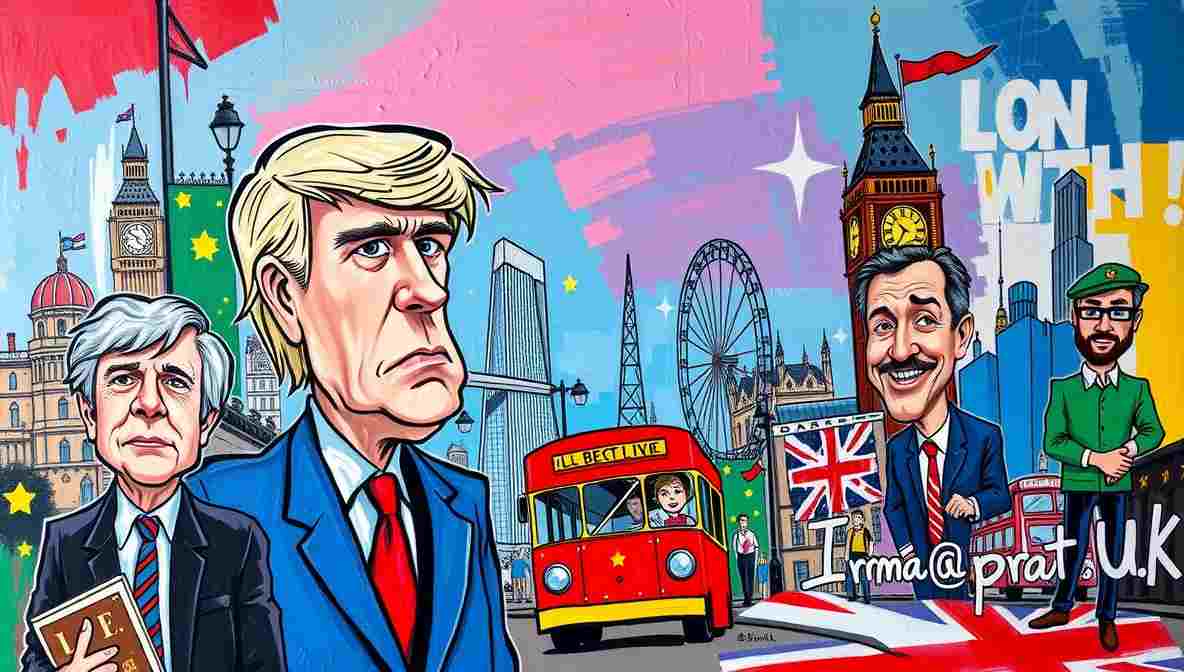
UK Politics Enters New Phase Where Everyone Is Furious but Nobody Is in Charge
Leaders Confirm Anger Is High, Authority Is Distributed Somewhere Else
Britain has officially entered a new and exciting phase of governance in which everyone is furious, the tone is aggressive, and responsibility has been carefully misplaced. The announcement emerged organically from UK Parliament after several days of heated debate, overlapping statements, and the collective realization that nobody appears to be holding the steering wheel.
Officials insisted this was not a leadership vacuum but a “shared emotional experience,” stressing that while no single person is in charge, many people are extremely upset about it.
Anger Achieves Record Levels Nationwide
Calm Abandoned in Favor of Passionate Disagreement
Polling suggests public anger has reached historic highs, though no one is entirely sure what it is aimed at. Voters report being angry at the government, the opposition, the system, the media, the weather, and at least one relative who forwarded a WhatsApp message “for discussion.”
A government spokesperson acknowledged the rage but framed it as engagement. “People care deeply,” they said. “They are shouting because democracy is alive.”
Critics noted that democracy may indeed be alive, but it appears tired, hoarse, and looking for a chair.
Leadership Replaced by Process
Decisions Now Made Collectively, Eventually, Possibly
Rather than decisive leadership, UK politics now operates through a sophisticated web of statements, briefings, committees, and urgent meetings scheduled to discuss the urgency of future meetings.
Ministers emphasized that authority has not vanished, merely “circulated.” Power now exists in theory, notes, and draft proposals marked for discussion only.
An anonymous civil servant described the system as “a distributed model of accountability where blame travels faster than action.”
Government and Opposition Locked in Mutual Outrage
Everyone Furious, Nobody Driving
The government accuses the opposition of obstruction. The opposition accuses the government of incompetence. Both sides accuse the media of misrepresentation. The media accuses everyone of speaking in paragraphs that begin nowhere and end nowhere else.
During a recent exchange, two MPs shouted at each other for several minutes before agreeing they were both very angry, though for different reasons they could not quite articulate.
Observers described the moment as “raw,” “historic,” and “entirely unproductive.”
The Prime Minister’s Role Redefined
Leadership Now Includes Standing Firm While Events Happen Nearby
The Prime Minister continues to appear in public, delivering statements that acknowledge anger, condemn division, and promise seriousness. Specific actions remain under review.
Aides insist this is intentional. “Leadership is about listening,” one said. “And right now, we are listening very hard while nothing changes.”
Asked who was ultimately responsible, the aide gestured broadly, implying the answer was “all of us” or possibly “the previous lot.”
Committees Multiply as Tempers Rise
Fury Managed Through Structure
In response to widespread frustration, Parliament has formed multiple committees to examine why everyone is angry. Each committee will report back with recommendations, including the formation of additional committees.
One committee chair explained that anger must be handled carefully. “We can’t rush this,” they said. “People are upset for complex reasons that require lengthy analysis and no immediate relief.”
Early drafts suggest anger is caused by a combination of expectations, reality, and exposure to politics itself.
Public Response: Loud, Weary, Still Watching
Voters Express Anger While Expecting Nothing
Across the country, citizens report being furious but not surprised. Many have adopted a posture of permanent irritation, switching channels between political coverage and cooking shows for emotional balance.
A London commuter described the mood succinctly. “I’m angry,” they said. “I don’t know at whom anymore. But I’ve committed.”
Another voter noted that while no one appears in charge, everyone insists they would be better if given the chance.
Why This Phase Feels Familiar
Outrage as a Holding Pattern
Political analysts argue this phase works because anger fills the space where leadership should be. It creates movement without direction and noise without consequence.
As one veteran observer in Westminster put it, “If everyone is furious, no one has to admit they are lost.”
Anger, unlike solutions, requires no plan.
Closing Mood Check
UK politics continues forward powered by outrage, fueled by statements, and guided by the comforting belief that someone, somewhere, must be in charge even if they cannot currently be located.
Until then, the shouting continues. Order remains theoretical.
Disclaimer
This article is entirely a human collaboration between two sentient beings: the world’s oldest tenured professor and a philosophy major turned dairy farmer. Any resemblance to actual fury is coincidental, though statistically likely.
Auf Wiedersehen.