
UK Government Policy Explained as “Bold Direction,” Details Still Loading
The Announcement: Confidence Without Content
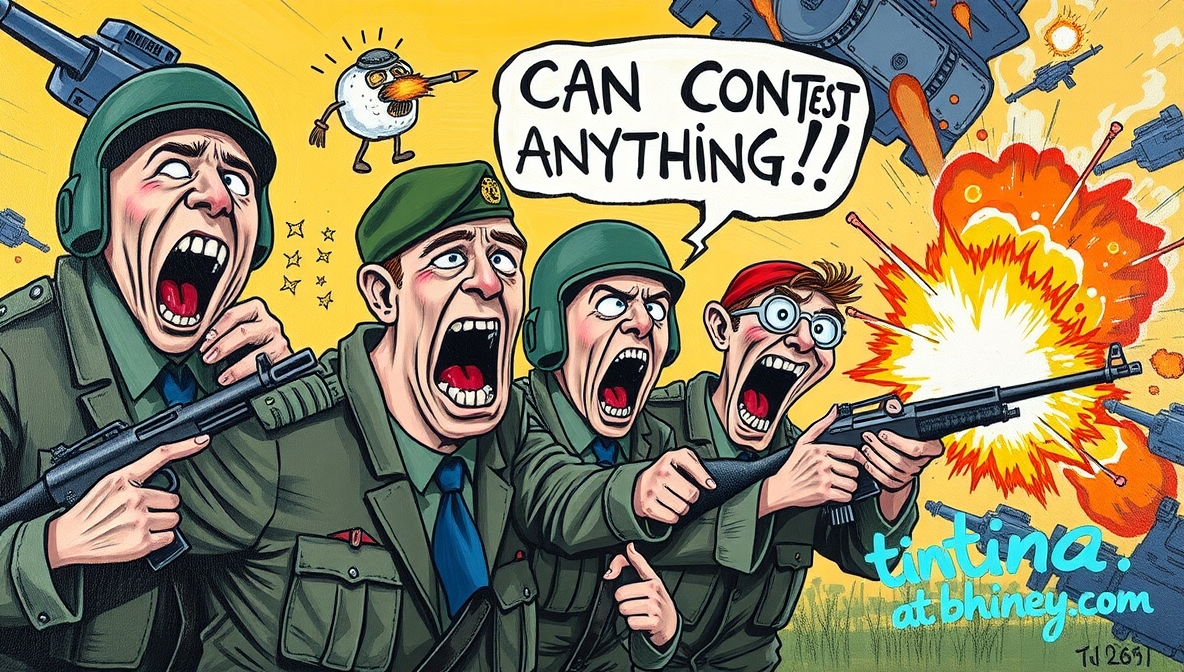
LONDON — The UK government today unveiled a sweeping new policy designed to address several major national issues simultaneously, though officials confirmed the policy itself will be clarified at a later date, possibly by someone else, possibly never. It’s ambitious in scope and vague in implementation—which is to say, it’s par for the course in modern Westminster.
Described as bold, ambitious, fully costed in spirit, and delivered with absolute confidence, the policy was announced at a press conference where ministers spoke confidently for 20 minutes without actually saying what would happen, who would be affected, what it would cost, or whether anyone involved understood what they were announcing.
“This policy sends a clear message,” a spokesperson said with the conviction of someone describing their own breakfast as foreign policy. “We’re just not prepared to say what that message is yet. But trust us, it’s crystal clear to those of us involved. Which is nobody, apparently, but we’re working on that.”
What Is UK Government Policy Now, Exactly? (Nobody Knows Yet)
According to insiders, modern UK government policy exists in three distinct, predictable, utterly consistent phases:
Phase 1 – Announcement: A confident statement about sweeping change, delivered with no supporting documentation. Ministers appear on breakfast television declaring they’ve solved everything. Nobody mentions specifics because specifics are “complicated.”
Phase 2 – Clarification: A denial of what people thought it meant. “We never said that,” ministers insist, despite the press conference footage proving otherwise. Journalists are blamed for “misinterpreting.” The public is blamed for “not listening carefully enough.”
Phase 3 – Revision: A claim that nothing has changed, or everything has changed, or some variation of change that makes it impossible to actually hold anyone accountable. “This represents a small adjustment,” they say, as the entire policy collapses.
By the end of the week, the policy is usually described as “misunderstood,” followed shortly by “under review,” followed eventually by “abandoned for reasons we’re not discussing.”
“It’s not inconsistency,” said one adviser with a straight face that suggested either profound confidence or complete dissociation from reality. “It’s flexibility at speed. It’s agility. It’s strategic vagueness. We’re essentially saying the same thing that means nothing, just in different configurations until everyone forgets what we originally announced.”
Policy Designed to Appeal to Everyone, Implemented for No One
Ministers insisted the new policy strikes the perfect balance between growth, fairness, discipline, compassion, innovation, and whatever focus groups liked most on Tuesday. It pleases all people, offends none, and achieves absolutely nothing—which is the pinnacle of modern political strategy.
Asked how the policy would work in practice, officials explained it would:
✗ Encourage improvement (encourage is the operative word—it won’t ensure it)
✗ Unlock potential (someone’s potential, somewhere, theoretically)
✗ Send signals to markets (which will ignore them)
✗ Be world-leading (which means nothing but sounds important)
✗ Transform communities (in spirit, if not actuality)
✗ Create opportunities (that definitely might exist)
✗ Drive growth (if growth is defined as “saying we want growth”)
When pressed for specifics—you know, actual details about how the policy would work, who would implement it, what success looks like, or whether anyone involved had thought about this for more than five minutes—officials simply reiterated the phrase “world-leading” more slowly, as if repeating it with more gravitas would somehow make it mean something.
“World-leading,” they said, slowly. “World-leading,” they repeated. The implication being: stop asking questions, accept the vagueness, and let us handle the rest. (We have no idea what the rest is, but we’ll handle it somehow.)
Costings Confirmed as “Responsible” (But How Exactly?)
The Treasury confirmed the policy is fully funded, provided no one asks how. It’s simultaneously completely costed and entirely mysterious—which is the Treasury’s favourite state.
Funding will come from:
✗ Efficiency savings (deleted civil servants who weren’t doing much anyway)
✗ Long-term growth (undefined and possibly imaginary)
✗ Better outcomes (which cost less for reasons we’re not explaining)
✗ A spreadsheet no longer available (destroyed, lost, or never existed)
✗ Reallocation (taking money from something else nobody notices)
✗ Private sector investment (which may or may not materialise)
✗ Optimism (which has proven surprisingly expensive)
“This is serious economics,” said a source from the Treasury, which is government-speak for “don’t ask follow-up questions.” “You wouldn’t understand it unless you already agreed with us. Which means our core audience is other Treasury officials who are equally confused but find it reassuring to be confused together.”
Economists questioned the costings, but their concerns were ignored because economists are “pessimistic” and “don’t understand this government’s vision”—which is actually true, because the government doesn’t have a vision beyond “announce something, deny we said it, move on.”
Local Councils Informed Via News Alerts (That’s Their Guidance)
Local authorities welcomed the announcement of the new policy, noting they first heard about it on their phones whilst commuting. It was breaking news. They read about their new responsibilities at the same time as everyone else—which is efficient government if your goal is maximum chaos.
“We look forward to implementing it,” said one council leader with the enthusiasm of someone who’d just been told they had to redecorated their office with no budget. “As soon as we find out what it is, how it works, who pays for it, what success looks like, and whether this is actually legal.”
Councils were assured further guidance would follow shortly, in the form of:
✗ A PDF released on a Friday evening (nobody reads these)
✗ An email from a department that doesn’t exist anymore
✗ A memo copied from a previous policy that’s actually unrelated
✗ A PowerPoint presentation nobody understands
✗ A link to a YouTube video that’s been deleted
✗ Instructions written in passive voice to avoid accountability
The guidance, they were assured, would answer all their questions. It won’t. But it will give the appearance that the government has thought this through, which is all that really matters in modern politics.
Public Reaction: Confused but Familiar (They’re Used to This)
Across the UK, voters responded to the policy announcement with mild confusion and deep, bone-aching recognition. This is how government works now. You announce something vague. People pretend to understand. Time passes. Nothing happens. Everyone moves on.
“I don’t know if it helps me,” said one resident whilst staring at a wall with the expression of someone who’d given up on understanding government policy. “But I know it’ll be explained again tomorrow in a different way that contradicts today’s explanation. And I’ll be equally confused. And life will continue.”
Polling suggests the public now judges policy success based on whether it survives:
✗ Its first interview (usually doesn’t)
✗ Its second clarification (definitely doesn’t)
✗ Its third reversal (absolutely not)
✗ Public scrutiny (never)
✗ Media interrogation (impossible)
✗ Basic logical consistency (laughable)
Anything beyond initial announcement is considered a miracle. Most policies don’t even make it through breakfast television before being contradicted by another minister.
Policy Reversal Pre-Planned (Contingency for Failure Is Built In)
Government sources confirmed contingency plans are already in place to adjust, pause, tweak, rebrand, or completely abandon the policy if necessary—which means they’ve prepared for the most likely outcome: failure. It’s strategic planning, but for giving up.
“This shows strong leadership,” an aide explained with absolute conviction. “We’re prepared for failure in advance. We’ve got exit strategies. We’ve got backup plans. We’ve got ways to quietly park the whole thing and pretend it never happened. This is the mark of serious governance—having an escape route before you’ve even started.”
Which is remarkable, really. Most organisations try to succeed at their goals. The UK government plans how to fail at theirs whilst maintaining the appearance of control.
The Vocabulary of Vagueness
UK government policy is communicated in a dialect specifically designed to sound important whilst meaning nothing:
✗ “Bold direction” = going in some direction, nobody knows which
✗ “World-leading” = we haven’t checked, but it sounds good
✗ “Fully funded” = we hope someone else pays for this
✗ “Unlock potential” = things might get better if you squint
✗ “Efficiency savings” = sacking people and hoping nobody notices
✗ “Long-term strategy” = we’re planning to delay implementation until we’re out of office
✗ “Stakeholder consultation” = telling people what they’re getting, then ignoring their concerns
Implementation: The Forgotten Phase
UK government policy often fails at implementation because implementation requires detail, planning, funding, and people who actually understand what they’re implementing. The government typically announces policy without having achieved any of these things.
So the announcement is bold. The implementation is invisible. And six months later, a new policy is announced, which will also fail, and be followed by another policy, which will also fail, until voters simply accept that government policy is a theatrical performance masquerading as governance.
Conclusion: UK Government Policy Marches On (Into the Void)
As the press conference ended, ministers reiterated their commitment to delivery, stability, and long-term thinking—terms that now mean roughly the same thing: nothing in particular, but delivered with conviction.
UK government policy, they insisted, remains focused on results, even if those results are theoretical, imaginary, or contradicted by observable reality. The vision is bold. The strategy is secret. The outcomes are uncertain. But the confidence is absolute.
In the meantime, the UK government will continue announcing policies with no details, defending them with contradictions, and implementing them with chaos. It’s not effective governance. But it’s very on-brand for modern Westminster.
The details, rest assured, are still loading. They may load by 2025. Or 2027. Or never. We’re committed to clarifying this soon—which is government-speak for “don’t hold your breath.”

Alan Nafzger was born in Lubbock, Texas, the son Swiss immigrants. He grew up on a dairy in Windthorst, north central Texas. He earned degrees from Midwestern State University (B.A. 1985) and Texas State University (M.A. 1987). University College Dublin (Ph.D. 1991). Dr. Nafzger has entertained and educated young people in Texas colleges for 37 years. Nafzger is best known for his dark novels and experimental screenwriting. His best know scripts to date are Lenin’s Body, produced in Russia by A-Media and Sea and Sky produced in The Philippines in the Tagalog language. In 1986, Nafzger wrote the iconic feminist western novel, Gina of Quitaque. Contact: editor@prat.uk