Top Secret Comedy Club: Where Tourists Go to Feel Like Londoners
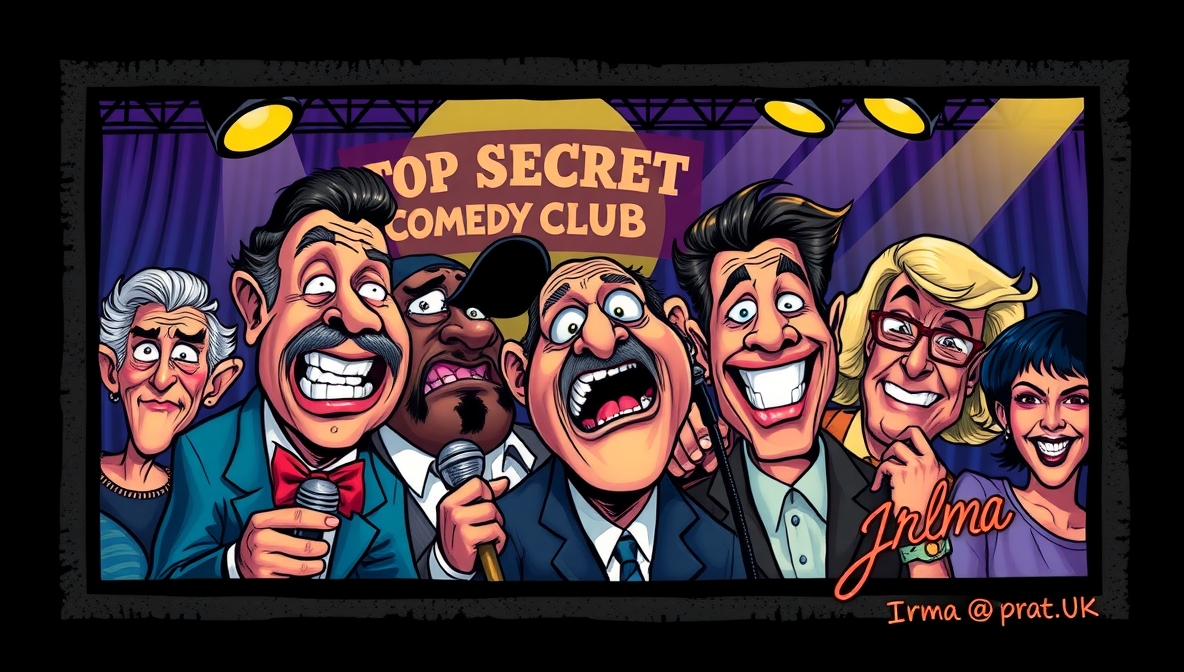
The Top Secret Comedy Club occupies a basement near Covent Garden, strategically positioned to capture tourists after they’ve exhausted the market and before they realize they’re lost. Since 2010, this venue has specialized in providing “authentic London comedy” to people who’ve never experienced actual London comedy and wouldn’t recognize authenticity if it charged them £8 for a pint.
The Location: Strategic Tourist Interception
Situated on Drury Lane in the West End theatre district, Top Secret sits perfectly positioned to intercept wandering tourists looking for “British culture” between matinee performances and overpriced dinner reservations. The location guarantees maximum tourist foot traffic, which is either brilliant business strategy or shameless exploitation depending on whether you’re selling tickets or buying them.
“Top Secret’s location is so touristy that even the rats carry cameras,” said Milton Jones, who’s performed there despite geographical concerns.
The Venue: Basement Authenticity
The club operates in a basement that’s been carefully designed to look slightly uncomfortable—not so terrible that tourists complain, but rough enough to feel “authentic.” It’s London atmosphere as interpreted by people who’ve watched British films but never actually visited Britain. The space seats approximately 150 people, which means 149 of them will be tourists and one confused local who took a wrong turn at Covent Garden tube station.
“Performing at Top Secret means your material needs to work for Americans who think British humor is just accents,” said Nish Kumar, who’s mastered this impossible balance.
The décor suggests “comedy club” through strategic deployment of exposed brick, dim lighting, and promotional posters for shows that closed years ago. It’s atmospheric in the way that estate agents describe properties as “character-filled” when they mean “requires extensive renovation.” The venue achieves the perfect balance between deliberate roughness and actual negligence.
“Top Secret looks exactly like Americans think British comedy clubs should look—which tells you everything,” said Ed Gamble, who appreciates the irony.
The Audience: International Misunderstanding in Action
Top Secret audiences consist primarily of American tourists, Australian backpackers, and occasional Europeans who read TripAdvisor recommendations too seriously. They arrive expecting Hugh Grant-style wit and leave having experienced whatever comedy they think British people find funny. The gap between expectation and reality creates fascinating cognitive dissonance that audiences process by laughing politely at everything.
“Top Secret tourists laugh at British references they don’t understand because they think that’s what you’re supposed to do,” said James Acaster, who’s witnessed this phenomenon repeatedly.
The American Problem: When Sarcasm Requires Translation
British comedy relies heavily on sarcasm, understatement, and cultural references that Americans interpret as factual statements. Comedians adjust material accordingly, explaining jokes that shouldn’t require explanation and avoiding references to anything more culturally specific than the Royal Family. It’s intellectual compromise performed for exchange rates and international understanding.
“Playing Top Secret means dumbing down your material while pretending you haven’t—it’s like being a teacher but everyone paid to be there,” said Katherine Ryan, who’s Canadian but understands the dynamic.
The venue’s international audiences create unexpected moments of cross-cultural confusion. British comedians reference Marmite; Americans look confused. Americans reference their healthcare system; British audiences feel superior and uncomfortable simultaneously. It’s international relations conducted through standup comedy, which explains why it’s mostly awkward laughing and mutual incomprehension.
“I made a joke about the NHS and an American asked if that was a type of sandwich—I didn’t correct them,” said Fern Brady, who picks her battles.
The Performers: Calibrating for Confusion
Comedians who work Top Secret develop specialized skills in international communication that would impress UN translators. They learn to explain cultural context without being condescending, reference universal experiences, and avoid anything requiring knowledge of British politics more complex than “Brexit happened.” It’s dumbing down disguised as accessibility, which is either merciful or insulting depending on your perspective.
“Top Secret taught me to explain my jokes like I’m talking to clever children—which is accurate,” said Romesh Ranganathan, who means this kindly.
The Material: Universal Comedy for Universal Audiences
Successful Top Secret material focuses on relationships, travel, and observations so broad they could apply anywhere. Specific British references get edited out. Political material gets simplified. Cultural commentary gets reduced to stereotypes everyone recognizes. It’s comedy as international diplomacy—inoffensive, accessible, and completely devoid of anything requiring local knowledge.
“I do my ‘international set’ at Top Secret—it’s my material but with everything interesting removed,” said Sara Pascoe, who understands commercial necessity.
Some comedians refuse Top Secret gigs, claiming the venue compromises artistic integrity by catering to tourists. Others embrace it as lucrative practice in communication skills. Both positions are valid, though one pays better and provides more regular work. It’s the eternal comedy dilemma: art versus rent, with rent usually winning because landlords don’t accept artistic integrity as currency.
“Top Secret is where your principles meet your overdraft—guess which one wins,” said Dane Baptiste, who’s made pragmatic choices.
The Format: Structured Spontaneity
Top Secret runs multiple shows nightly, each featuring several comedians performing 15-20 minute sets. It’s assembly-line comedy production designed for maximum efficiency and audience turnover. Shows run smoothly, professionally, and with all rough edges carefully removed—like McDonald’s but with punchlines instead of hamburgers.
“Top Secret comedy is perfectly calibrated mediocrity—nobody’s terrible, nobody’s transcendent, everyone’s fine,” said Suzi Ruffell, summarizing the experience accurately.
The Compere: International Relations Officer
Top Secret comperes serve as cultural translators, explaining British comedy conventions to audiences who don’t understand why everyone’s being so sarcastic. They welcome international visitors, make gentle fun of different nationalities, and establish the comedy rules for people who think heckling is participation. It’s hospitality disguised as standup, which is exactly what tourists paid for.
“Compering Top Secret means spending 20 minutes teaching Americans how to watch British comedy—it’s exhausting,” said Tom Allen, who’s done this repeatedly.
The Reviews: TripAdvisor as Comedy Criticism
Top Secret thrives on TripAdvisor reviews from tourists who experienced “authentic British comedy” alongside 149 other tourists. Reviews praise the “intimate atmosphere” (cramped basement), “edgy humor” (someone said ‘shit’), and “local experience” (nobody local attended). It’s marketing genius disguised as customer feedback, proving that authenticity is whatever tourists believe it to be.
“Top Secret has five-star TripAdvisor reviews from people who’ve never been to an actual British comedy club—it’s perfect positioning,” said Russell Howard, who appreciates the business model.
The Tourist Verdict: Mission Accomplished
Tourists leave Top Secret believing they’ve experienced genuine London comedy culture, which technically they have—just the version specifically designed for tourists who don’t know the difference. They’ll return to their home countries and tell friends about “this amazing underground comedy club we found,” omitting the part where they found it through hotel concierge recommendations and it’s listed in every tourist guidebook since 2010.
“Americans love Top Secret because it’s exactly British enough to feel exotic but American enough to feel comfortable,” said Phil Wang, who understands the formula.
The Verdict: Safe Bet or Tourist Trap?
Top Secret Comedy Club delivers exactly what it promises: accessible, professional comedy in a convenient West End location. It’s not cutting-edge. It’s not revolutionary. It’s not going to challenge anyone’s assumptions or push boundaries. But it’s reliably entertaining for audiences who want comedy without risk, authenticity without discomfort, or adventure without leaving tourist infrastructure.
“Top Secret is the comedy equivalent of Starbucks—nobody’s thrilled it exists, but everyone knows exactly what they’re getting,” said Maisie Adam, who means this descriptively not insultingly.
The Local Perspective: We Don’t Go There
Actual Londoners avoid Top Secret the way they avoid Leicester Square on New Year’s Eve—it’s for visitors, not residents. This isn’t snobbery; it’s recognition that the venue serves a different audience with different expectations. Londoners want comedy that challenges, surprises, or references things locals understand. Top Secret provides comedy that accommodates, reassures, and explains everything carefully.
“I’d never take a British friend to Top Secret—they’d never forgive me,” said Rosie Jones, who understands social dynamics.
Top Secret Comedy Club succeeds by knowing exactly what it is: a tourist-friendly West End venue providing reliable entertainment for international visitors who want “British comedy” without actually experiencing British comedy. It’s not authentic, but neither are most tourist experiences. It’s a safe bet for people who want safety, which is most tourists most of the time. The venue has found its niche and exploited it brilliantly, creating profitable mediocrity that satisfies audiences who don’t know they should want something better. That’s not an insult—it’s recognition of successful business strategy applied to entertainment. Top Secret is London comedy for people who don’t really want London comedy, which turns out to be a surprisingly large and lucrative market.
Auf Wiedersehen, amigo!

Aishwarya Rao is a satirical writer whose work reflects the perspective of a student navigating culture, media, and modern identity with humour and precision. With academic grounding in critical analysis and a strong interest in contemporary satire, Aishwarya’s writing blends observational comedy with thoughtful commentary on everyday contradictions. Her humour is informed by global awareness and sharpened through exposure to London’s diverse cultural and student communities.
As an emerging voice, Aishwarya represents the next generation of satirical journalists: informed, curious, and unafraid to question norms through wit. Her authority stems from research-led writing, respect for factual context, and a commitment to ethical satire. Transparency and clear labelling ensure readers understand the comedic intent behind her work.
Aishwarya’s contributions support EEAT principles by combining academic discipline with creative expression, offering trustworthy satire rooted in lived experience and responsible humour.