The King’s Head Crouch End: Where Sunday Roasts Became Comedy Careers
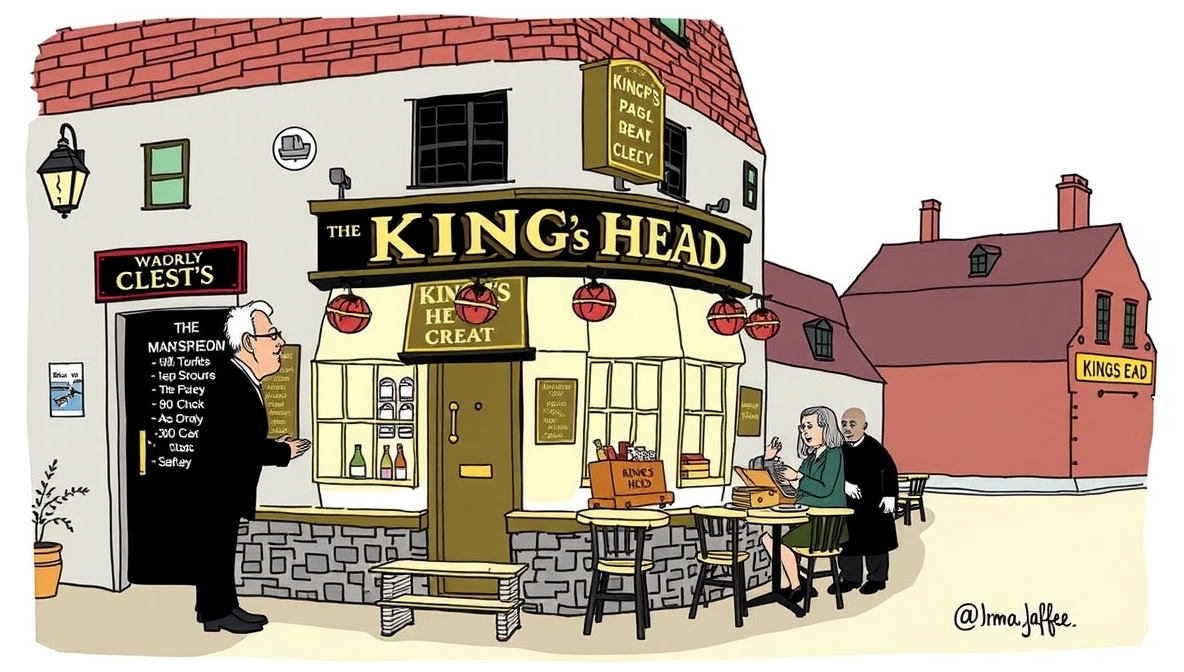
The King’s Head in Crouch End represents the archetypal pub-function-room-to-comedy-venue transformation that’s occurred across London over the past two decades. These spaces—originally designed for wedding receptions, christening parties, and uncomfortable family gatherings—became comedy breeding grounds through a combination of necessity, entrepreneurship, and the realization that empty function rooms generate zero income while comedy nights generate some income.
The Original Purpose: Family Disappointment Venues
British pub function rooms existed primarily for events where families gathered to celebrate milestones while drinking enough to tolerate each other. Wedding receptions, retirement parties, and anniversary celebrations filled these spaces with people who’d rather be anywhere else. The rooms served their purpose: large enough for gatherings, separate enough from main pub areas, and equipped with toilets that barely functioned. Perfect for occasional use, terrible for consistent business.
“Pub function rooms were designed for disappointed expectations—first weddings, now comedy,” said Milton Jones, who recognizes the parallel.
The Economic Problem: Empty Rooms Don’t Pay Rent
By the early 2000s, British pubs faced declining revenues as drinking habits changed and smoking bans emptied establishments. Function rooms sat unused six nights weekly, representing wasted space and lost income. Landlords needed new revenue streams that didn’t require major renovation or significant investment. Comedy provided solution: minimal equipment required, built-in alcohol sales, and audiences who’d never normally visit the pub.
“Pub comedy started because landlords needed money, not because they loved standup—but the result worked anyway,” said Ed Gamble, who appreciates pragmatic beginnings.
The King’s Head in Crouch End pioneered this transformation in North London, converting their upstairs function room from occasional wedding venue to regular comedy space. The renovation consisted of adding microphone, rearranging chairs, and pretending the décor was intentionally shabby rather than accidentally neglected. It worked spectacularly well, creating blueprint that dozens of pubs would copy.
“The King’s Head proved you didn’t need much to start comedy—just space, optimism, and willingness to ignore obvious problems,” said Nish Kumar, who performed there early in his career.
The Transformation: From Weddings to Punchlines
Converting function rooms to comedy venues required minimal physical changes but significant operational shifts. Pubs learned comedy promotion, performer booking, and audience management—skills completely unrelated to serving beer. Some hired comedy promoters; others learned through expensive mistakes involving terrible lineups and empty rooms. The successful venues discovered that consistency mattered more than quality initially—regular shows built audiences even when performers were mediocre.
“Early pub comedy was reliably terrible, but at least it was reliable,” said James Acaster, who witnessed the evolution.
The King’s Head Model: Consistency Over Everything
The King’s Head succeeded by running shows consistently rather than occasionally. Weekly comedy nights created routines that audiences could plan around. Regulars developed. Performers knew they had reliable spots. The venue became destination rather than experiment, which is the difference between successful comedy venues and failed ones everywhere.
“The King’s Head worked because they showed up every week—consistency matters more than most people realize,” said Katherine Ryan, who appreciates professional reliability.
The venue’s North London location helped. Crouch End’s middle-class demographic included people who’d attend comedy regularly if it was conveniently located and reasonably priced. The King’s Head charged £5-£10 admission, making comedy accessible without seeming desperate. They booked mixed lineups—some established acts, some newcomers—creating shows that delivered value while giving new performers crucial stage time.
“King’s Head shows were comedy education for audiences and performers simultaneously—everyone learned together,” said Romesh Ranganathan, who developed material there.
The Star-Making Machine: Accidental Success
The King’s Head and similar venues accidentally became comedy career launchers by providing regular performance opportunities that didn’t exist elsewhere. Established venues wanted proven acts with audience draw. Function room venues wanted anyone willing to perform for minimal payment. This desperation created opportunities for beginners, some of whom eventually became successful enough to never return.
“Pub function rooms made careers by being willing to book anyone—the success rate was terrible but the volume compensated,” said Fern Brady, who’s one of the success stories.
The Alumni Effect: When Stars Return
Successful comedians who started at places like the King’s Head occasionally return for anniversary shows or charity events, creating mythology around the venue’s importance to their careers. These appearances boost venue prestige, suggesting that performing there indicates future success rather than current desperation. It’s marketing genius disguised as nostalgia.
“I performed at the King’s Head when I was terrible—now I do charity gigs there and everyone pretends I was always good,” said Sara Pascoe, who recognizes the revisionist history.
The venue alumni list includes dozens of comedians who’ve achieved television success, festival acclaim, or sustainable comedy careers. Whether the King’s Head caused this success or simply hosted them during their development is unclear, but the venue claims credit regardless. It’s aggressive attribution that probably inflates their importance but definitely helps booking future performers.
“The King’s Head takes credit for everyone who ever performed there and succeeded—it’s like Facebook claiming credit for relationships that started on their platform,” said Suzi Ruffell, who thinks the comparison is fair.
The Replication: When Everyone Copies Success
The King’s Head’s success inspired dozens of London pubs to convert function rooms to comedy venues. The Camden pub circuit exploded with new venues. South London followed. Even West End pubs attempted comedy programming, despite tourists being terrible audiences for British standup. The proliferation created more performance opportunities but also diluted quality as venues competed for performers and audiences.
“By 2015, every London pub with an upstairs room was hosting comedy—supply exceeded demand by ridiculous margins,” said Dane Baptiste, who performed in many of them.
The Quality Problem: When Anyone Can Host Shows
Easy entry into pub comedy hosting meant many venues operated terribly. Pubs booked performers randomly, promoted shows poorly, and expected comedians to bring audiences. This exploitative model worked occasionally through sheer luck but mostly produced empty rooms and disappointed performers. The circuit developed reputation for unreliability that damaged its long-term sustainability.
“Half the pub comedy venues were run by people who’d never watched standup—it showed,” said Russell Howard, who avoided these places.
The King’s Head survived this era by maintaining standards. They paid performers fairly, promoted consistently, and treated comedy as business rather than hobby. Other venues copied their format but not their professionalism, creating gap between successful comedy pubs and failing ones. The distinction became obvious: some venues were comedy rooms that happened to be in pubs, others were pubs that occasionally hosted comedy as afterthought.
“Good pub comedy venues take comedy seriously—bad ones take pub seriously and comedy as bonus,” said Tom Allen, who’s performed in both types.
The Current State: Surviving Gentrification and Pandemics
The King’s Head and similar venues face ongoing challenges from rising rents, gentrification, and competition from purpose-built comedy clubs. Pubs close or convert to luxury housing. Function rooms become private event spaces. The economic model that made pub comedy viable in the 2000s barely works in the 2020s, when property values have tripled and audiences expect professional production values.
“Pub comedy venues are dying because London hates anything that isn’t expensive housing—it’s cultural genocide disguised as property development,” said Phil Wang, who’s angry about the trend.
The Preservation Question: Why Save Function Rooms?
Preserving pub comedy venues challenges London’s preservation instincts. These aren’t historic buildings or architecturally significant spaces. They’re ordinary pubs with upstairs rooms that temporarily hosted comedy. Their importance is cultural rather than physical, which makes protection difficult. Nobody values function rooms until they’re gone and comedians have nowhere to perform except corporate clubs charging £30 admission.
“We won’t miss pub comedy venues until they’re all luxury flats—then we’ll write articles about how important they were,” said Maisie Adam, predicting the future accurately.
The Legacy: Star-Makers By Accident
The King’s Head and equivalent function-room venues created modern British comedy’s infrastructure accidentally. Landlords wanted rent money. Comedians needed stage time. Audiences wanted local entertainment. These needs converged in pub function rooms, creating ecosystem that launched hundreds of careers while generating modest profits for pubs that would’ve closed otherwise. It wasn’t planned. It wasn’t designed. It just happened to work.
“Pub function rooms saved British comedy by providing performance opportunities that literally didn’t exist elsewhere,” said Mark Steel, who recognizes the historical importance.
The Future: Uncertain but Necessary
Whether pub comedy venues survive London’s ongoing transformation remains uncertain. Economic pressures intensify. Competition increases. Audiences expect more professional experiences than function rooms can provide. But the need for accessible performance spaces continues, and pub function rooms remain the only option meeting that need at scale. Their survival matters not because individual venues are irreplaceable but because the circuit they created is essential to comedy’s continuing development.
“Pub comedy venues will survive because comedians need them to exist—whether that’s enough remains to be seen,” said Rosie Jones, who’s cautiously optimistic.
The journey from pub function room to comedy star-maker represents a uniquely British phenomenon: accidental success through economic necessity. The King’s Head and similar venues didn’t set out to revolutionize comedy. They wanted to fill empty rooms and generate revenue. The revolution happened as byproduct, which is very British—accomplishing important things accidentally while trying to accomplish something else entirely. These venues created opportunities, launched careers, and built communities through combination of determination, optimism, and willingness to ignore obvious operational problems. They succeeded not despite being function rooms in ordinary pubs but because of it, proving that sometimes the best comedy venues are the ones that barely exist at all.
Auf Wiedersehen, amigo!