The Great Fire of London: Too Soon? How Londoners Joked Through History’s Worst Disasters
Finding the Funny in Apocalyptic Urban Destruction Since 1666
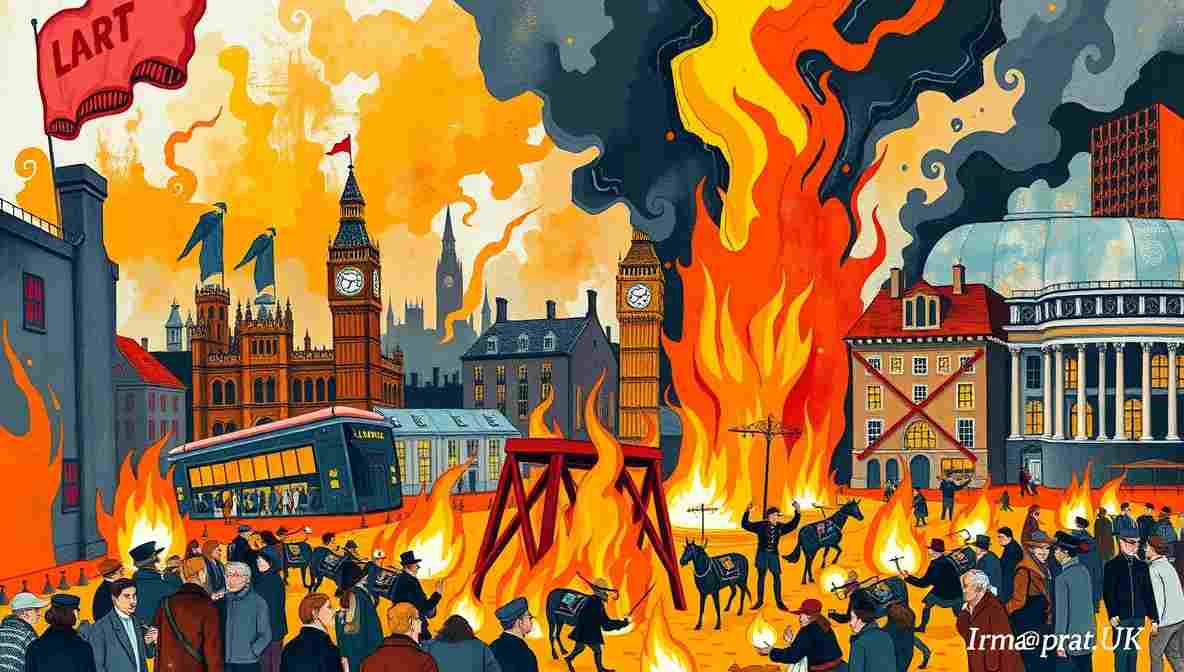
In September 1666, London burned for four days, destroying 13,000 houses, 87 churches, and most of the medieval city. The appropriate response would be solemnity, grief, and careful reconstruction. The actual response included Samuel Pepys burying his Parmesan cheese in the garden for safekeeping, locals complaining about property developers, and almost immediate jokes about the disaster—establishing the British tradition of using humor to process catastrophe that continues today whenever anything terrible happens and someone immediately tweets “this is fine” with a burning building gif.
The Fire Itself: Chaos with Commentary
Samuel Pepys’ diary provides contemporaneous accounts of the Great Fire, revealing that even as London burned, residents maintained impressive focus on mundane concerns. Pepys worried about his wine collection and important papers, helped neighbors evacuate possessions while noting their poor choices of what to save, and wrote detailed observations about the fire’s progress as if reviewing a particularly intense theatrical performance—essentially live-tweeting the apocalypse in 17th-century prose.
Other accounts describe Londoners fleeing the flames while carrying absurd items: one man reportedly saved his chamber pot while abandoning valuable furniture, establishing the disaster tradition of making terrible decisions under pressure then laughing about them later. The chaos of evacuation included people hiring boats at extortionate prices, carts charging premium rates for moving possessions, and general price-gouging that proved capitalism survives even when everything burns—a realization that’s either darkly funny or just dark, depending on your perspective.
The Blame Game: French Spies and Divine Wrath

Before the embers cooled, Londoners identified numerous culprits: French spies, Dutch agents, Catholic conspirators, and God’s wrath against England’s sins. The actual cause—bakery fire on Pudding Lane spreading through timber buildings during drought—was too mundane, requiring human responsibility rather than foreign plots or divine judgment. A French watchmaker named Robert Hubert confessed to starting the fire despite being provably elsewhere, got executed anyway, and became history’s most eager scapegoat—dying to give Londoners someone to blame, which is either tragic or the ultimate commitment to public service.
Rebuilding with Ranting: Post-Fire Property Development
The fire created London’s first major urban redevelopment opportunity, with King Charles II and Christopher Wren proposing grand plans for wide streets, classical architecture, and rational city planning. What actually happened: property owners rebuilt on original plots as quickly as possible, ignoring planning proposals and recreating medieval street patterns with slightly better fire codes. This established the London tradition of responding to catastrophe with ambitious rebuilding plans that get abandoned for expedient compromise—a pattern repeated after every subsequent disaster.
Contemporary accounts show Londoners complaining about developers, construction delays, and rising property prices even while homeless from the fire—proving that British capacity for moaning about housing transcends actual homelessness. The speed of rebuilding (most structures replaced within years) suggests disaster creates efficiency that peacetime planning never achieves, a lesson modern infrastructure projects consistently ignore.
The Monument: Built to Remember, Used for Suicides
The Monument to the Great Fire, completed in 1677, stands 202 feet tall—the exact distance from its base to the fire’s origin. This memorial served its commemorative purpose until Londoners discovered it made an excellent suicide location, requiring the addition of a cage in 1842 after numerous people jumped from its viewing platform. The Monument thus represents both London’s desire to remember disasters and its tendency to repurpose memorials for unintended uses—very British duality.
Historical Humor: When Is Disaster Funny?
The question “too soon?” regarding disaster humor never applied to the Great Fire because no one was performing stand-up comedy about it. However, ballads, pamphlets, and satirical prints appeared rapidly, mocking various aspects of the catastrophe: the chaos of evacuation, profiteering merchants, and reconstruction delays. This wasn’t tasteless humor but coping mechanism, helping traumatized population process disaster through satire rather than therapy—partly because therapy hadn’t been invented, mostly because Londoners preferred complaining to feelings.
The fire entered British cultural memory not as pure tragedy but as story with blackly comic elements: the cheese burial, the chamber pot rescue, the scapegoat confession, and Charles II personally fighting flames while courtiers panicked. These humorous details don’t diminish the disaster’s seriousness but made it memorable, giving traumatic event narrative shape that pure facts couldn’t achieve.
The Plague-Fire Double Feature
The Great Fire occurred just one year after the Great Plague killed approximately 100,000 Londoners—roughly 15% of the population. This plague-fire combination should have destroyed London’s spirit entirely, yet contemporary accounts show remarkable resilience mixed with gallows humor. The fire’s complete destruction of plague-infested areas led to suggestions it was divine urban renewal, terrible-yet-funny observation that burning everything was more effective than 17th-century sanitation measures.
The Blitz: When London Burned Again (But With Better Documentation)
Fast forward to 1940-41, when Nazi bombing created London’s second great fire, this time with cameras, newsreels, and government propaganda to document it. The Blitz established modern British disaster humor template: stiff upper lip, dry wit under pressure, and comedy that acknowledged awfulness while refusing to be overwhelmed by it. Where Great Fire survivors worried about cheese, Blitz survivors worried about tea supplies—different era, same priorities.
Blitz humor included jokes about Hitler (“Is he still around? Thought we’d finished him off”), gallows humor about bombing damage (“Well, at least the in-laws’ place got hit”), and dark comedy about death (“Nasty way to go, but at least it was quick”). This humor served the same function as 1666 fire jokes: processing trauma through laughter rather than despair, maintaining psychological resilience when material circumstances offered little hope.
Keep Calm and Mock the Germans
The famous “Keep Calm and Carry On” poster—actually unused during the war but adopted posthumously as British brand—encapsulates the disaster humor philosophy: acknowledge the disaster, refuse to panic, continue making tea and jokes. This approach either demonstrates admirable resilience or unhealthy emotional suppression, probably both, but it got London through the Blitz and became the template for responding to every subsequent crisis with varying degrees of appropriateness.
7/7 Bombings: Modern Disaster, Ancient Humor

The 2005 terrorist attacks on London transport killed 52 people and injured hundreds, yet within hours Londoners were posting defiant humor online: “London’s response to terrorism: ‘Is my bus running?'” and variations on “You can bomb us but you’ll never stop us complaining about transport.” This humor wasn’t minimizing tragedy but asserting that terror wouldn’t change fundamental British character—we’d continue being sarcastic and annoyed about the Underground regardless of bombs.
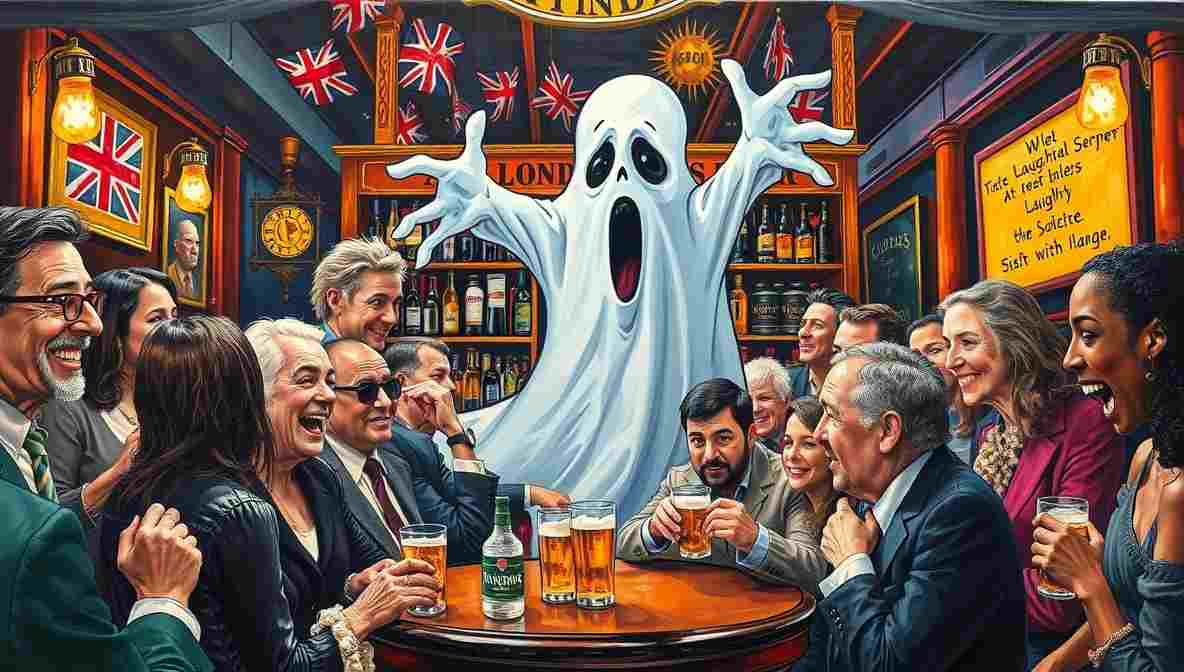
Social media accelerated disaster humor from days or weeks (Great Fire) to hours or minutes (7/7), creating new ethical considerations about timing and taste. “Too soon?” became actual question rather than rhetorical one, with debate about whether immediate humor helps cope or disrespects victims. Consensus never emerged—some found humor healing, others offensive, most understood both positions while laughing anyway.
COVID-19: The Disaster We’re Still Joking Through
The pandemic produced unprecedented volume of disaster humor: sourdough bread jokes, Zoom comedy, and endless variations on “unprecedented times.” This humor served traditional coping functions while creating new challenges—how to be funny about ongoing tragedy, how to joke about deaths still occurring, how to maintain dark humor without becoming cruel. The result: comedy that acknowledged awfulness while finding absurdity in lockdown life, toilet paper hoarding, and government incompetence.
British COVID humor maintained historical patterns: complaining about government (timeless), mocking official responses (traditional), and finding comedy in small disasters (queue jumping, arguing about masks). The jokes weren’t better or worse than Great Fire humor, just faster, more widespread, and documented in ways allowing future historians to judge our coping mechanisms while hopefully not experiencing similar disasters.
When Humor Fails: The Limits of Jokes
Not all disasters produced successful humor—some tragedies resist comedy, either too immediate, too personal, or too awful for jokes to serve any function. The distinction between humor that heals and humor that harms remains contested, with general agreement that timing matters but disagreement about everything else. Britain’s disaster humor tradition doesn’t mean all disasters are funny—just that humor often helps process what can’t be processed otherwise.
What Disaster Humor Reveals About British Character
From Great Fire to present, British disaster humor demonstrates consistent characteristics: refusal to appear defeated, preference for understatement, and tendency to focus on mundane concerns (tea, cheese, transport) rather than existential threats. This approach either shows admirable resilience or alarming detachment, possibly both simultaneously, but it’s distinctly British—Americans process disaster through triumph narratives, French through philosophy, British through sarcastic complaints about inconvenience.
The humor serves practical functions: maintaining morale, creating community through shared laughter, and providing psychological distance from overwhelming events. It also serves darker purpose: avoiding genuine emotional processing by replacing it with jokes, a coping mechanism that works short-term but might create long-term problems we collectively refuse to discuss because discussing feelings is uncomfortable and humor is easier.
Too Soon? The British Answer: Probably, But We’ll Do It Anyway
British disaster humor exists in permanent state of “too soon”—jokes start before disasters end, continue through recovery, and become historical anecdotes that shape how we remember events. Whether this is healthy remains debatable; whether it’s distinctly British seems certain. Other cultures joke about disasters eventually; Britain jokes about disasters immediately, reflexively, and without apparent shame or concern about appropriateness.
This pattern from Great Fire to present suggests humor isn’t optional response to disaster but automatic one—part of British psychology that activates when things go wrong, producing jokes as naturally as breathing. Whether this represents emotional maturity or dysfunction depends on perspective, but after 350+ years of consistent behavior, we’re unlikely to change. The Great Fire wasn’t too soon for jokes in 1666, and nothing since has been too soon either—suggesting British definition of “too soon” differs fundamentally from everyone else’s, if we acknowledge the concept exists at all.
Why We’ll Keep Joking Through Catastrophe
British disaster humor persists because it works—not at solving problems or preventing tragedy, but at making unbearable circumstances bearable. From burying Parmesan during the Great Fire to making memes during pandemic lockdown, humor provides psychological tool for maintaining sanity when external circumstances offer little reason for optimism. It’s not perfect coping mechanism, probably not healthiest one, but it’s ours, refined through centuries of disasters that would have broken populations lacking our commitment to inappropriate laughter.
Future disasters—climate change, economic collapse, or whatever fresh hell awaits—will produce more British humor, more “too soon” debates, and more evidence that we’d rather make jokes than seek therapy. The Great Fire established template: when everything burns, complain about property prices, save the wrong items, blame foreigners, rebuild quickly, erect memorial, and most importantly, find something funny in the ashes. It’s not much, but it’s gotten us through four centuries of catastrophes, and we’re too committed to the bit to stop now.
Auf Wiedersehen, amigo!