The Canada Goose Jacket: Fashion’s Most Honest Status Symbol
How $1,000 jackets became proof that capitalism is working exactly as intended
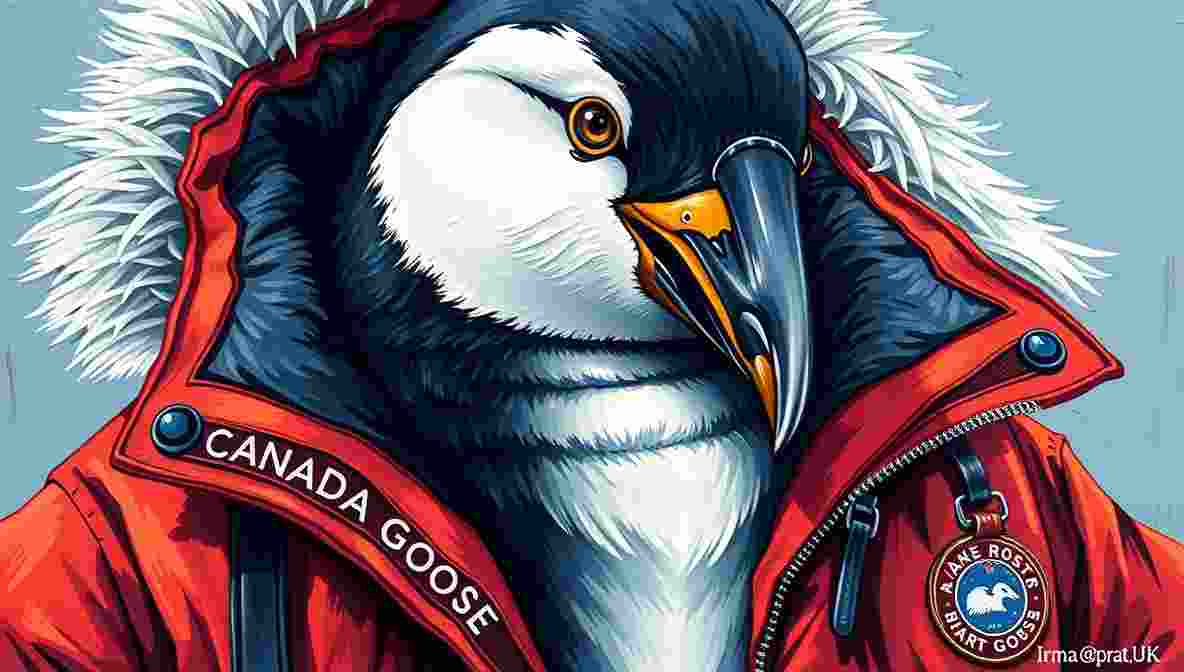
Let’s be clear about what’s actually happening here: status symbols have evolved throughout human history, but none quite as literal as a jacket with a massive fur-lined hood that screams “I spent more on outerwear than most people spend on rent.” The Canada Goose parka didn’t emerge from some visionary’s dream of revolutionizing winter wear. It emerged from a very simple realization: if you charge enough money for something, people will assume it’s good, and they’ll queue around the block to prove they can afford it.
The real news driving this phenomenon is fascinating. Canada Goose began in 1957 as an actual workwear company. Now it’s a status marker so powerful that wearing one essentially announces to the world that you’ve either made it financially or your parents have. The jacket doesn’t keep you warmer than alternatives costing a third of the price—that’s irrelevant. What matters is that everyone knows you paid more. That’s the whole ecosystem.
The Great Jacket Hierarchy: Fashion and Social Order

What separates the Canada Goose wearer from the Gap puffer-jacket person isn’t insulation quality—it’s the visible announcement of wealth. As comedian John Mulaney said, “Having a Canada Goose jacket is basically wearing a billboard that says ‘I have disposable income.'” The brand hierarchy has become so entrenched that spotting a non-Goose winter coat on a wealthy person feels almost like a betrayal of the unspoken contract.
The phenomenon reveals something darker about luxury consumption. Every winter morning in major cities becomes a visible ranking system. The psychological warfare is subtle but devastating. According to luxury fashion research, owning a Canada Goose parka has become shorthand for a certain tax bracket. The jacket doesn’t protect you better from cold—it protects you from being perceived as middle-class.
The Goose Aesthetic: Conformity Dressed as Individuality
Here’s the truly satirical part: everyone wearing a Canada Goose thinks they’re making an individual statement. They’re not. They’re participating in the most coordinated fashion movement since school uniforms, except they paid premium prices for the privilege. Walk down any wealthy neighborhood street in January and you’ll see identical jackets in slightly different colorways—the fashion equivalent of buying the same car everyone else has and calling it diverse taste.
Comedian Dave Chappelle observed, “A Canada Goose jacket is what you wear when you want people to know you’re cold AND rich. Simultaneously.” The jacket has become the uniform of people who believe they’re too individual to wear uniforms. It’s the ultimate performance of authenticity through mass conformity. Observation one: the label is visible from space.
The luxury market research confirms that brand obsession drives 73% of Canada Goose purchases—not thermal performance or weather appropriateness. Observation two: you could achieve identical warmth with a $200 jacket, but then people wouldn’t know you spent $1,000. That’s the actual product being sold. Observation three: the fur-lined hood serves no practical purpose except to frame your face in a way that says “my hood is worth more than your entire outfit.”
The Environmental Paradox: Virtue Signaling Meets Carbon Footprint

Perhaps the most delicious irony is that Canada Goose markets itself to environmentally conscious consumers while using coyote fur trim and producing garments with planetary carbon footprints the size of actual geese. As comedian Bill Burr said, “You’re wearing a coat that cost more than a semester of college, made with materials that probably created more carbon than your car, to look like you care about the environment.” The cognitive dissonance is spectacular.
According to environmental impact analysis, luxury parkas contribute disproportionately to fashion waste. Observation four: the jacket is designed to last forever, which means every Canada Goose ever made is still in circulation, creating a permanent visible wealth archive. Observation five: people wear them indoors now. In heated buildings. Just to be seen wearing them. This is peak capitalism theater.
Comedian Patton Oswalt noted, “The Canada Goose parka is what happens when fashion and Stockholm syndrome have a baby.” The wearer has been convinced that paying exponentially more for marginal quality differences represents sophistication rather than marketing success. Observation six: the brand’s strategy is literally just “make it expensive and tell rich people it’s good.” It’s worked flawlessly.
The Winter Uniform: When Status Becomes Weather Appropriate
What’s remarkable is how efficiently Canada Goose transformed a simple parka into a class indicator. In wealthy neighborhoods, not wearing one is now noticed. In less affluent areas, wearing one signals something about your circumstances. The jacket has become a geographical marker of privilege, a wearable ZIP code. Observation seven: if everyone around you is wearing Canada Goose, you’re probably not in a neighborhood with affordable housing.
Comedian Sarah Silverman observed, “Canada Goose figured out something brilliant: convincing people that spending a thousand dollars on a parka is a smart investment in their future happiness. Spoiler alert: the happiness doesn’t come from the jacket.” The thermals are standard, the construction is fine, but the real value proposition is social positioning.
The brand has perfected the art of scarcity psychology. Limited colors, selective distribution, premium pricing—it’s all designed to create artificial exclusivity around what is objectively just insulated nylon and down. Observation eight: there’s nothing inherently superior about the jacket, which is precisely why the marketing has to work so hard.
The Gotcha Moment: Faux Authenticity in Designer Packaging

Canada Goose markets itself as authentic workwear, the “real deal” compared to fashion-forward alternatives. This is pure mythology. The company spends millions on brand positioning precisely because the product alone can’t justify the price. Observation nine: authentic workwear wouldn’t cost more than a month’s groceries for most people. Observation ten: the brand is designed for people who want to appear rugged without actually being rugged.
Comedian Chris Rock said, “A Canada Goose parka is proof that marketing can make people believe anything. The jacket doesn’t know it’s supposed to be special. It’s just confused about why it costs so much.” The genius is that wealthy people have been convinced that visible expense equals quality. The equation is backwards, but nobody cares.
According to luxury goods analysis, brand mythology accounts for approximately 60-70% of luxury pricing. Observation eleven: you’re mostly paying for the story, not the material.
The Psychology of Privilege: What Canada Goose Really Sells
Here’s what’s genuinely happening: Canada Goose sells permission. Permission to be visibly wealthy without guilt. Permission to spend absurd amounts on basics. Permission to participate in conspicuous consumption while maintaining a veneer of practicality. The jacket keeps you warm (barely better than alternatives costing a tenth of the price), but that’s not what you’re actually purchasing.
Comedian Jim Gaffigan reflected, “Wearing a Canada Goose jacket is like screaming ‘I HAVE MONEY’ but in a winter-appropriate tone of voice.” Observation twelve: the jacket has become so status-laden that some people now wear cheaper alternatives specifically to signal that they’re too secure to need visible markers of wealth. This is called “secure wealth performance,” and it’s only slightly less transparent than the original performance.
Comedian Tina Fey observed, “Canada Goose figured out that people will pay any price if you convince them it means something. They’re not entirely wrong—it does mean something. It means you have disposable income.” This is the honest truth the brand accidentally reveals.
Observation thirteen: the resale market for Canada Goose is robust, proving that people are literally investing in the brand’s mythology. Observation fourteen: if you lose a Canada Goose jacket, you’ll actually feel sad about the money, not the fashion. Observation fifteen: in the future, historians will look back at the Canada Goose phenomenon as the moment capitalism became so efficient it didn’t even need to pretend the products were about anything except wealth display.
Observations About Canada Goose Jackets and Their Devotees
-
A Canada Goose jacket costs roughly the same as a used Honda, but somehow offers less legroom and no cup holders.
-
People wearing Canada Goose jackets act like they’re one unexpected gust of wind away from leading an Arctic expedition sponsored by National Geographic.
-
The jacket’s main function isn’t warmth, it’s letting everyone within a three-block radius know you have a credit card with a high limit and no fear.
-
Canada Goose wearers insist the jacket is “an investment,” which is also what people say about crypto and cursed antique mirrors.
-
The temperature could be 48 degrees and sunny, but the jacket still comes out, because emotional winter is a year-round condition.
-
Wearing a Canada Goose jacket indoors is a power move, like lighting a cigar in a yoga studio.
-
The logo patch is positioned so prominently that it functions as a personal résumé: “I survive cold. I also brunch.”
-
People who wear Canada Goose jackets walk slower, as if the coat itself is burdened by the weight of student loans it represents.
-
Every Canada Goose jacket looks like it’s bracing for a blizzard that never arrives, much like its owner waiting for their startup to “take off.”
-
The jackets are so insulated that wearers often unzip them dramatically, signaling, “Yes, I’m overheating, but I refuse to take it off.”
-
Canada Goose jackets are worn most often in cities where the cold is inconvenient, not dangerous, like New York, London, and coffee shops with aggressive air conditioning.
-
Owning one instantly qualifies you to complain loudly about winter, even if you moved north voluntarily.
-
People who say, “You don’t understand, it’s really warm,” sound exactly like people defending timeshares.
-
The jacket’s bulk suggests survival. The lifestyle underneath suggests oat milk and a vague interest in Pilates.
-
Canada Goose wearers look mildly offended when someone else nearby is also warm, as if warmth is supposed to be exclusive.
-
The jacket turns every sidewalk into a fashion runway crossed with a polar research station.
-
Most Canada Goose jackets will never experience conditions colder than a refrigerator aisle at Whole Foods.
-
The louder the jacket, the quieter the personality, because the coat is doing all the talking.
-
Canada Goose wearers believe the jacket makes them look rugged, but it mostly makes them look like a marshmallow with LinkedIn.
-
Taking off a Canada Goose jacket requires planning, hydration, and sometimes a chair.
-
The jacket implies danger, but the wearer is usually heading to a wine bar that serves charcuterie “with a story.”
-
Canada Goose jackets have become the official uniform of “I don’t ski, but I might talk about skiing.”
-
People wearing them often sigh dramatically about the cold, even as everyone else in a hoodie survives just fine.
-
The jacket gives off the vibe of someone who wants credit for enduring hardship without actually enduring any.
-
Canada Goose wearers believe they are prepared for winter, societal collapse, and a sudden invitation to Davos.
-
When two Canada Goose jackets pass each other, there’s a brief moment of mutual recognition, like luxury penguins nodding in respect.
Lessons Learned: What the Parka Teaches Us About Consumer Culture

The Canada Goose jacket is capitalism’s most honest product because it makes no pretense about what it’s actually selling. It’s not selling warmth (you can get that for $200). It’s not selling durability (that’s table stakes). It’s selling the right to announce your net worth through your outerwear. And it’s working spectacularly because it’s honest about the lie in a way that most luxury goods refuse to be.
What we should take from this: recognize when you’re buying the product versus buying the story. Canada Goose succeeded not because jackets suddenly became better in 2010, but because marketing became better at convincing wealthy people that visibility of expense equals quality. The moment you notice yourself wearing something primarily so others will notice you wearing it, you’ve entered the Canada Goose zone. That’s the actual lesson. Know the difference between purchasing based on function and purchasing based on status affirmation. And if you’re going to do the latter, at least be honest about why you’re doing it.
Auf Wiedersehen, amigo!
SOURCE: canadagoosejackets.org.uk
IMAGE GALLERY
Canada Goose





Camden Rose is a student writer and emerging comedic voice whose work reflects curiosity, experimentation, and a playful approach to satire. Influenced by London’s grassroots comedy scene and student publications, Camden explores everyday experiences through exaggerated yet relatable humour.
Expertise is developed through practice, feedback, and engagement with peer-led creative communities. Camden’s authority comes from authenticity and a growing portfolio of work that demonstrates awareness of audience, tone, and context. Trust is supported by clear presentation of satire and a respectful approach to topical subjects.
Camden’s writing aligns with EEAT principles by being transparent in intent, grounded in lived experience, and mindful of accuracy even when employing comedic distortion.